

Astronomers investigating one of the universe’s most violent phenomena are confronting a surprising question: can a 100-solar-mass black hole merger trigger gamma-ray flashes? For decades, scientists believed that collisions between two black holes produced only gravitational waves—ripples in spacetime predicted by Albert Einstein’s theory of general relativity—but no detectable light.
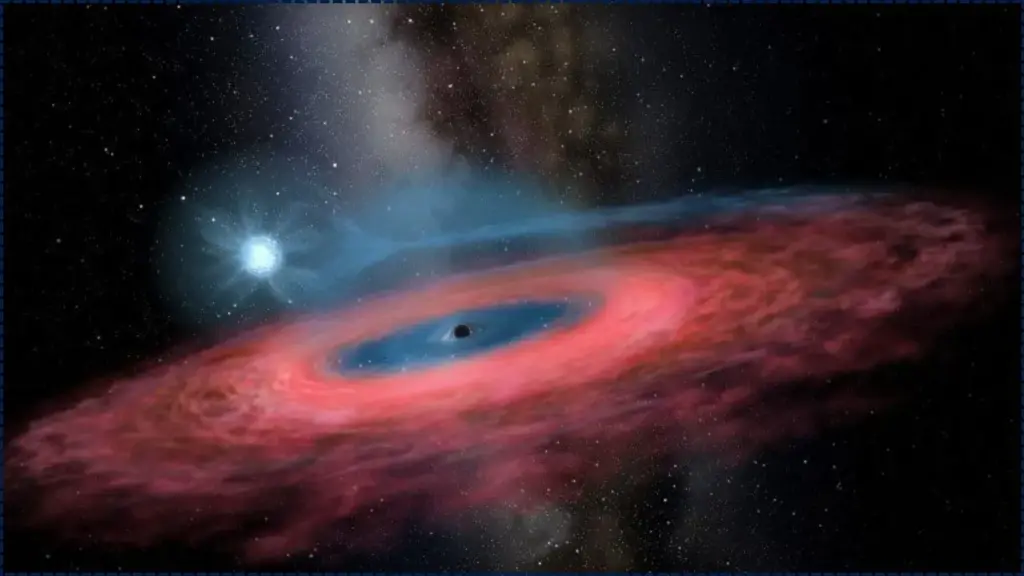
However, a recent gravitational-wave detection involving two unusually massive black holes may challenge that assumption. The event, recorded by the Laser Interferometer Gravitational-Wave Observatory (LIGO) and its international partners, involved black holes whose combined mass approached roughly 100 times the mass of the Sun.
About 11 seconds after the gravitational-wave signal, satellites detected a short gamma-ray burst originating from roughly the same region of the sky.
Scientists caution that the association remains uncertain. Yet if confirmed, the observation could expand the emerging field of multi-messenger astronomy, which studies cosmic events using both gravitational waves and electromagnetic radiation.
100-Solar-Mass Black Hole
| Key Fact | Detail |
|---|---|
| Massive black hole merger | Gravitational-wave event involving ~100 solar masses |
| Gamma-ray detection | Burst observed ~11 seconds after merger signal |
| Traditional theory | Black hole mergers expected to produce no light |
| Scientific significance | Possible expansion of multi-messenger astronomy |
The Discovery of Gravitational Waves
The story begins with one of the most important discoveries in modern physics.In 2015, scientists operating the Laser Interferometer Gravitational-Wave Observatory (LIGO) detected gravitational waves for the first time. The signal originated from two merging black holes located more than a billion light-years away.
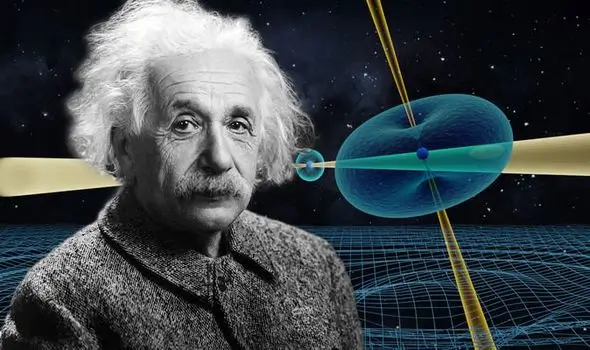
The discovery confirmed a century-old prediction by Albert Einstein, who proposed that accelerating massive objects should generate ripples in the fabric of spacetime.
The detection earned the 2017 Nobel Prize in Physics and opened a new way of observing the universe. Since then, LIGO and its European counterpart Virgo have recorded hundreds of black hole mergers, revealing a population of previously unseen cosmic objects.
Understanding Black Hole Mergers
Black holes are among the most extreme objects in the universe. They form when massive stars collapse under their own gravity at the end of their life cycles. If two black holes form in the same stellar system, they may eventually become gravitationally bound.
Over millions or billions of years, the pair gradually spirals inward. As they approach each other, they emit gravitational waves that carry energy away from the system. Eventually the two black holes merge into a single, larger black hole in a violent event lasting only fractions of a second.
Despite the enormous energy involved, the event is expected to produce no light because black holes contain no matter that can radiate electromagnetic energy.
Gamma-Ray Bursts: The Brightest Explosions in the Universe
Gamma-ray bursts (GRBs) are among the most energetic events known in astrophysics. They release enormous amounts of radiation in a matter of seconds, often outshining entire galaxies. Scientists classify gamma-ray bursts into two main types:
Long Gamma-Ray Bursts
These bursts typically last more than two seconds and are associated with the collapse of massive stars.
Short Gamma-Ray Bursts
Short bursts, lasting less than two seconds, are believed to originate from neutron-star mergers or neutron-star–black-hole collisions.
The first confirmed detection of both gravitational waves and gamma rays occurred in 2017, when astronomers observed a neutron-star merger that produced a short gamma-ray burst.That event confirmed theoretical predictions about the origins of many gamma-ray bursts.
The Unexpected Signal
The new gravitational-wave event involving a 100-solar-mass black hole merger may represent something different. Shortly after the gravitational-wave detection, NASA’s Swift gamma-ray observatory recorded a burst of high-energy radiation from the same region of the sky.
The timing—about 11 seconds after the merger—caught scientists’ attention. Researchers analyzed the probability that the gamma-ray burst occurred coincidentally. Their statistical calculations suggest that the likelihood of a random alignment is small but not impossible.
“This estimate is deliberately conservative,” the research team wrote, noting that the true probability could be even lower.
Observatories Behind the Discovery
Several major scientific instruments contributed to the detection.
LIGO and Virgo
The Laser Interferometer Gravitational-Wave Observatory (LIGO) consists of two large detectors located in Louisiana and Washington State. Together with the Virgo detector in Italy, the observatories measure incredibly small distortions in spacetime caused by gravitational waves.

Swift Gamma-Ray Observatory
NASA’s Swift satellite monitors the sky for gamma-ray bursts and rapidly alerts astronomers when it detects a new event.
Einstein Probe
China’s Einstein Probe, a recently launched space telescope, detected an X-ray afterglow that may also be related to the event. Together these instruments form part of a global network enabling multi-messenger astronomy.
Possible Explanations for Gamma-Ray Emission
If the gamma-ray burst truly originated from the black hole merger, scientists must explain how the radiation was produced. Several hypotheses have been proposed.
Mergers Inside Active Galactic Nuclei
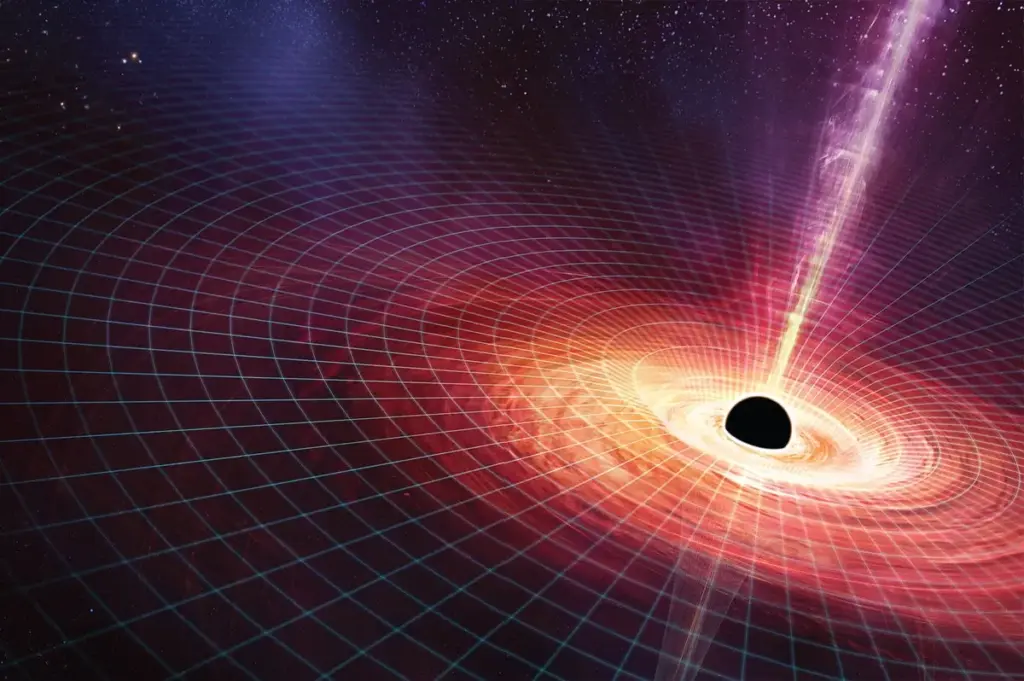
One possibility is that the black holes merged inside the accretion disk of a supermassive black hole located at the center of an active galaxy. These disks contain enormous amounts of gas and dust.
When the black holes merge, the disturbance could trigger shocks in the disk and generate high-energy radiation.
Magnetic Field Interactions
Another explanation involves strong magnetic fields surrounding the black holes. During the merger, these fields could accelerate charged particles to extremely high energies, producing gamma rays.
Stellar Collapse Environment
Some theories suggest the black holes formed inside a collapsing massive star. In that scenario, surrounding stellar material could feed the newly formed black hole and power a short gamma-ray burst.
Why the 100-Solar-Mass Merger Matters
The mass of the merging black holes is particularly significant. Most black holes detected by LIGO have masses between 10 and 50 times that of the Sun. A merger approaching 100 solar masses may represent an intermediate stage in black hole evolution.
Some astrophysicists believe that large black holes grow through repeated mergers of smaller ones. Studying such events could help explain how supermassive black holes—millions or billions of solar masses—formed in the early universe.
Multi-Messenger Astronomy Expands
The potential connection between gravitational waves and gamma rays highlights the growing importance of multi-messenger astronomy. This approach combines different types of cosmic signals to study the same event. These signals include:
- Gravitational waves
- Gamma rays
- X-rays
- Visible light
- Neutrinos
By combining these observations, scientists can reconstruct cosmic events with far greater precision.
The Challenge of Confirming the Signal
Despite the excitement surrounding the discovery, astronomers remain cautious. Gamma-ray bursts occur frequently across the universe. Determining whether a specific burst corresponds to a gravitational-wave event is difficult.
The gravitational-wave detectors also cannot pinpoint an exact location in the sky with high precision. Future observations will be necessary to confirm whether the signals are truly linked.
Future Observatories and Missions
Upcoming instruments may help resolve the mystery.
Laser Interferometer Space Antenna (LISA)
Planned for the 2030s, LISA will detect gravitational waves from space, allowing scientists to observe many more black hole mergers.
Next-Generation Gamma-Ray Telescopes
New gamma-ray observatories will improve detection sensitivity and localization accuracy.
Expanded Gravitational-Wave Networks
Additional detectors in India and Japan will enhance the global gravitational-wave detection network. Together these instruments could dramatically increase the chances of identifying electromagnetic signals from black hole mergers.
Why the Discovery Matters
If gamma-ray flashes truly accompany some black hole mergers, the implications for astrophysics could be profound. Such observations would help scientists:
- Identify the environments where black hole mergers occur
- Understand the role of gas and magnetic fields in extreme gravity
- Improve models of gamma-ray burst formation
- Refine measurements of cosmic distances
The discovery would also strengthen the connection between gravitational-wave astronomy and traditional telescope observations.
Related Links
Beyond the Roof: Top 5 US urban solar trends transforming city living in 2026
State-by-State Solar Guide: Which US states offer the best solar rebates in 2026?
Astronomers emphasize that the potential gamma-ray signal from the 100-solar-mass black hole merger requires further confirmation. Yet the observation has already sparked new theoretical research and renewed interest in how black holes interact with their cosmic surroundings.
As gravitational-wave detectors and space telescopes grow more sensitive, scientists expect to observe many more mergers in the coming years. Each new detection may help reveal whether the universe’s most powerful collisions sometimes produce not only ripples in spacetime, but flashes of light as well.
FAQs
What is a black hole merger?
It occurs when two black holes orbit each other and eventually combine into a larger black hole.
Do black hole mergers produce light?
Usually they produce only gravitational waves. However, if surrounding matter is present, electromagnetic radiation may be possible.
What are gamma-ray bursts?
They are extremely energetic flashes of radiation typically linked to neutron-star mergers or collapsing stars.
Why is the 100-solar-mass merger important?
It may represent one of the first cases where a black hole merger appears to have produced detectable electromagnetic radiation.