Agrivoltaics — the practice of growing crops beneath elevated solar panels — is emerging as a powerful model that combines agriculture and renewable energy on the same land. By allowing farmers to cultivate high-value crops while generating solar electricity, agrivoltaics aims to increase land productivity and potentially double farmers’ income.
As India pursues renewable energy expansion and rural income stability, this dual-use system is gaining policy and industry attention.
Agrivoltaics and the Future of Farming
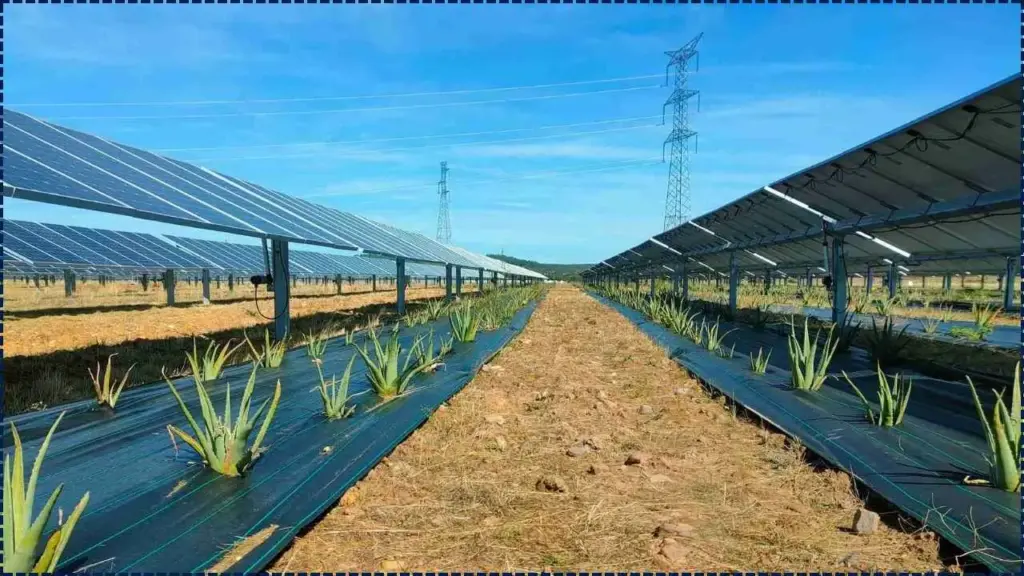
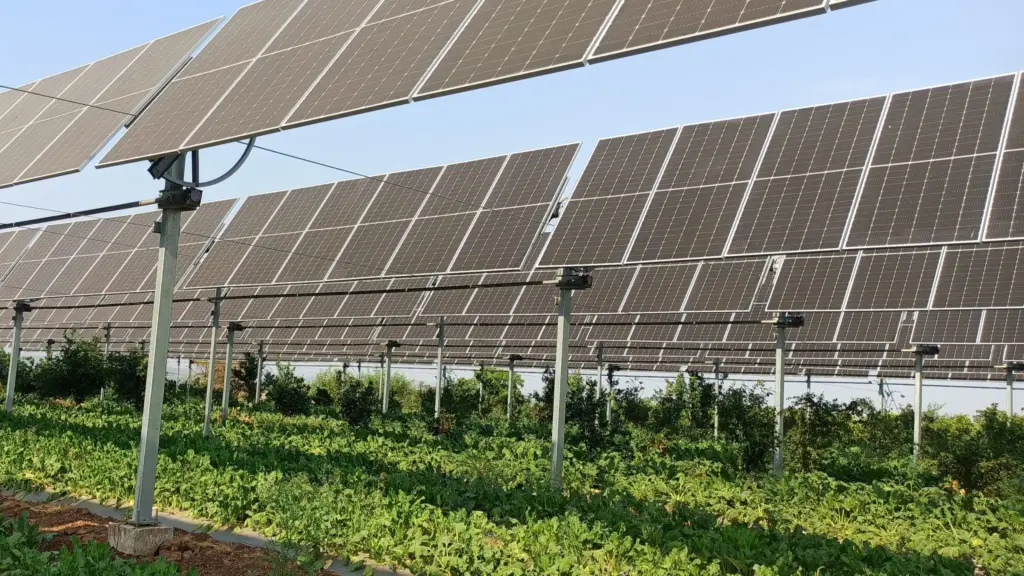
Agrivoltaics represents a shift in how land is utilised. Instead of choosing between food production and solar farms, farmers can now do both simultaneously. The system integrates photovoltaic (PV) panels on raised mounting structures, allowing agricultural activity below.
According to the International Energy Agency (IEA), solar photovoltaic capacity remains one of the fastest-growing sources of electricity worldwide. However, large-scale solar parks often require substantial land.
Agrivoltaics addresses this land-use tension by promoting co-location of crops and solar infrastructure. In India, where agricultural land supports millions of livelihoods, optimising each hectare is critical. Agrivoltaics seeks to transform farmland into dual-income assets.
How Agrivoltaics Works
In agrivoltaic systems, solar panels are mounted 2–5 metres above the ground, depending on crop type and farm equipment needs. The panels are spaced to allow controlled sunlight distribution.
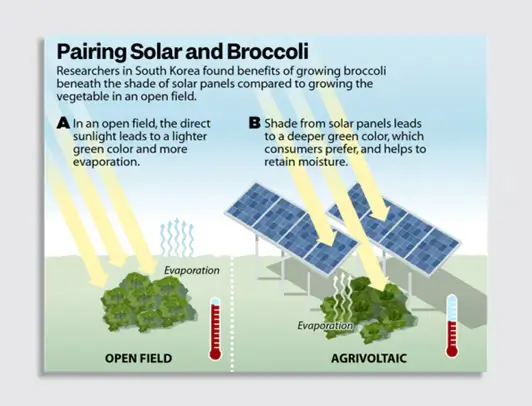
The system creates a modified microclimate:
- Reduced direct heat exposure
- Lower soil evaporation
- Improved moisture retention
- Protection from extreme weather
Crops such as leafy vegetables, herbs, chillies, tomatoes and certain pulses respond well to partial shading conditions.
Scientific Evidence: Yield and Efficiency Gains
Research from agricultural and renewable energy institutions indicates that agrivoltaic systems can improve overall land productivity. Studies show that combining crops and solar generation on the same land can raise land-use efficiency by up to 150–160% compared with separate installations.
In hot climates, shading from solar panels reduces crop heat stress and water loss. Some field experiments have recorded increased yields for specific vegetables under controlled shading conditions.
Water savings are another major advantage. Reduced evaporation under panels can lower irrigation needs by 15–30%, particularly in semi-arid regions. For water-stressed Indian states such as Rajasthan and Gujarat, this efficiency can be significant.
Economic Model: Can It Double Farmers’ Income?
The promise of agrivoltaics lies in diversified income streams.
1. Agricultural Revenue
Farmers continue cultivating crops and selling produce as usual.
2. Solar Energy Revenue
Electricity generated can:
- Power irrigation pumps
- Reduce diesel costs
- Be sold to the grid under power purchase agreements
The PM-KUSUM (Pradhan Mantri Kisan Urja Suraksha evam Utthaan Mahabhiyan) scheme supports solar adoption in agriculture by offering subsidies and facilitating grid-connected systems.
Under Component-A of the scheme, farmers can lease land for solar projects while continuing agricultural activity. For farmers with stable power purchase agreements, solar income provides predictable monthly revenue, reducing dependence on seasonal crop fluctuations.
Case Studies from India
Pilot agrivoltaic installations in Madhya Pradesh and Maharashtra have demonstrated viable integration. Farmers have grown vegetables and medicinal plants under solar arrays while generating electricity for irrigation and grid sale.
In some cases, farmers report reduced electricity expenses and additional income through long-term energy agreements. While full income doubling depends on crop type, land size and power tariffs, the diversified revenue structure increases financial resilience.
Grid Integration and Energy Security
Agrivoltaics contributes to decentralised energy generation. Distributed solar power reduces transmission losses and strengthens rural grid stability.
In regions where electricity supply is unreliable, on-farm solar generation ensures uninterrupted irrigation and cold storage operations. This improves post-harvest management and reduces crop losses.
Battery storage systems can further enhance reliability, allowing farmers to store excess daytime power for night use.
Environmental and Climate Benefits
Agrivoltaics supports India’s climate commitments by expanding renewable energy capacity without sacrificing food production. Environmental benefits include:
- Lower carbon emissions
- Reduced fossil fuel use for irrigation
- Improved soil moisture conservation
- Lower heat stress on crops
Additionally, shading reduces soil degradation caused by excessive sun exposure, improving long-term land quality.
Challenges and Barriers
Despite its promise, agrivoltaics faces constraints.
High Initial Capital Cost
Elevated structures and dual-use design increase installation expenses compared with conventional ground-mounted solar.
Crop Compatibility
Not all crops thrive under partial shading. Wheat and rice may require careful configuration.
Maintenance Complexity
Panels require periodic cleaning and monitoring. Coordination between farming operations and solar maintenance must be managed carefully.
Financing Access
Small and marginal farmers may require credit support or cooperative models to participate. Experts note that scale and technological improvements are likely to reduce costs over time.
Global Perspective
Countries such as Germany, Japan and the United States are expanding agrivoltaic research. European pilot projects have demonstrated compatibility with vineyards and horticulture.

International organisations, including the Food and Agriculture Organization (FAO), recognise agrivoltaics as a land-efficient strategy in climate-sensitive regions. India’s combination of high solar irradiance and large agricultural base positions it as a strong candidate for wider adoption.
Social and Rural Development Impact
Agrivoltaics can stimulate rural employment in:
- Solar installation
- Technical maintenance
- Energy management
- Data monitoring
The integration of renewable energy and agriculture also encourages skill development in rural communities. By stabilising income, agrivoltaics may reduce distress migration from farming regions.
Future Outlook: Smart Farming Integration
Emerging technologies can enhance agrivoltaic performance:
- IoT-based soil monitoring
- Automated irrigation systems
- Smart inverters
- AI-driven yield optimisation
As electric tractors and farm machinery become viable, agrivoltaic farms may operate with reduced fossil fuel dependence.
Industry analysts suggest that if supported by policy incentives and financing reforms, agrivoltaics could become a mainstream rural infrastructure model within the next decade.
Related Links
Home Solar Prices Hit All-Time Low! Now Even Battery Storage Is Cheaper Than You Think
Free Electricity from Sea Waves? India’s First Ocean Energy Project Lights Up Coastal Cities.
Balanced Expert View
A renewable energy economist notes:
“Agrivoltaics is not a universal solution, but in regions facing water stress and income volatility, it offers measurable benefits.”
An agricultural scientist adds:
“Crop selection and site-specific design are critical. When optimised, agrivoltaics enhances resilience without compromising productivity.”
Agrivoltaics represents a strategic innovation at the intersection of agriculture and renewable energy. By growing high-value crops beneath solar panels, farmers can diversify income, conserve water and improve land productivity. While financial and technical barriers remain, supportive policies and technological advancements may accelerate adoption.
As India seeks to strengthen rural livelihoods and meet renewable energy targets, agrivoltaics could play a defining role in shaping a sustainable agricultural future.