
Punjab’s rural energy landscape is undergoing change through the Punjab’s Solar Revolution initiative, designed to create villages with minimal or zero electricity bills via widespread rooftop solar installations.
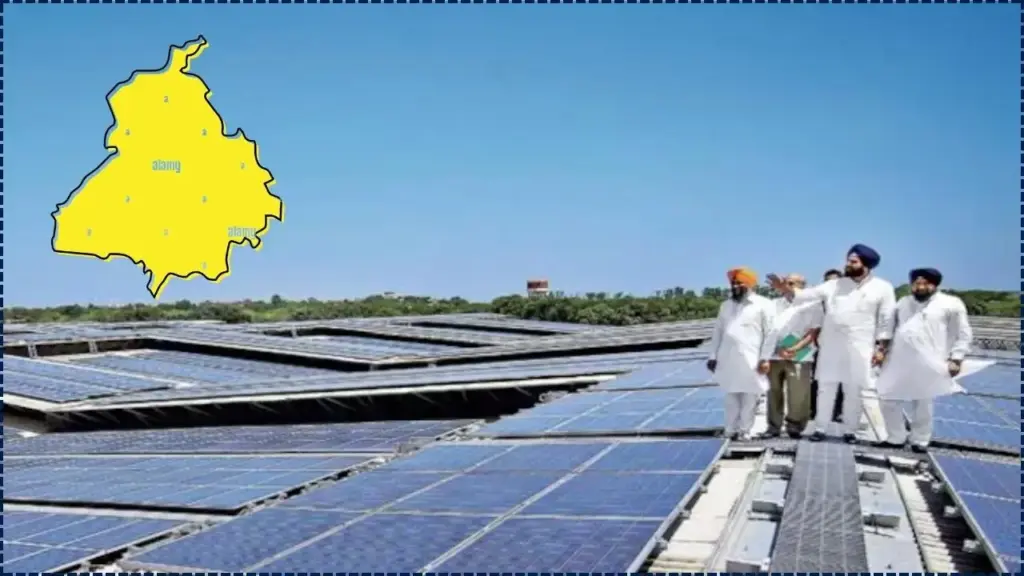
Supported by the Centre’s PM Surya Ghar scheme and implemented by state agencies, selected villages are generating surplus solar power, reducing household expenses and feeding electricity back into the grid. Officials say the model may soon expand across districts.
What Is the Punjab’s Solar Revolution Initiative?
The Punjab’s Solar Revolution programme operates under the PM Surya Ghar: Muft Bijli Yojana, launched in 2024 by the Government of India to accelerate rooftop solar adoption.
The scheme envisions selecting or encouraging one village in each district to become a demonstration site for distributed solar energy. According to the Ministry of New and Renewable Energy (MNRE), the goal is to combine financial savings for households with localised clean power generation.
Villages are evaluated based on rooftop capacity installed, public participation, grid integration and awareness efforts. Winning villages may receive additional central financial assistance of up to ₹1 crore for community infrastructure.
In Punjab, implementation is overseen by the Punjab Energy Development Agency (PEDA) in coordination with district administrations.
How One Village Reduced Electricity Bills
In Ludhiana district, one village installed over 200 kilowatts of rooftop solar capacity across homes and commercial buildings, according to district-level reports.
Under India’s net-metering system, households feed surplus daytime generation into the grid. Electricity credits offset consumption during evening hours, often reducing monthly bills to negligible amounts.
District officials noted that visible financial savings encouraged further participation. Once early adopters demonstrated near-zero bills, neighbouring households began installations.
Financial Model and Payback Period
Subsidy Structure
Under PM Surya Ghar, households receive central financial assistance for rooftop systems. Subsidy amounts vary based on system size.
Estimated Savings
For a typical rural household consuming 150–250 units per month, a 2–3 kilowatt rooftop system can significantly offset consumption. Energy analysts estimate that, after subsidy support, the payback period for such systems may range between four and six years, depending on installation cost and consumption patterns.
After the payback period, electricity generated effectively becomes low-cost power for the remainder of the system’s 20–25 year lifespan.
Impact on Household Income
For lower- and middle-income families, reduced electricity expenditure can redirect funds toward education, agriculture or small business investments.
Implications for Punjab’s Distribution Companies (DISCOMs)
Punjab’s electricity distribution sector has long faced financial strain, partly due to subsidised agricultural power.
Distributed solar reduces daytime grid demand, which may lower peak procurement costs. However, large-scale rooftop adoption can also reduce revenue for DISCOMs if tariff structures are not adjusted.
Energy economist Dr. Rajiv Malhotra, speaking at a renewable policy forum in Delhi, noted that “rooftop solar must be aligned with distribution company reform to ensure financial sustainability.”
Officials say careful tariff design and net-metering caps are under evaluation to balance household benefit and utility stability.
Agricultural Power and Groundwater Considerations
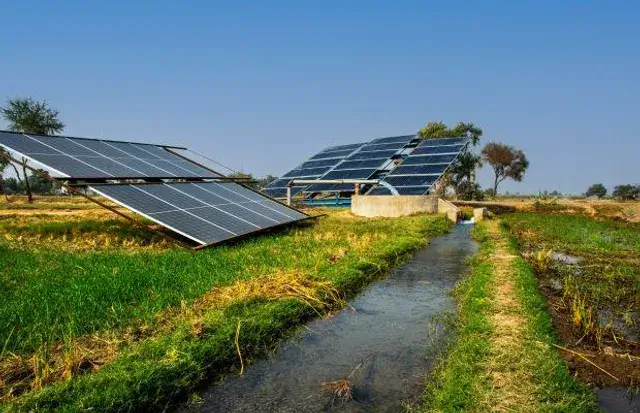
Punjab’s agriculture sector consumes significant electricity, particularly for groundwater pumping. Experts argue that solarisation of rural feeders could encourage daytime pumping aligned with solar generation.
However, some analysts caution that unlimited free solar power could intensify groundwater extraction if not managed through policy controls.The International Energy Agency (IEA) has previously noted that coupling renewable energy expansion with water management policies is essential in agrarian economies.
Employment and Local Economy Effects
Rooftop solar expansion creates demand for trained technicians, electricians and maintenance personnel. Local installers in participating districts report increased business activity following the Model Solar Village competition.
State officials indicate that training programmes are being aligned with solar deployment targets to develop a skilled rural workforce.
Women’s Participation and Social Impact
Village-level solar adoption has also involved women’s self-help groups in awareness campaigns and documentation processes. Community leaders report that women often manage household finances and therefore play a key role in deciding whether to install rooftop systems.
Social researchers suggest that visible reductions in monthly bills strengthen household financial resilience, particularly in rural areas.
Environmental Impact and Carbon Reduction
According to estimates from renewable energy agencies, each kilowatt of rooftop solar capacity can offset approximately one to one-and-a-half tonnes of carbon dioxide emissions annually, depending on grid composition.
If replicated across districts, Punjab’s Solar Revolution adoption could contribute meaningfully to India’s target of achieving 500 gigawatts of non-fossil fuel capacity by 2030.
The International Renewable Energy Agency (IRENA) has emphasised that distributed solar plays a crucial role in accelerating decarbonisation while reducing transmission losses.
Battery Storage and Future Expansion
Currently, most participating villages rely on grid-connected net-metered systems without battery storage.
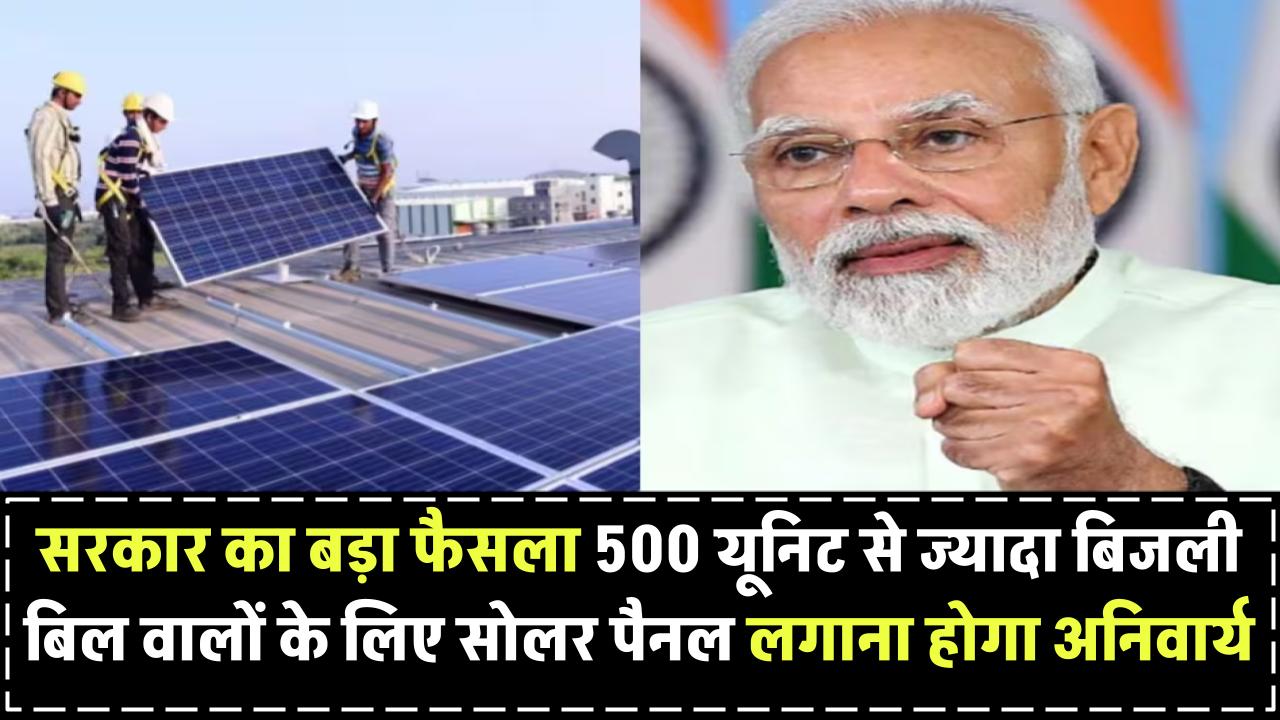
सरकार का बड़ा फैसला! 500 यूनिट से ज्यादा बिजली बिल वालों के लिए सोलर पैनल लगाना होगा अनिवार्य
Experts note that future integration of affordable battery systems could allow households to store excess generation for evening use, further reducing reliance on grid supply. However, battery costs remain relatively high for widespread rural adoption.
Comparisons with Other States
States such as Gujarat and Rajasthan have also promoted rooftop solar under central schemes. Punjab’s competitive Model Solar Village approach differs by leveraging community pride and district-level recognition to accelerate adoption.
Energy analysts say competition-based models may increase participation faster than purely administrative allocation.
Challenges and Sustainability Risks
Despite progress, several risks remain:
- Maintenance and inverter replacement costs over time
- Administrative delays in subsidy disbursement
- Grid capacity limitations in rural feeders
- Equity concerns for households lacking suitable roof space
A senior PEDA official acknowledged that “long-term success depends on consistent maintenance, clear billing transparency and continued awareness efforts.”
Related Links
No More Plug-ins? New Wireless Tech Will Charge Your Electric Car While You Drive!
Solar Tiles: Replace Panels with ‘Solar Tiles’; Beautiful Roofs That Generate Free Power.
Policy Outlook: Is Your Village Next?
The national framework aims to replicate the Punjab’s Solar Revolution model across districts. Officials indicate that additional villages are being shortlisted based on readiness and community engagement.
Energy policy experts emphasise that replication will require streamlined documentation, technical training and sustained political support. If early successes continue, Punjab’s rural solar transition may accelerate in the coming years.
Punjab’s Model Solar Village initiative demonstrates how distributed rooftop solar, backed by subsidies and community mobilisation, can significantly reduce electricity bills in rural areas. While financial, technical and regulatory challenges remain, the Punjab’s Solar Revolution model signals a broader shift toward decentralised renewable energy in India.
As more villages participate, rural solar adoption could reshape household economics, reduce carbon emissions and strengthen local energy resilience.