India is developing plans for an E-Highway along the Delhi–Jaipur corridor, where electric buses would draw power directly from overhead lines while travelling.
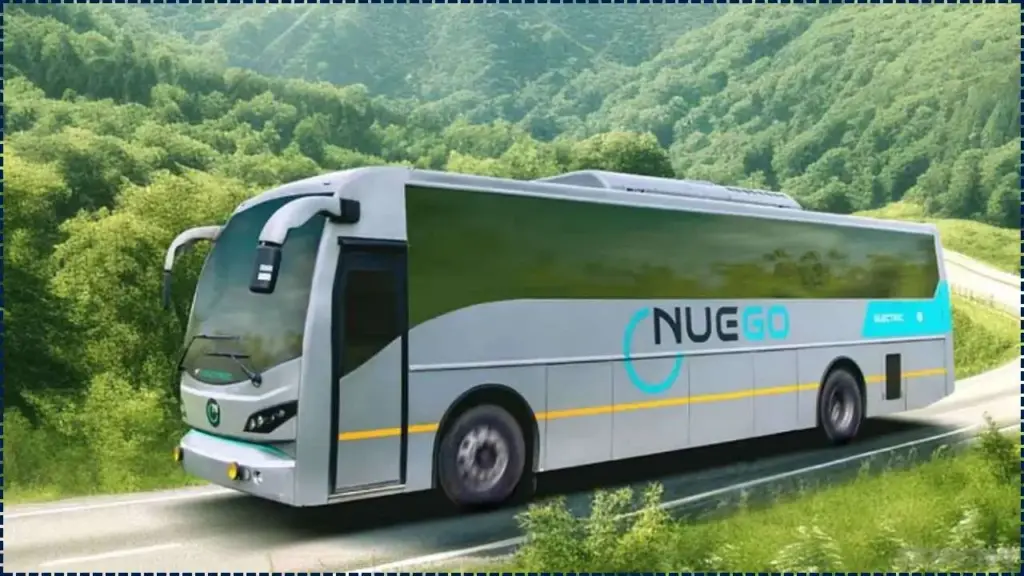
The proposal, led by the Ministry of Road Transport and Highways (MoRTH), seeks to reduce diesel consumption, lower emissions and test in-motion charging technology on one of the country’s busiest national highways.
What the E-Highway Proposal Entails
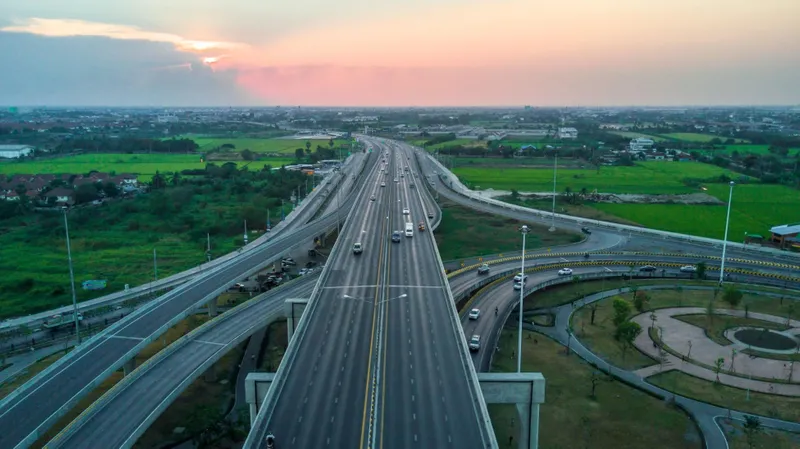
The proposed E-Highway would operate along National Highway 48 (NH48), linking Delhi and Jaipur across roughly 270 kilometres. The corridor carries heavy passenger and freight traffic and forms part of India’s Golden Quadrilateral highway network.
Under the plan, electric buses would run in dedicated lanes fitted with overhead electric wires. Vehicles equipped with pantographs would connect to the lines and receive continuous electric power while in motion.
Union Minister Nitin Gadkari has stated in public addresses that the Delhi–Jaipur route could become India’s first electrified highway corridor. The concept draws on Electric Road System (ERS) technology, already tested in parts of Europe for heavy vehicles.
How Overhead In-Motion Charging Works
Electric buses on the E-Highway would use a retractable pantograph mounted on the roof. When travelling under electrified sections, the pantograph connects to overhead catenary lines and supplies electricity directly to the motor.
The system also charges onboard batteries simultaneously. When buses exit electrified stretches, they switch to battery mode. This hybrid design reduces reliance on large battery packs and minimises charging downtime.
According to transport studies published by European infrastructure agencies, in-motion charging can improve energy efficiency and extend vehicle range for long-distance routes.
Environmental Rationale
Emission Reduction
Road transport contributes significantly to India’s urban air pollution and carbon emissions. Data from the Ministry of Environment, Forest and Climate Change indicates that diesel buses are a major source of particulate emissions on highways.
Electric buses powered from overhead lines produce zero tailpipe emissions. If supplied with renewable energy, overall carbon intensity can decline further.
The International Energy Agency (IEA) notes that electrifying heavy-duty transport corridors can deliver measurable emissions reductions, especially in high-traffic areas.
Energy Security
India imports the majority of its crude oil. Electrifying bus fleets reduces exposure to international fuel price fluctuations. Energy economists say corridor electrification aligns with broader national goals of reducing fossil fuel dependency.
Cost and Financial Structure
Building an E-Highway requires substantial upfront investment. Infrastructure components include:
- Steel poles and overhead catenary wires
- Substations and power conversion units
- Grid connection systems
- Dedicated highway lane modifications
Industry estimates suggest electrification costs vary widely depending on terrain and system design. Transport economists note that while capital expenditure is high, operational savings may offset costs over time for routes with high vehicle density.
A senior infrastructure consultant based in Mumbai said that “cost recovery depends on traffic volume, electricity pricing and vehicle utilisation.” The government is reportedly examining Public-Private Partnership (PPP) models to share financial risk.
Passenger and Operational Impact
If implemented, the E-Highway could reduce travel time between Delhi and Jaipur. Officials have suggested that high-capacity electric buses operating in dedicated lanes could cover the distance in approximately two to three hours, depending on traffic conditions.
Lower fuel costs may translate into more competitive ticket pricing, although fare structures have not been finalised. Transport planners also argue that smoother electric propulsion reduces vibration and noise, potentially improving passenger comfort.
Grid Integration and Power Demand
Continuous in-motion charging requires stable electricity supply. The Central Electricity Authority (CEA) has emphasised the need to upgrade transmission infrastructure to handle additional electric mobility demand.
Peak load management is critical, especially if multiple buses draw power simultaneously during high-traffic hours. Coordination between MoRTH, state electricity utilities and grid operators will be essential to ensure uninterrupted service.
Freight Electrification Potential
Although the initial focus is on passenger buses, policymakers have indicated that freight vehicles could adopt similar systems in future phases. Heavy-duty trucks account for a large share of diesel consumption on highways.
European pilots, particularly in Germany and Sweden, have demonstrated overhead electrification for hybrid freight trucks. Adapting the model to Indian freight corridors could deliver larger emissions reductions if scaled successfully.
Maintenance and Durability Challenges
Northern India experiences extreme weather, including high summer temperatures, dust storms and monsoon rains. Overhead infrastructure must withstand these conditions without compromising safety.
Regular inspection and maintenance will be required to prevent disruptions. Engineers also need to design sufficient clearance for flyovers and heavy vehicles not using the electrified lane.
Transport safety experts caution that clear signage and driver training will be necessary to prevent accidents.
Comparison with Battery-Only Models
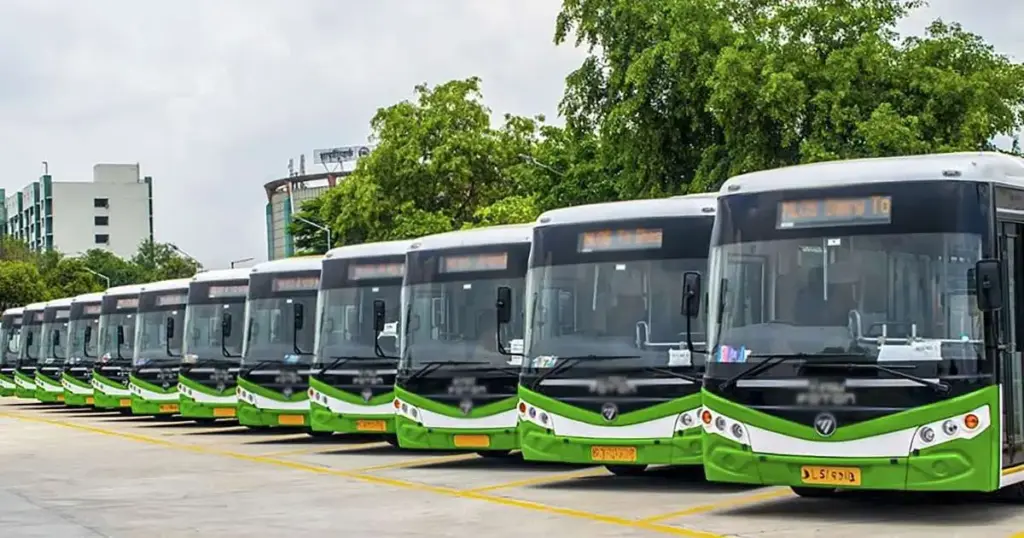
India has already deployed thousands of battery electric buses under national schemes such as FAME. Battery technology has improved in energy density and charging speed. However, long-distance routes require large battery packs and extended charging infrastructure.
Overhead in-motion charging reduces battery size requirements and increases fleet uptime. A mobility researcher at Indian Institute of Technology (IIT) Delhi said that corridor electrification may complement rather than replace battery-only models.
Land and Regulatory Coordination
Installing overhead lines along an existing highway requires coordination with multiple agencies. Land use approvals, safety clearances and grid connections must be secured. State governments of Haryana and Rajasthan would play a role in implementation.
Policy consistency and regulatory clarity are considered essential for investor confidence.
Renewable Energy Linkages
India has pledged to achieve 500 gigawatts of non-fossil fuel capacity by 2030. Transport electrification complements renewable energy expansion by increasing electricity demand.

Energy planners suggest that future E-Highways could integrate directly with solar and wind power corridors. If powered by renewable sources, electrified highways would further reduce lifecycle emissions.
International Precedents
Germany’s eHighway pilots have operated on public highways with hybrid trucks drawing power from overhead lines. Sweden has tested both conductive rail systems and overhead electrification.
Reports from European transport agencies indicate positive fuel savings but emphasise high initial investment. India’s proposed E-Highway adapts these models to a high-density passenger corridor.
Economic Viability and Scalability
Economists note that the viability of E-Highways depends on route selection. High-traffic corridors with predictable vehicle flow are better suited for electrification. If the Delhi–Jaipur pilot proves successful, similar systems could be considered for other busy corridors such as Mumbai–Pune or Delhi–Chandigarh.
However, long-term sustainability depends on maintenance costs, electricity pricing and technological evolution. Rapid improvements in battery technology could alter cost comparisons over time.
Expert Perspectives
Supporters argue that in-motion charging enhances efficiency for fixed routes and reduces dependence on large battery storage. Critics caution that the capital cost may be difficult to justify if battery prices continue to fall.
Energy policy analysts stress the need for transparent cost-benefit analysis before large-scale expansion. Balanced feasibility studies are expected prior to construction.
Related Links
E-Waste to Energy: Turning Old Laptop Batteries into Power Banks; A Massive Business Idea.
The proposed E-Highway on the Delhi–Jaipur corridor represents an ambitious step in India’s electric mobility transition. By enabling buses to draw power directly from overhead lines, the project seeks to reduce diesel consumption, lower emissions and test advanced charging technology.
The concept is technically proven in parts of Europe but requires significant investment, grid upgrades and regulatory coordination.
If executed successfully, the E-Highway could establish a new model for electrified intercity transport in India. Its long-term impact will depend on economic viability, operational reliability and sustained policy support.