
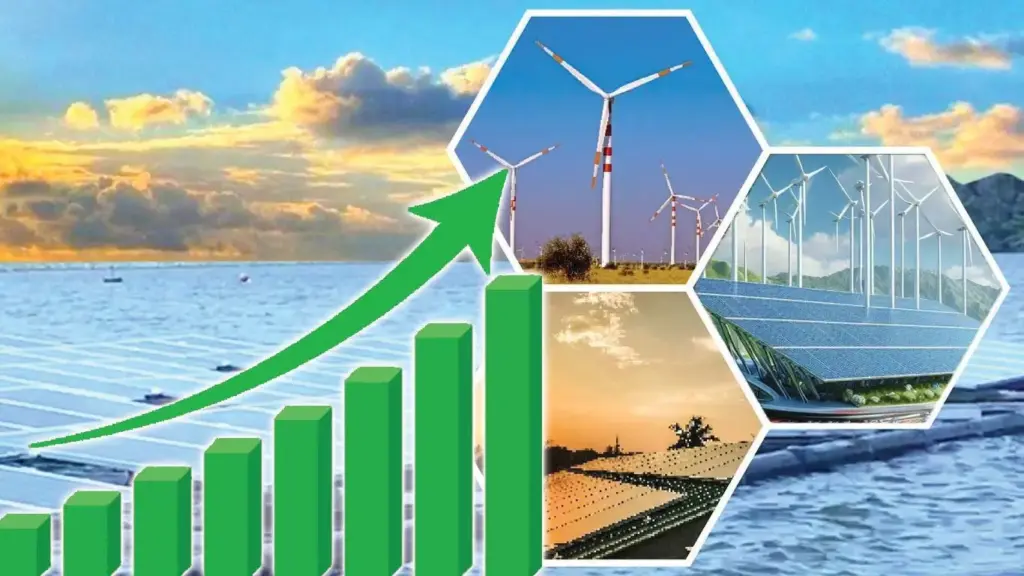
India’s power sector is undergoing a measurable transformation. Official data show that India’s New Power Capacity now accounts for the largest share of newly added electricity generation capacity, outpacing fossil fuels in recent expansion cycles.
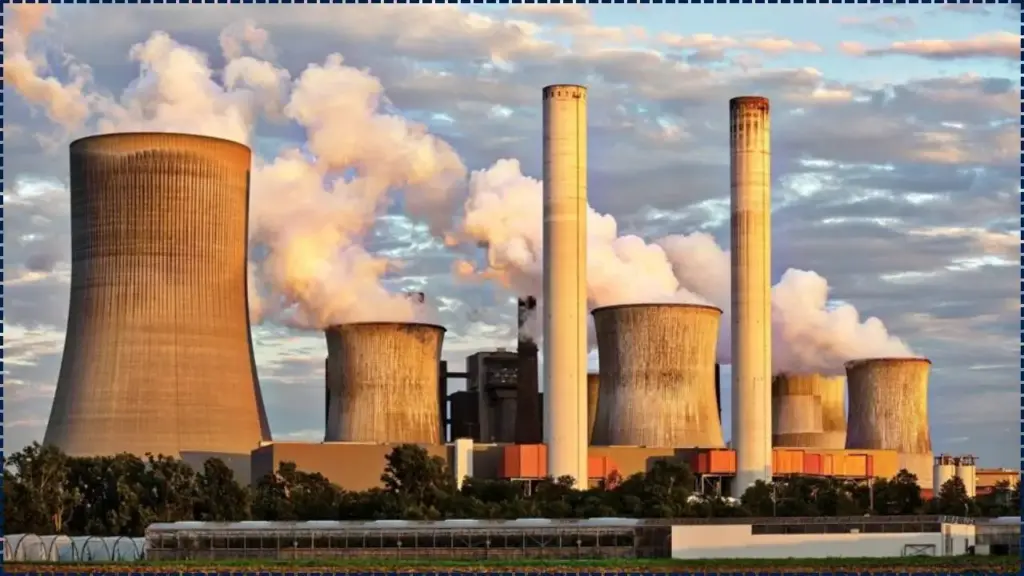
The trend reflects falling costs, supportive policy frameworks, and rising electricity demand, while coal additions have slowed compared to renewable growth. The shift does not eliminate coal from India’s energy system. Instead, it signals a change in how new capacity is being built to meet future demand.
India’s New Power Capacity Now Drives Most New Capacity Growth
According to data from the Central Electricity Authority (CEA) and the Ministry of Power, India added more than 50 gigawatts (GW) of new capacity in the most recent fiscal cycle. Renewable energy contributed the majority of this expansion, with solar representing the largest component.
Solar’s share of annual capacity additions has steadily increased over the past five years. Coal-based additions, while continuing, have grown at a comparatively slower rate.
The Ministry of New and Renewable Energy (MNRE) has stated that renewable deployment remains central to achieving India’s target of 500 GW of non-fossil capacity by 2030. Solar capacity, both utility-scale and rooftop, forms the backbone of that strategy.
“Renewables are becoming the primary source of incremental capacity,” an MNRE official said during a recent review meeting.
Why Solar Is Leading the Shift
Declining Costs and Competitive Tariffs (KW2)
The cost of solar generation has fallen significantly over the past decade. According to the International Renewable Energy Agency (IRENA), utility-scale solar power is now among the least expensive forms of new electricity generation globally.
In India, competitive auctions conducted by the Solar Energy Corporation of India (SECI) have delivered record-low tariffs. These lower tariffs have strengthened the financial case for solar compared with new coal plants.
“Solar power has reached cost parity, and in many cases is cheaper than new fossil fuel projects,” said an energy analyst at the Council on Energy, Environment and Water (CEEW).
Policy Support and Energy Security (KW3)
India’s renewable growth aligns with its climate commitments under the Paris Agreement and its pledge to achieve net-zero emissions by 2070. Government initiatives such as the Production Linked Incentive scheme and customs duties on imported modules aim to build domestic manufacturing strength.
Energy security is another factor. Diversifying power generation sources reduces exposure to fuel price volatility and import dependence.
During recent international forums, government representatives emphasised that expanding renewable capacity strengthens both economic resilience and environmental sustainability.
Coal Remains Central but Expands More Slowly
Coal continues to provide the majority of India’s electricity generation. According to CEA figures, coal-based power plants supply more than half of the country’s electricity.
Officials from the Ministry of Coal maintain that coal will remain an essential base load source in the medium term. Electricity demand has been rising due to industrial growth, urban expansion, and improved household access.
“Energy transition must proceed alongside energy security,” a senior coal ministry official said at a policy seminar. “We are adding renewables rapidly, but stable generation remains critical.”
New coal plants are still under development, though at a pace that lags behind renewable expansion.
Electricity Demand Growth and Urbanisation
India’s electricity demand has grown steadily, driven by expanding manufacturing, increased air conditioning use during heatwaves, and rural electrification.
The Central Electricity Authority projects continued demand growth over the next decade. Solar energy is expected to meet a significant portion of this incremental demand due to its scalability and cost competitiveness.
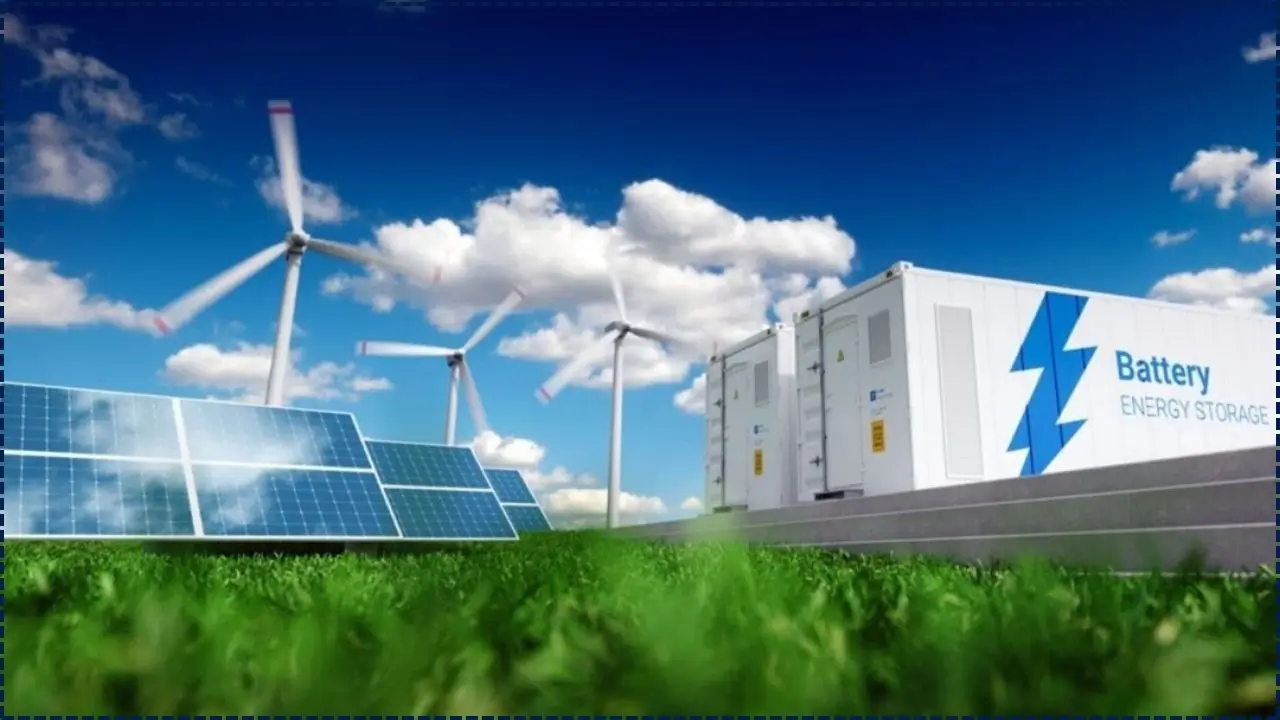
The Battery Boom: Why storage sector stocks are predicted to see a 5x jump in the next 5 years
Urbanisation also plays a role. Growing cities require expanded transmission networks and decentralised generation options. Solar installations, including rooftop systems, help meet these emerging needs.
Grid Stability and Storage Investments (KW4)
As solar capacity increases, grid management becomes more complex. Solar output fluctuates based on sunlight availability, creating challenges for maintaining stable supply.
The Grid Controller of India Limited, formerly POSOCO, has emphasised the importance of flexible generation, battery storage, and improved forecasting.
Battery energy storage systems are being introduced to manage peak demand periods and integrate renewable output more effectively. Pumped hydro storage projects are also under development.
An analyst at the International Energy Agency noted that “higher shares of solar require coordinated investment in transmission infrastructure and storage solutions.”
Rooftop Solar and Distributed Generation
India’s residential rooftop solar sector is gaining renewed policy focus. Government subsidy programmes aim to expand adoption among households and small businesses.
Distributed solar reduces transmission losses and enhances grid resilience. It also empowers consumers to manage electricity costs more effectively. Industry groups argue that simplified regulatory procedures and accessible financing are essential to accelerate rooftop growth.
Investment and Private Sector Participation
Major Indian conglomerates and international investors have committed significant capital to renewable energy projects. According to reports by Reuters and Bloomberg, investment in India’s renewable sector has increased steadily in recent years.
The Production Linked Incentive scheme has encouraged domestic manufacturing of solar modules and cells. This supports job creation and strengthens supply chains.
However, analysts caution that manufacturing growth must align with steady demand to avoid oversupply conditions in the equipment market.
Employment and Just Transition Considerations
Renewable expansion creates employment opportunities across construction, installation, operations, and maintenance. The International Labour Organization (ILO) has highlighted the job potential of renewable industries in developing economies.
At the same time, coal-dependent regions face economic adjustment challenges. Policymakers are examining strategies to support workers and communities affected by the gradual shift in energy investments. Ensuring a balanced and inclusive transition remains a priority in policy discussions.
Environmental and Public Health Impact
Solar expansion contributes to reducing greenhouse gas emissions and improving air quality. Coal combustion remains a major source of particulate matter and carbon dioxide emissions.

According to the Central Pollution Control Board, improved renewable penetration can help mitigate urban air pollution over time. Environmental experts note that sustained renewable deployment is critical to meeting national and international climate targets.
International Comparisons
Globally, renewable energy is expanding rapidly. According to the International Energy Agency, renewables accounted for the majority of new global power capacity additions in recent years.
India’s trajectory aligns with broader global trends, though each country’s energy mix remains shaped by domestic resource availability and economic priorities. India’s scale and population make its energy transition particularly significant for global climate outcomes.
Challenges Ahead
Despite solar’s dominance in new additions, challenges remain. These include land acquisition, transmission bottlenecks, financing costs, and technology upgrades.
Rapid capacity growth must be supported by robust planning and regulatory clarity. Without coordinated grid investment, renewable integration could face delays.
Experts stress that careful sequencing of infrastructure development will determine long-term success.
Related Links
Solar energy now dominates India’s new power capacity additions, marking a pivotal shift in investment patterns. Falling costs, supportive policies, and rising electricity demand have accelerated renewable expansion.
Coal continues to supply the majority of electricity, but its role in new capacity growth has slowed. The transition reflects economic and strategic priorities rather than abrupt replacement.
India’s energy future will depend on balancing renewable expansion with grid reliability, storage development, and inclusive economic planning. Solar may lead new additions today, but the broader transformation will unfold gradually as infrastructure, policy, and market forces evolve.