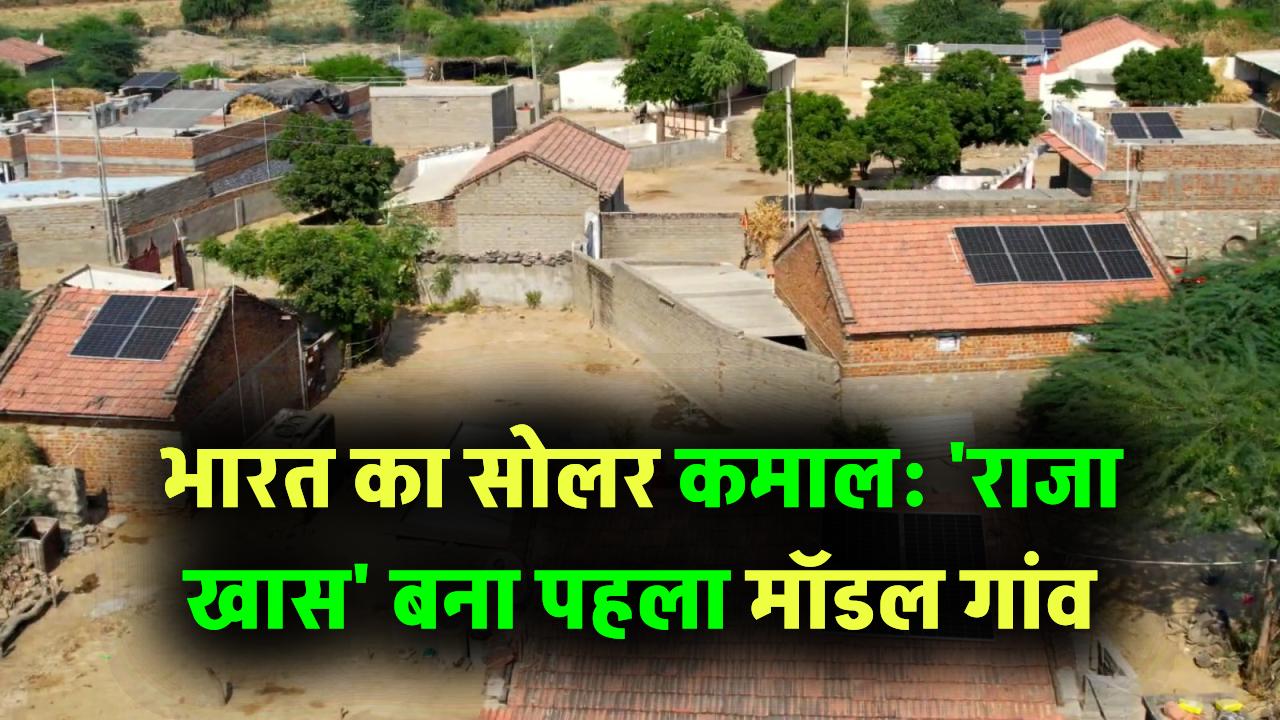

India’s ambitious rooftop solar initiative — the PM Surya Ghar: Muft Bijli Yojana — is accelerating household adoption of clean energy and reshaping the investment landscape for solar companies.
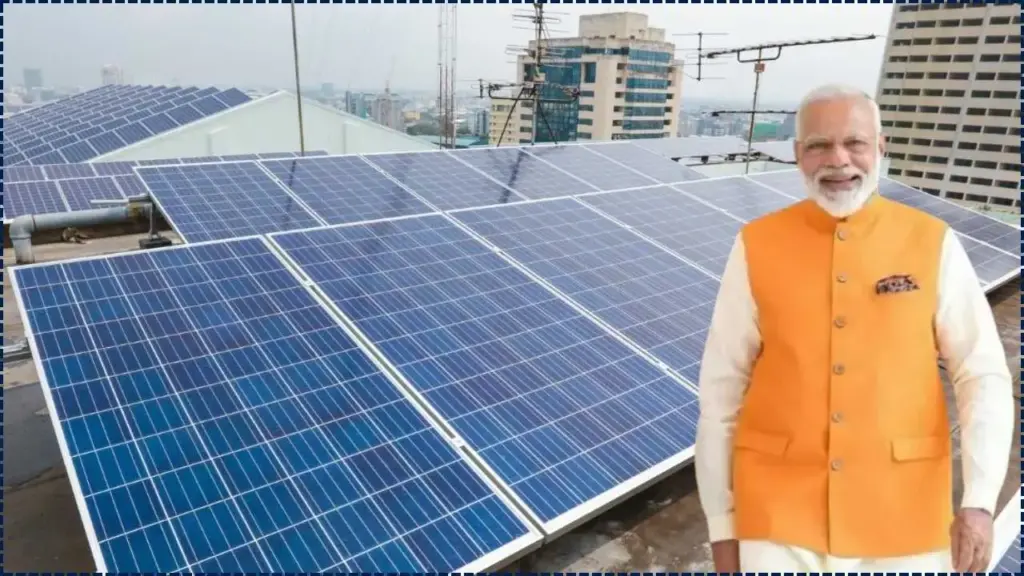
Since its launch in February 2024, the scheme has triggered a surge in residential demand, strengthening order books and boosting market sentiment in select renewable energy stocks.
The Policy Behind the Rally
The Pradhan Mantri Surya Ghar: Muft Bijli Yojana aims to install rooftop solar systems on one crore (10 million) households by March 2027. According to the Ministry of New and Renewable Energy (MNRE), eligible families can receive subsidies of up to ₹78,000 for installing systems of up to 3 kilowatts.
The programme has an estimated financial outlay exceeding ₹75,000 crore. It is designed to provide up to 300 units of free electricity per month to participating households. Prime Minister Narendra Modi stated during the announcement that the initiative would help families reduce power bills while strengthening India’s clean energy transition.
According to government data, rooftop solar installations have already crossed several lakh applications within months of launch. Analysts say this early momentum has signalled long-term demand stability for the sector.
PM Surya Ghar Scheme: Why PM Surya Ghar Scheme Is Influencing Solar Stocks
The PM Surya Ghar Scheme has become central to investor discussions in India’s renewable energy market.
Unlike utility-scale solar parks, rooftop installations distribute demand across millions of households. This broad-based demand benefits manufacturers, EPC contractors, inverter suppliers, financing institutions, and service providers.
Energy policy expert Dr. Arunabha Ghosh, Chief Executive Officer of the Council on Energy, Environment and Water (CEEW), has previously noted that distributed solar “reduces stress on distribution companies and enhances grid resilience.”
Brokerage analysts say this structural demand expansion strengthens revenue visibility for companies operating across the value chain. However, they also caution that stock prices may run ahead of fundamentals during periods of policy optimism.
Market Reaction and Capital Flows
Since the scheme’s announcement, several solar-linked companies have recorded notable stock price movements. Market analysts attribute part of this momentum to improved policy clarity and long-term subsidy backing.
According to data from the National Stock Exchange (NSE), renewable energy stocks have experienced higher trading volumes following major policy announcements related to rooftop solar.
Foreign portfolio investors have also increased exposure to renewable energy companies, reflecting confidence in India’s 2030 clean energy roadmap. The government aims to reach 500 gigawatts (GW) of non-fossil fuel capacity by 2030, with solar forming a major share.
The International Energy Agency (IEA) has identified India as one of the fastest-growing solar markets globally, driven by declining costs and strong policy frameworks.
Companies Positioned to Benefit
1. Adani Green Energy Ltd
Adani Green Energy Ltd (AGEL) operates one of India’s largest renewable energy portfolios. Although primarily focused on utility-scale projects, broader solar adoption strengthens ecosystem demand.
AGEL targets 45 GW of renewable capacity by 2030. Its long-term power purchase agreements (PPAs) provide stable cash flow. Analysts, however, monitor its debt levels closely.
2. Tata Power Company Ltd
Tata Power, part of the Tata Group, has expanded aggressively into rooftop solar solutions. The company offers residential solar installation services, financing options, and integrated energy solutions.

In recent investor calls, company executives highlighted strong growth in rooftop orders. Tata Power aims to scale renewable capacity significantly over the coming years.
3. Waaree Renewables Technologies Ltd
Waaree Renewables Technologies Ltd combines manufacturing and EPC services. As rooftop installations increase, its vertically integrated structure allows it to capture both module sales and project execution revenue.
The company has expanded manufacturing capacity under the government’s Production Linked Incentive (PLI) scheme.
4. Borosil Renewables Ltd
Borosil Renewables Ltd manufactures solar glass used in photovoltaic modules. Increased domestic manufacturing demand strengthens its business prospects.
Industry observers say India’s push for self-reliance in solar components reduces exposure to global trade volatility.
5. KPI Green Energy Ltd
KPI Green Energy Ltd operates distributed and captive solar power projects. Smaller companies such as KPI may see sharper stock movements due to limited market capitalisation. Analysts advise investors to review balance sheet strength and contract pipelines carefully.
Impact on Distribution Companies (DISCOMs)
One often-overlooked aspect of the PM Surya Ghar Scheme is its impact on state electricity distribution companies (DISCOMs). Distributed solar reduces peak demand pressure but can affect revenue streams if higher-paying urban customers generate their own electricity.
The government has indicated that policy frameworks will balance financial sustainability of DISCOMs while promoting rooftop adoption. Energy economists note that reforms in tariff design and smart metering will be essential to ensure stability.
Financing and Banking Sector Role
Public sector banks and non-banking financial companies are playing a growing role in financing rooftop solar systems. Access to low-interest loans reduces upfront barriers for households. According to industry estimates, improved financing penetration could accelerate installations beyond initial targets.
Banking analysts say loan performance will depend on system reliability and subsidy disbursement timelines.
Supply Chain and Manufacturing Push
India has launched PLI schemes to encourage domestic manufacturing of solar modules, cells, and wafers. This reduces reliance on imports and supports employment generation.
According to government data, domestic solar manufacturing capacity has expanded significantly over the past three years. However, global price fluctuations in polysilicon and other raw materials remain risk factors.
Risks and Caution for Investors
Despite policy tailwinds, risks remain:
- Execution delays at state level
- Supply chain disruptions
- High capital expenditure requirements
- Regulatory adjustments
- Elevated stock valuations
A Mumbai-based renewable sector analyst said, “Structural demand is positive, but investors must evaluate earnings growth rather than rely solely on policy headlines.”
Environmental and Social Benefits
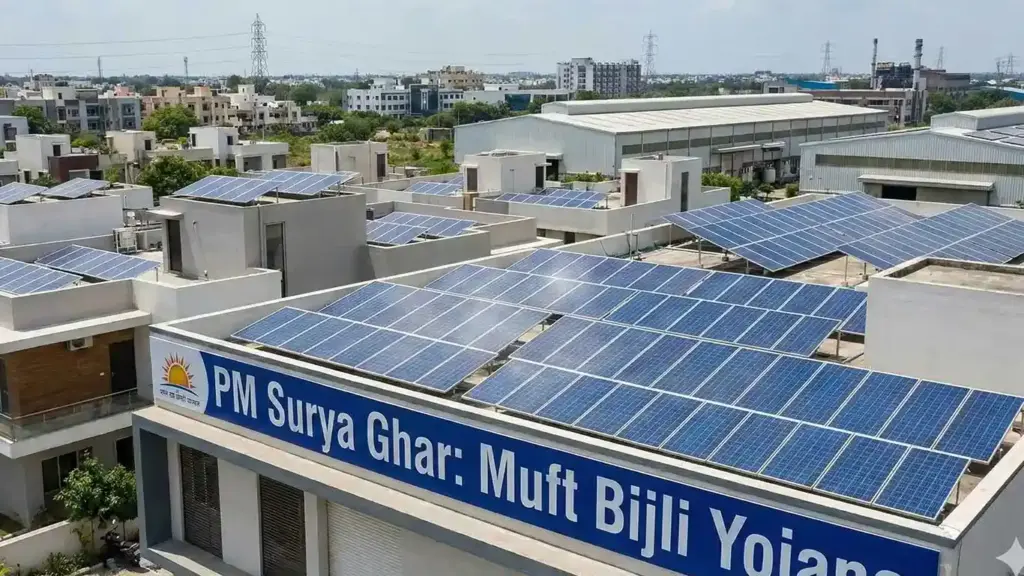
Rooftop solar expansion reduces carbon emissions and supports India’s net-zero target for 2070. Distributed systems lower transmission losses and empower households as “prosumers.”
The World Bank and other multilateral institutions have repeatedly emphasised the role of decentralised renewable energy in improving energy security.
Related Links
India’s Export Leap! How the Green Hydrogen jump is making these 3 Indian companies global leaders
The Battery Boom: Why storage sector stocks are predicted to see a 5x jump in the next 5 years
Long-Term Outlook
India’s rooftop solar capacity remains significantly below its technical potential. If implementation remains steady and financing channels expand, analysts believe rooftop installations could become a major pillar of India’s energy mix.
The PM Surya Ghar Scheme has strengthened policy credibility and improved market confidence. However, sustainable stock performance will depend on profitability, operational discipline and long-term capital management.
The PM Surya Ghar scheme represents a significant policy intervention aimed at democratizing solar energy in India. By combining subsidies, financing support and domestic manufacturing incentives, the government has expanded opportunities across the renewable value chain.
While solar stocks have responded positively, experts stress that long-term gains will depend on execution, financial health and regulatory stability rather than short-term enthusiasm.