A groundbreaking innovation in solar technology, Scientists Unveil A New “Tandem Cell”—the development of tandem solar cells—has reached a new milestone with 32% efficiency, surpassing the previous limits of traditional silicon-based solar panels.
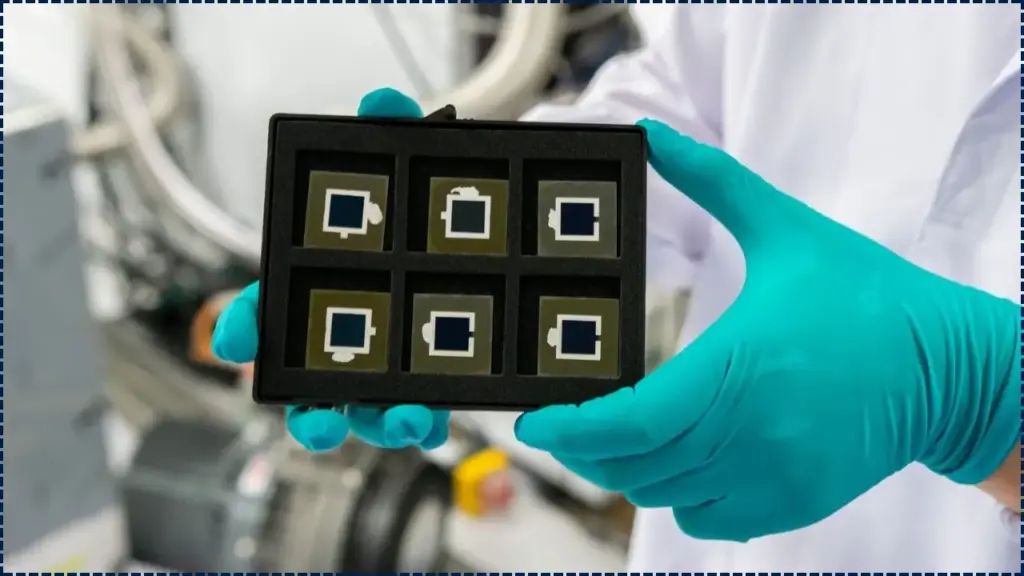
This breakthrough, achieved by combining perovskite with silicon in a stacked configuration, promises to dramatically enhance the performance, affordability, and accessibility of solar energy, paving the way for a new era of rooftop solar power.
What Are Tandem Solar Cells?
Tandem solar cells are an advanced type of photovoltaic (PV) technology that stack multiple light-absorbing layers on top of one another to increase efficiency. Traditional silicon solar cells, while dominant in the market, are nearing their theoretical efficiency limit of 33%.
This limitation arises because silicon can only absorb certain wavelengths of light, leaving other parts of the spectrum unused. Tandem cells, on the other hand, overcome this by using two or more materials that absorb different parts of the solar spectrum. The most common pairing involves combining perovskite with silicon.
Perovskite materials are highly efficient at absorbing high-energy light (like blue and UV light), while silicon efficiently absorbs lower-energy light (like red and infrared). By stacking these materials, tandem cells can capture more sunlight, producing more electricity than traditional single-junction silicon cells.
The 32% Efficiency Breakthrough
Record-Breaking Tandem Cell Efficiency
In recent experiments, researchers at institutions such as Helmholtz-Zentrum Berlin and Oxford University achieved a 32% efficiency for perovskite-silicon tandem solar cells. This breakthrough represents a significant leap in the solar energy field, far surpassing the efficiency of conventional silicon cells, which typically hover around 20% efficiency under ideal conditions.
In fact, this efficiency level is a world record for perovskite-silicon tandem cells, marking a historic milestone for the solar industry. The performance of tandem cells has been steadily improving in recent years, but reaching 32% efficiency positions them as a viable contender for mainstream solar energy solutions.
The previous record was 29.5%, but this new development opens up exciting possibilities for scaling up this technology. By combining materials with complementary properties, tandem cells are able to capture a wider range of light energy, converting more sunlight into electricity.
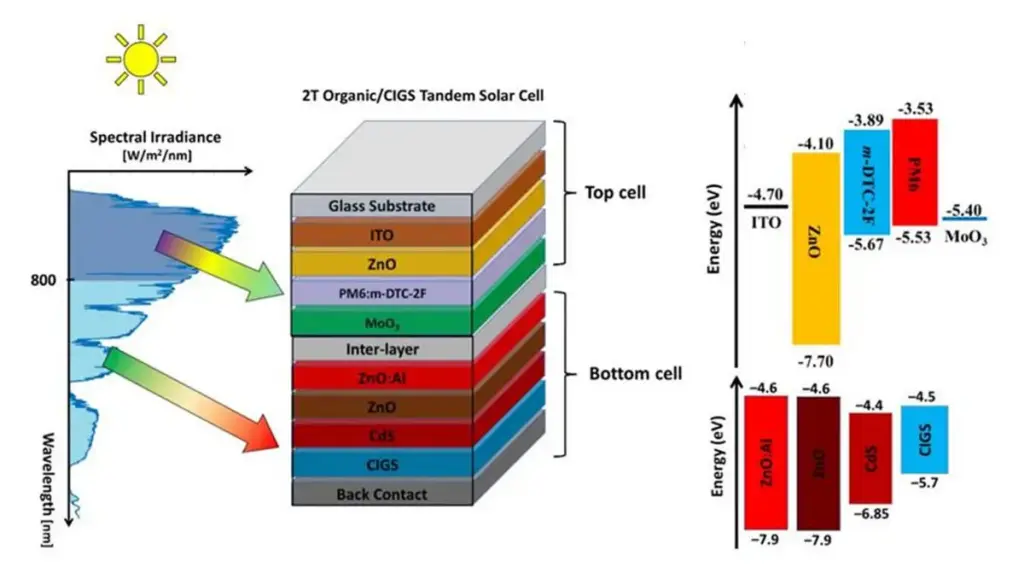
How Do Tandem Solar Cells Work?
Tandem solar cells achieve their high efficiency by stacking layers of photovoltaic materials to capture more of the solar spectrum. In these cells, perovskite absorbs the higher-energy light (like blue light), while silicon absorbs lower-energy light (like red and infrared light).
Key Mechanisms:
- Perovskite Top Cell: The top layer of a tandem solar cell is typically made from perovskite, a material known for its high efficiency and cost-effectiveness. Perovskite absorbs higher-energy wavelengths of sunlight and converts them into electrical current.
- Silicon Bottom Cell: Below the perovskite layer is the silicon cell, which absorbs lower-energy wavelengths. While silicon has a lower absorption efficiency for high-energy light, it complements the perovskite cell by capturing the light that perovskite cannot, resulting in a more complete capture of sunlight.
- Electrical Conversion: Both layers work together to generate a greater current than either material could individually. This stacking approach allows tandem solar cells to achieve higher power conversion efficiencies.
By optimizing the interface between the layers and using advanced manufacturing techniques, the efficiency of tandem cells can be further improved, potentially reaching even higher efficiency levels in the future.
Why This Breakthrough Matters for Rooftop Solar
More Power with Less Space
For homeowners and businesses, the increase in efficiency translates into more power generated from the same amount of space. 32% efficiency means that tandem solar panels could produce up to 50% more electricity per square meter than conventional silicon panels.
This is especially valuable in urban areas where roof space is limited, making it harder to meet energy needs with traditional panels.

Faster Return on Investment
With more energy being produced per panel, homeowners can expect a shorter payback period for their investment in solar panels. As the cost of installation comes down and performance improves, homeowners can expect to recover their initial costs more quickly, leading to higher overall savings.
In addition, the increased efficiency could make solar more viable for households in regions with less sunlight or shorter daylight hours. These more efficient panels could help meet energy demands in areas that traditionally haven’t been seen as suitable for solar energy.
Driving Down Solar Costs
While the new 32% efficiency in tandem cells is exciting, the next big step will be scaling up the manufacturing of these high-efficiency panels. Currently, perovskite materials are cheaper to produce than silicon, but scaling up the production of tandem solar cells could drive further cost reductions.
As manufacturing processes become more efficient, tandem solar panels could eventually cost less than traditional silicon-based panels, making solar energy accessible to even more people around the world.
Challenges to Commercialization
While the potential for tandem solar cells is huge, there are still some hurdles to overcome before these cells can be mass-produced and installed on rooftops worldwide:
1. Long-Term Stability
One of the biggest challenges with perovskite materials has been their long-term stability. Perovskites are known to degrade when exposed to moisture, oxygen, and ultraviolet (UV) light. Researchers are working on improving the durability of these cells so that they can last as long as traditional silicon panels, which have a lifespan of 25–30 years.
2. Scalability of Production
Manufacturing perovskite-based tandem cells at scale is more challenging than producing silicon-based solar panels. However, roll-to-roll processing and other scalable manufacturing techniques could make mass production a reality in the coming years.

3. Environmental Concerns
Many perovskite formulations contain lead, which could present environmental risks if the panels are damaged or improperly disposed of. Researchers are working on lead-free alternatives, but these are still in the early stages of development and may not yet match the efficiency of lead-based formulations.
4. Cost of Manufacturing
Although perovskite solar cells have shown great promise in terms of efficiency and lower material costs, the infrastructure required for large-scale production still needs investment. New manufacturing plants and techniques will need to be developed to support the anticipated demand for tandem solar cells.
Related Links
The Future of Solar: A New Era for Your Roof
The 32% efficiency breakthrough in tandem solar cells is just the beginning. As research and manufacturing techniques improve, we could see solar panels that are more efficient and cheaper than ever before. These improvements will likely lead to faster adoption of solar energy, especially in residential and commercial markets.
With continued advancements, tandem solar technology could eventually become the standard for solar panels, helping to accelerate the global transition to renewable energy. In the coming years, rooftop solar could become a primary source of energy for homeowners worldwide, providing clean, affordable, and reliable power.
As solar technology continues to advance, homeowners and businesses can look forward to a future in which solar energy is even more efficient, cost-effective, and accessible.
This marks the beginning of a new era in solar power — one where your roof could become a primary source of energy for your home or business.