Poland has crossed a symbolic and strategic threshold in its energy transition, with renewable sources accounting for just over 50% of the country’s installed electricity generation capacity at the end of 2025. The milestone marks a significant shift in a nation long identified with coal-dependent power generation.
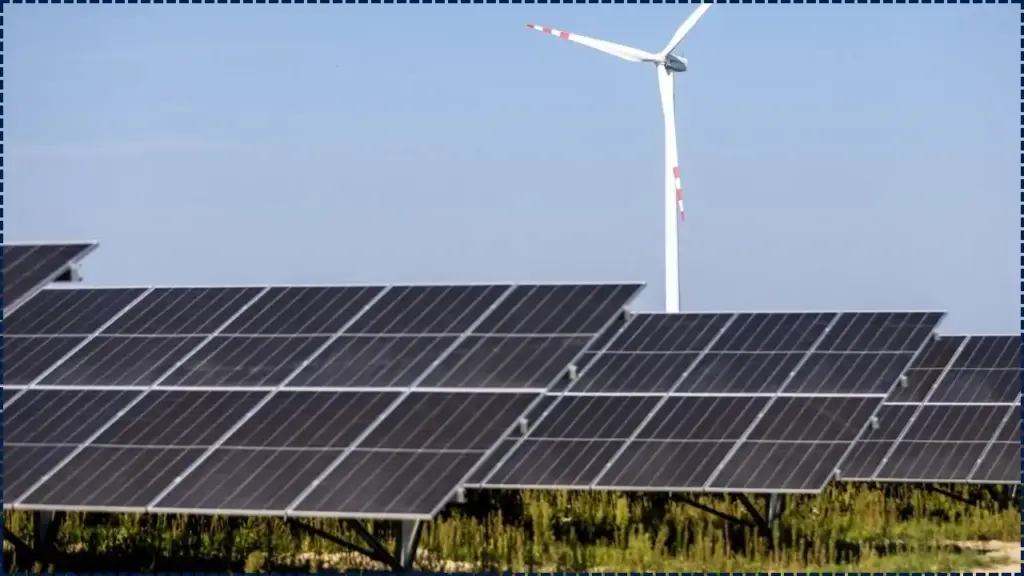
According to preliminary data released by Poland’s Ministry of Climate and Environment and cited by regional energy analysts, renewable capacity reached approximately 37.8 gigawatts (GW), representing 50.04% of total installed capacity. The surge has been driven primarily by rapid growth in solar photovoltaics and onshore wind.
While renewables now dominate installed capacity, fossil fuels — especially coal — still supply the majority of Poland’s actual electricity generation. Analysts stress that the 50% figure refers to potential maximum output, not real-time generation. Even so, the development signals a structural change in investment and infrastructure priorities.
Poland Crosses Historic 50% Renewable Energy Milestone
The moment that Poland crosses historic 50% renewable energy milestone reflects more than a statistical achievement. It marks a turning point in a country where coal once generated over 70% of electricity.
Installed capacity measures how much electricity plants could produce under ideal conditions. Because solar and wind output depends on weather, their generation share remains lower than their capacity share. According to independent European grid data, renewables supplied roughly 29–32% of Poland’s electricity generation in 2025.
Nevertheless, surpassing the 50% capacity threshold indicates that new investment overwhelmingly favors renewable infrastructure rather than fossil fuels.
Solar Power Drives Record Growth
Rapid Expansion of Photovoltaics
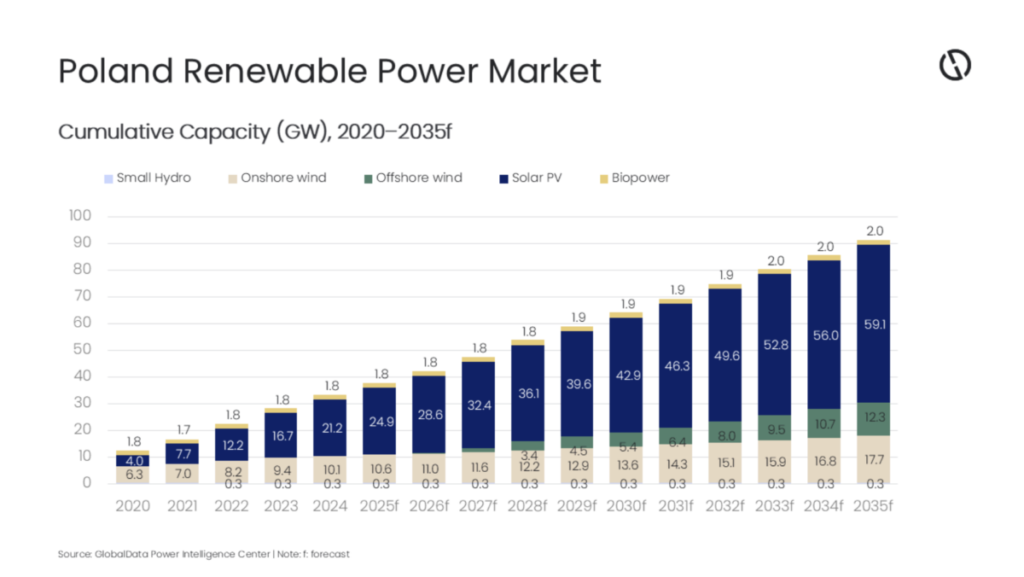
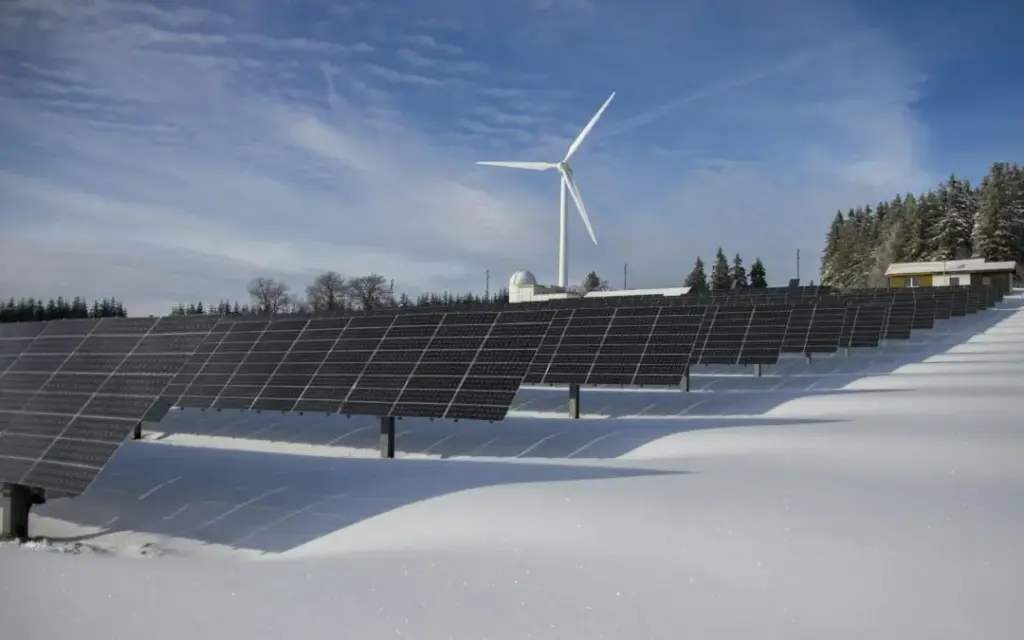
Solar energy has been the primary engine behind Poland’s renewable surge. Installed solar capacity grew from less than 4 GW in 2020 to nearly 25 GW by the end of 2025, according to European energy market trackers.
The expansion has been supported by national incentive programs for residential “prosumers,” tax deductions, and European Union climate funds. Falling equipment costs have also made rooftop solar economically attractive to households and small businesses.
Energy economist Dr. Aleksandra Nowak of the University of Warsaw said the speed of solar deployment has exceeded earlier projections. “Five years ago, few anticipated that photovoltaics would dominate Poland’s renewable portfolio so quickly,” she noted in a recent policy discussion.
Wind Energy Strengthens Its Position
Onshore Wind Recovery
Onshore wind capacity rose to more than 10.5 GW in 2025. Growth had slowed earlier in the decade due to restrictive distance laws governing turbine placement. However, regulatory adjustments and improved planning frameworks have revived project pipelines.
Offshore wind is expected to become the next major contributor. Large-scale projects in the Baltic Sea are scheduled for phased commissioning later this decade, potentially adding several gigawatts of stable generation capacity.
Energy analysts say offshore wind will be crucial in increasing not only renewable capacity but also renewable generation share, as offshore wind tends to have higher and more consistent output than solar.
Coal Still Dominates Generation
Capacity vs. Electricity Production
Although Poland crosses historic 50% renewable energy milestone in capacity terms, coal remains central to electricity production. Hard coal and lignite plants continue to provide grid stability and baseload supply.
According to European grid data, coal accounted for roughly half of Poland’s electricity generation in 2025. Gas-fired plants and imports supplement the system during periods of low renewable output.
Grid specialists caution that without expanded storage and interconnection upgrades, renewable capacity alone cannot fully displace fossil generation. “Installed capacity does not automatically translate into energy security,” said Tomasz Lewandowski, a Warsaw-based grid analyst.
European Union Influence and Climate Targets
Poland’s renewable growth has unfolded within a broader European policy framework. Under the European Union’s climate legislation, member states must increase renewable energy shares and reduce greenhouse gas emissions.
Poland’s National Energy and Climate Plan outlines targets for higher renewable deployment by 2030, alongside gradual coal phase-down and the introduction of nuclear power. EU modernization funds have supported grid upgrades and renewable investments.
The milestone comes as the European Union intensifies efforts to reduce reliance on imported fossil fuels and accelerate clean energy development.
Economic and Social Implications
Investment and Job Creation
The renewable surge has generated investment across manufacturing, construction, and maintenance sectors. Solar installation companies have expanded rapidly, and wind component supply chains have grown.
Industry groups estimate that Poland’s renewable sector now supports tens of thousands of jobs. Economists note that renewable deployment can help stabilize electricity prices over time because wind and solar have lower operating costs once built.
However, coal-dependent regions face transition challenges. Mining communities remain economically tied to fossil fuel industries, and policymakers must manage the social dimensions of the energy shift.
Grid Integration and Storage Challenges
Balancing Intermittency
A system where renewables exceed half of installed capacity requires flexible grid management. Solar production peaks in summer afternoons, while demand often rises in winter evenings. Wind output fluctuates with weather systems.
To address these challenges, Poland is expanding battery storage projects and improving cross-border interconnections with Germany, the Czech Republic, and Lithuania. Pumped hydro storage also plays a role in balancing supply and demand.
Experts argue that further digitalization and smart grid investment will be essential to convert capacity milestones into reliable low-carbon generation.
Long-Term Outlook: Toward 2030 and Beyond
Poland’s long-term energy strategy includes nuclear development alongside renewables. The government has outlined plans for its first nuclear power plant in the 2030s, intended to complement wind and solar output.
Analysts say the combination of nuclear baseload and renewable growth could accelerate coal retirement if implemented effectively.
Dr. Nowak emphasized that crossing the 50% capacity threshold is a beginning rather than an endpoint. “This is a structural pivot,” she said. “But sustained policy consistency will determine whether renewables also dominate actual generation.”
Related Links
When Poland crosses historic 50% renewable energy milestone, it signals a fundamental shift in infrastructure investment and policy direction. Although fossil fuels still dominate electricity generation, renewable capacity now defines the country’s future energy architecture.
Continued grid upgrades, storage deployment, and policy stability will determine how quickly that capacity translates into lasting decarbonization.
FAQs
Q: Does the 50% milestone mean renewables produce half of Poland’s electricity?
No. The milestone refers to installed capacity. Actual electricity generation from renewables remains below 50% because output depends on weather and grid balancing.
Q: What technologies drove the milestone?
Solar photovoltaics and onshore wind were the primary contributors, supported by EU funding and national incentive programs.