As global solar installations surpass the one-terawatt mark, a less visible but rapidly expanding sector is gaining attention: solar panel cleaning. Analysts estimate that the Solar Panel Cleaning market — solar panel cleaning — could reach approximately $1.7 billion annually, driven by mounting evidence that dust, pollution, pollen, and debris significantly reduce photovoltaic efficiency.
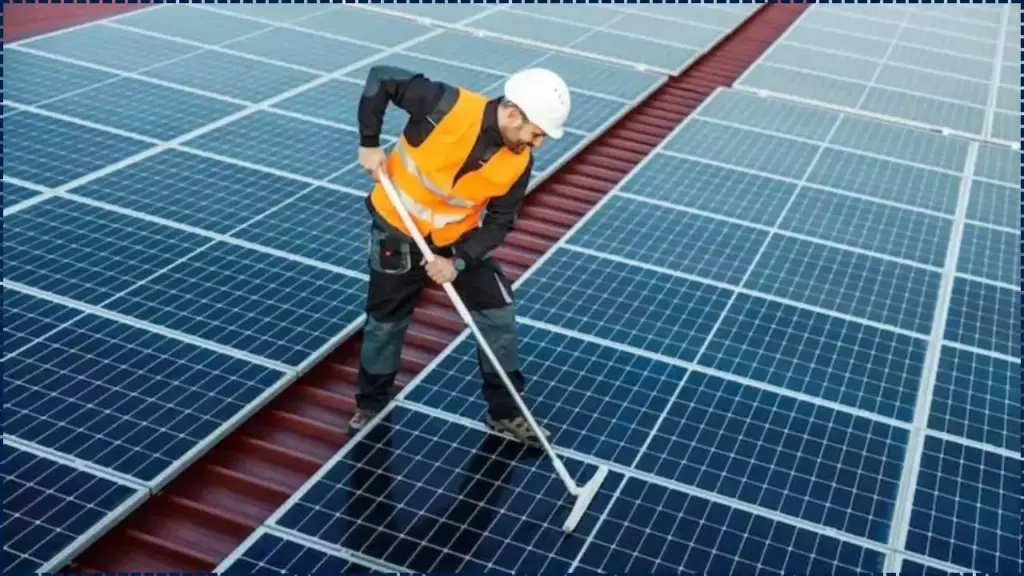
With solar energy now central to global decarbonization strategies, maintaining panel performance has become an operational, financial, and environmental priority.
Solar Panel Cleaning
| Key Fact | Detail |
|---|---|
| Estimated Market Value | ~$1.7 billion annually |
| Global Solar Capacity | Surpassed 1 terawatt |
| Soiling Loss Range | 2%–30% depending on region |
| Solar Asset Lifespan | 25–30 years typical |
Solar Panel Cleaning: Solar Panel Cleaning Becomes Strategic
The Solar Panel Cleaning sector — solar panel cleaning — has evolved from routine maintenance into a strategic component of renewable asset management.
According to research from the National Renewable Energy Laboratory (NREL), soiling can reduce photovoltaic output by 5% on average, with losses exceeding 20% in high-dust or polluted regions.
“Performance degradation from soiling is measurable and material,” said Dr. Joshua Stein, a photovoltaic performance expert at NREL. “In large solar farms, cleaning decisions directly affect revenue.”
Because utility-scale plants often operate under long-term power purchase agreements (PPAs), even small efficiency losses can translate into substantial financial impact.
The Economics Behind the $1.7B Estimate
Solar farms are capital-intensive investments expected to operate for decades. Financial models assume certain generation levels over time.
When output falls below projections due to soiling, asset owners face reduced revenue and potential contractual penalties. Maria Lopez, an infrastructure analyst covering renewable assets, said, “Lenders and insurers now scrutinize maintenance plans closely. Cleaning is increasingly part of due diligence.”
As global solar capacity continues expanding — the International Energy Agency (IEA) reports record annual additions in recent years — the installed base requiring maintenance grows proportionally.
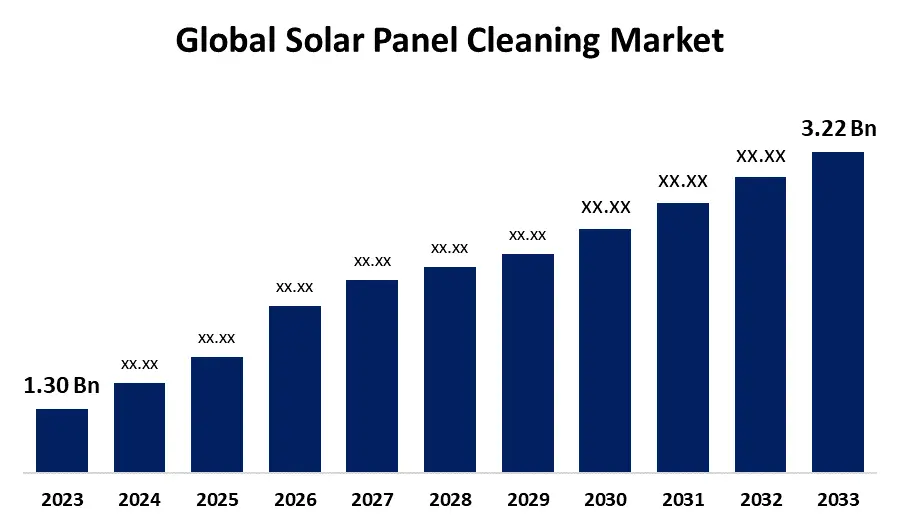
The estimated $1.7 billion opportunity reflects global service contracts across utility-scale, commercial, and distributed rooftop systems.
Soiling: More Than Just Dust
Solar panel soiling includes:
- Desert dust accumulation
- Industrial pollution particles
- Agricultural residue
- Bird droppings
- Salt deposits in coastal areas
Regional Variability
In desert regions such as the Middle East and northern India, soiling rates can rise rapidly between rainfall events.
In urban industrial areas, particulate pollution can create sticky grime that is not easily removed by rain. Even in temperate climates, pollen and seasonal debris affect output. NREL research indicates that natural rainfall rarely restores panels to original performance levels.
Capacity Factor and Long-Term Degradation
Soiling interacts with long-term panel degradation rates. Solar modules naturally degrade at approximately 0.5% annually. When combined with unmanaged soiling, effective performance loss can exceed expected projections.
Operators therefore consider cleaning frequency as part of lifecycle optimization.
“Asset management has matured,” said David Klein, chief executive of a renewable O&M company. “We now use real-time monitoring data to trigger cleaning only when economically justified.”
Water Use and Sustainability Concerns
Traditional cleaning methods rely heavily on water and manual labor. Large-scale solar farms can require thousands of gallons per cleaning cycle. In water-scarce regions, this creates environmental and cost concerns.
The International Renewable Energy Agency (IRENA) has noted that water consumption is an important factor in sustainable solar deployment.
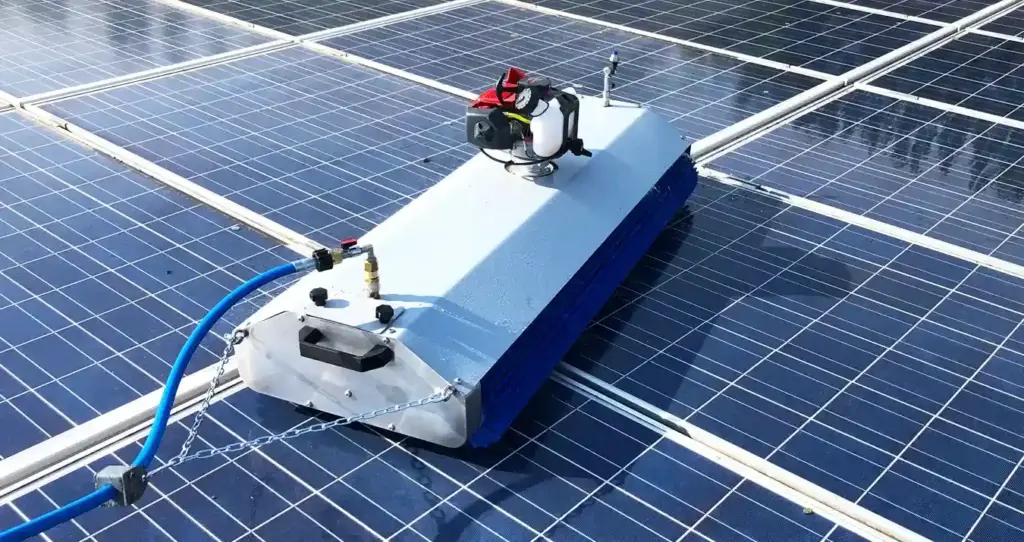
To address this, companies increasingly deploy waterless robotic cleaning systems that use microfiber brushes or air jets.
Robotics and Automation
Automation is reshaping the sector. Robotic systems can operate at night, reducing panel temperature stress and eliminating daytime production interruptions.
Automated systems also lower labor costs and improve worker safety. However, upfront capital costs remain higher than manual cleaning methods. Industry experts say robotics adoption is strongest in large desert installations where cleaning frequency is high.
Insurance, Financing, and Contractual Implications
Insurance providers increasingly require documented maintenance programs to mitigate performance risk. Financial institutions financing solar farms often assess cleaning schedules during underwriting.
Performance-based contracts may include clauses that penalize operators if output falls below thresholds not attributed to weather. Lopez noted, “Maintenance planning is now tied directly to credit risk assessment.”
Research and Innovation: Anti-Soiling Coatings
Researchers are developing anti-soiling coatings and hydrophobic materials to reduce dust adhesion. Universities and national laboratories are testing nano-coatings designed to repel particles or allow rainwater to remove debris more effectively.
Commercial adoption remains limited due to cost and durability concerns.
Dr. Emily Carter, an energy systems professor at Princeton University, said during a symposium, “Materials science innovation could eventually reduce cleaning frequency, but current technologies do not eliminate the need entirely.”
Regional Case Studies
Middle East
Solar farms in Saudi Arabia and the United Arab Emirates face frequent dust storms. Cleaning may occur multiple times monthly during peak dust seasons.
India
Rapid solar expansion in Rajasthan and Gujarat has driven demand for robotic cleaning solutions due to water scarcity.
United States
In states such as Arizona, Nevada, and Texas, cleaning frequency varies by season and rainfall patterns. Operators often use data analytics platforms to balance cleaning costs against revenue recovery.
ESG and Environmental Reporting
As environmental, social, and governance (ESG) metrics become central to investment decisions, maintenance transparency matters.

Havells का 15kW Solar Inverter कितने का मिलेगा? जानिए फीचर्स, कीमत और खरीदने से पहले की जरूरी बातें
Investors increasingly evaluate lifecycle sustainability, including water use, chemical runoff, and worker safety. Solar cleaning providers are responding by offering water-efficient technologies and biodegradable cleaning agents.
Market Risks and Limitations
Despite strong growth projections, the sector faces uncertainties:
- Anti-soiling coatings could reduce cleaning demand.
- Improved panel tilt design may mitigate accumulation.
- Market saturation in mature regions may slow service growth.
- Declining solar equipment costs could shift investment priorities.
Analysts caution that the $1.7 billion estimate depends on continued rapid global solar expansion.
Outlook Toward 2030
The IEA projects continued acceleration in solar deployment as countries pursue net-zero commitments. If installed solar capacity doubles by 2030, the cleaning market could expand proportionally.
Energy consultants expect increasing standardization of O&M contracts that include performance-based cleaning clauses. Klein said, “The industry is shifting from reactive cleaning to predictive maintenance.”
Related Links
Broader Significance
The rise of solar panel cleaning highlights the maturation of renewable energy markets. Early growth focused on installation capacity. The next phase emphasizes optimization and operational efficiency.
As solar becomes foundational to global electricity supply, maintaining performance over decades will be essential.
The estimated $1.7 billion opportunity represents not merely a niche service, but a reflection of solar’s transition from emerging technology to established infrastructure.
Solar panel cleaning has emerged as a critical maintenance frontier within the renewable energy sector. As photovoltaic capacity scales worldwide, ensuring panels operate at peak efficiency becomes both a financial imperative and an environmental responsibility.
The $1.7 billion market estimate underscores how operational excellence — not just installation growth — defines the next stage of the solar industry’s evolution.