
Australia’s rooftop solar capacity has reached a historic threshold, triggering what industry observers describe as a storage surge across the country’s electricity market. As distributed solar generation approaches saturation in several regions, demand for battery systems is accelerating rapidly, reshaping how households, utilities, and investors approach energy management.
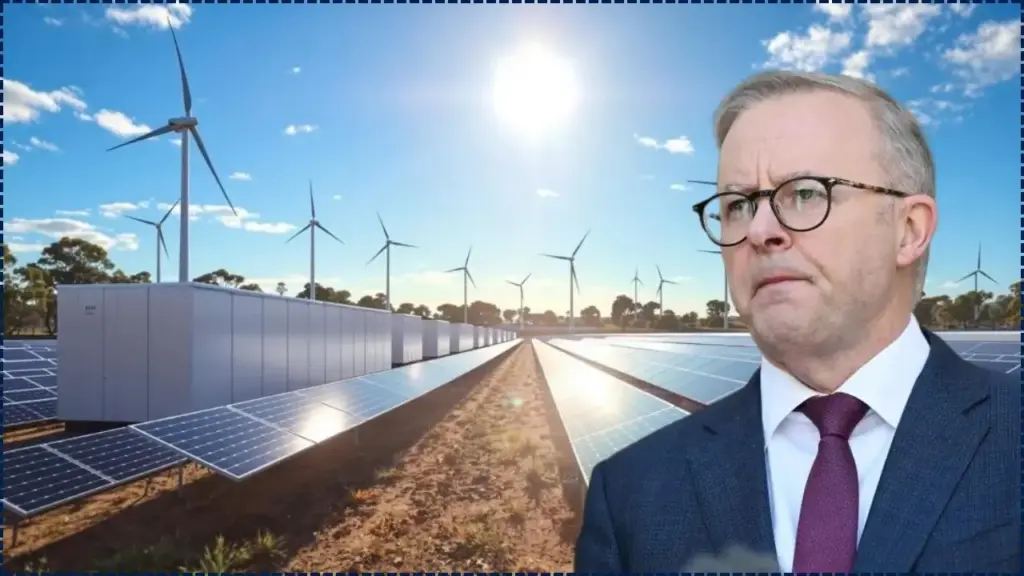
The Australian Solar Hits Peak Capacity shift reflects a structural change in Australia’s energy transition.
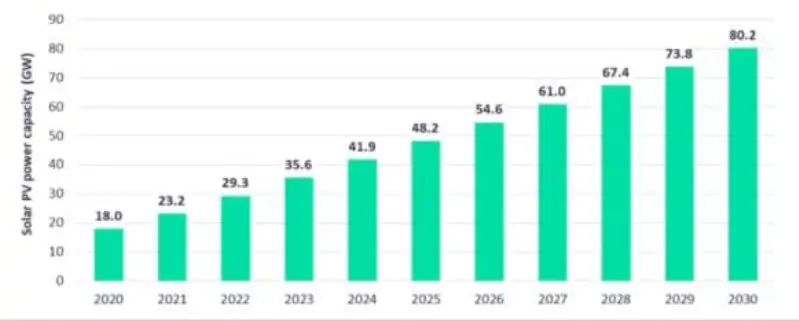
With rooftop solar exceeding 28 gigawatts (GW) nationwide and midday electricity demand regularly suppressed by solar output, storage is increasingly viewed as essential to maintaining grid stability and extracting economic value from renewable generation.
Australian Solar Hits Peak Capacity
| Key Metric | Detail |
|---|---|
| Rooftop Solar Capacity | ~28.3 GW installed |
| Home Batteries Installed (2025 H2) | ~183,000 units |
| Utility-Scale Storage Added (2025) | ~4.9 GWh |
| Forecast Residential Storage (2026) | Up to 12 GWh cumulative |
Australian Solar Hits Peak Capacity : Solar Saturation Drives Battery Expansion
The Australian Solar Hits Peak Capacity phenomenon is emerging as rooftop solar generation increasingly meets or exceeds daytime grid demand in parts of Australia’s National Electricity Market (NEM).
During peak solar hours, operational demand — the electricity drawn from large power stations — has at times fallen below 10,000 megawatts, according to the Australian Energy Market Operator (AEMO). In some regions, rooftop solar supplies the majority of electricity needs during midday.
This success creates a new challenge. Solar generation is abundant during daylight hours but drops sharply in the evening, precisely when residential consumption rises. Without storage, excess midday electricity can depress wholesale prices or be curtailed. Batteries are now positioned as the system’s balancing mechanism.
From Solar Boom to Storage Necessity
The Solar Expansion Story
Australia’s rooftop solar adoption began accelerating after generous feed-in tariffs were introduced in the late 2000s. Over time, falling photovoltaic costs and rising retail electricity prices sustained growth even as subsidies declined.
Today, more than one in three Australian households has rooftop solar. In some states, penetration exceeds 40 percent. However, as solar installations multiplied, grid dynamics began to shift dramatically.
Grid Stress, Curtailment and Negative Pricing
As rooftop generation surges midday, wholesale electricity prices have increasingly dipped toward zero or turned negative. Negative pricing occurs when generators effectively pay to supply electricity, often because shutting down thermal plants is costly or grid congestion limits exports.
Accordiang to AEMO market data, solar-heavy regions such as South Australia and Queensland have experienced frequent negative pricing events in recent years.
Curtailment — the forced reduction of renewable output — has also increased in certain zones due to transmission constraints.
Battery storage mitigates these effects by absorbing surplus energy during oversupply periods and dispatching it during evening peaks.
Residential Battery Uptake Accelerates
The residential segment is expanding rapidly. In the second half of 2025 alone, approximately 183,000 household battery systems were installed.
Several factors are contributing to this growth:
- Federal and state rebate programs
- Declining lithium-ion battery costs
- Increased awareness of blackout resilience
- Time-of-use tariff structures
- Expansion of virtual power plant (VPP) programs
Under the Cheaper Home Batteries Program, eligible households received subsidies reducing upfront costs by roughly 30 percent. Energy analysts note that installation rates surged immediately following the policy’s introduction.
Utility-Scale Batteries: A Parallel Expansion
While residential systems are expanding quickly, large-scale batteries are transforming grid operations. Nearly 4.9 gigawatt-hours (GWh) of grid-scale storage were commissioned in 2025 alone — equivalent to the combined total installed in several previous years.
These systems participate in multiple revenue streams:

- Frequency control ancillary services (FCAS)
- Energy arbitrage
- Capacity contracts
- System strength services
Market analysts describe this as “revenue stacking,” enabling batteries to capture value across multiple grid functions.
Economic Case for Storage
Household Economics
Residential battery payback periods typically range from six to ten years, depending on:
- Retail electricity tariffs
- Solar export rates
- Battery size
- Self-consumption percentage
For households on time-of-use tariffs, storing midday solar to avoid evening peak prices can materially reduce bills.
Battery adoption is also rising among consumers concerned about grid outages caused by extreme weather events.
Investor Perspective
Institutional investors increasingly view storage as a growth sector. Australia’s battery pipeline includes more than 16 GW of proposed projects through 2027, according to market analysts.
Investment is driven by decarbonization commitments, capacity market signals, and confidence in renewable expansion targets.
State-Level Policy Differences
Battery incentives vary across Australian states:
- Victoria offers additional rebates and interest-free loans
- South Australia supports virtual power plant participation
- New South Wales has introduced large-scale storage roadmaps
- Western Australia operates separate grid dynamics but sees similar trends
Policy stability remains a key factor influencing installation rates.
Virtual Power Plants and Grid Digitization
Virtual Power Plants (VPPs) aggregate distributed batteries into a coordinated energy resource. Participants allow grid operators to draw on stored electricity during peak demand or grid instability.
AEMO has supported pilot VPP programs, recognizing their potential to enhance flexibility without new centralized infrastructure. However, cybersecurity and digital integration challenges remain under review.
Supply Chain and Lithium Considerations
Australia is one of the world’s largest lithium producers, supplying key raw materials for battery manufacturing. However, most battery cell manufacturing remains offshore.
Industry experts argue that growing domestic storage demand could encourage local battery assembly or manufacturing investment. Supply chain volatility and global battery demand could influence pricing trajectories in coming years.

Equity and Accessibility Concerns
While battery uptake is strong among higher-income households, energy equity advocates caution that lower-income consumers may face barriers.
Without access to capital or suitable roof space, some households cannot participate directly in solar-plus-storage systems. Policymakers are exploring shared battery schemes and community energy storage models to address these disparities.
International Comparison
Australia’s rooftop solar penetration ranks among the highest globally. However, battery adoption is now positioning the country as a leader in distributed storage integration.
In contrast:
- The United States has strong utility-scale battery growth
- Germany emphasizes residential storage linked to feed-in reforms
- China dominates battery manufacturing capacity
Australia’s experience may provide insights for markets facing similar solar saturation.
Long-Term Outlook to 2035
AEMO’s Integrated System Plan anticipates continued rapid renewable expansion. By 2035, storage capacity may need to more than triple to support coal plant retirements and electrification of transport and heating.
Energy economists suggest the storage surge marks a structural shift rather than a temporary spike. “The solar boom changed supply,” said one market analyst. “The storage boom will redefine demand and flexibility.”
Related Links
Solving Scalability: New ‘Crystal-Seed’ Method Paves Way for Perovskite Commercialization
Australia’s energy transition is entering a decisive phase. As rooftop solar approaches peak penetration in several regions, battery storage is emerging as the central enabler of grid reliability, price stability, and renewable integration.
The Australian Solar Hits Peak Capacity storage surge reflects both market forces and policy design. While challenges remain — including equity, grid reform, and supply chain resilience — batteries are increasingly integral to Australia’s clean energy architecture.
How effectively the country manages this transition may shape its path toward decarbonization over the next decade.