
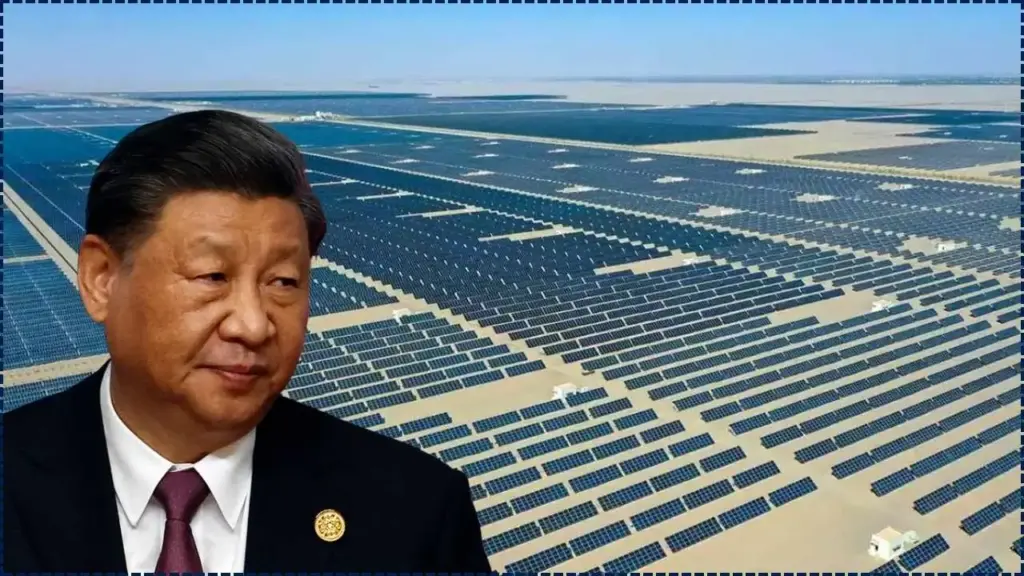
China has connected a 4-gigawatt solar power plant to the grid in the Ningxia Hui Autonomous Region, transforming former coal mining land into a large renewable energy base under its China Launches Massive 4GW Solar Plant strategy.
Officials say the project reflects Beijing’s effort to expand clean power generation while rehabilitating land damaged by decades of coal extraction.
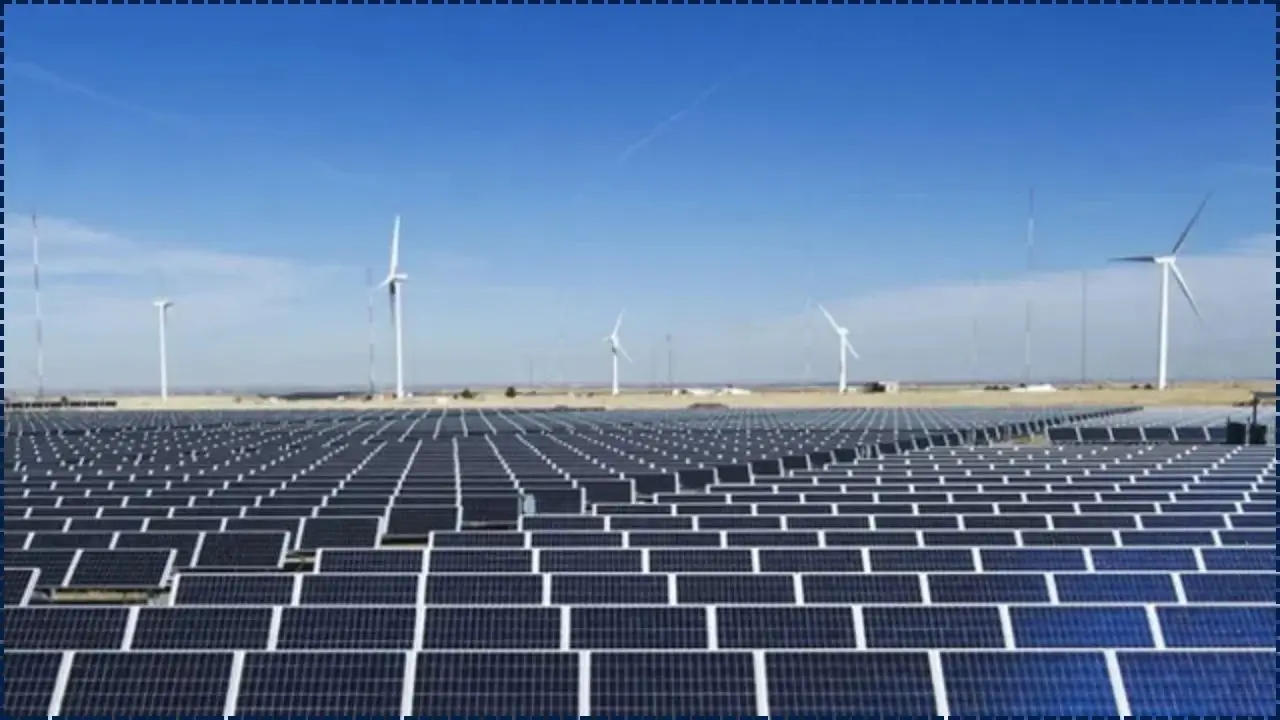
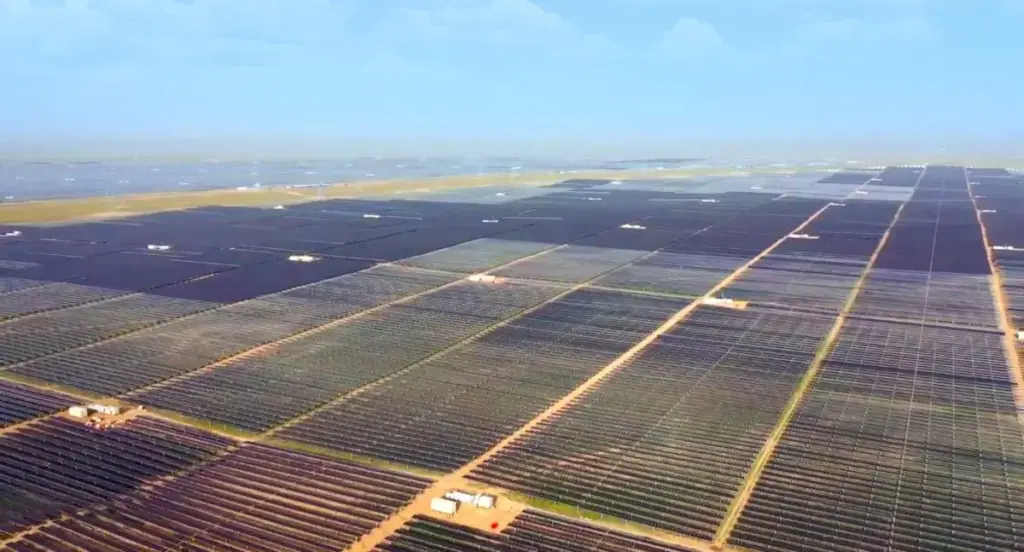
The facility, located near Lingwu in northwestern China, spans roughly 80 square kilometers and contains more than seven million solar panels. According to state media and project developers, it is expected to generate about 6.8 billion kilowatt-hours of electricity annually, enough to power several million homes.
China Launches Massive 4GW Solar Plant
| Key Fact | Detail |
|---|---|
| Capacity | 4 gigawatts (GW) |
| Estimated Annual Output | ~6.8 billion kWh |
| Land Type | Former coal mining subsidence area |
| Climate Target Context | Carbon neutrality by 2060 |
China Launches Massive 4GW Solar Plant and China’s Energy Strategy
The China Launches Massive 4GW Solar Plant initiative forms part of China’s broader plan to peak carbon emissions before 2030 and achieve carbon neutrality by 2060. President Xi Jinping announced those goals at the United Nations General Assembly in 2020.
China remains the world’s largest energy consumer and the largest emitter of greenhouse gases. According to the International Energy Agency (IEA), the country accounts for roughly one-third of global carbon dioxide emissions. At the same time, it leads the world in renewable capacity additions.
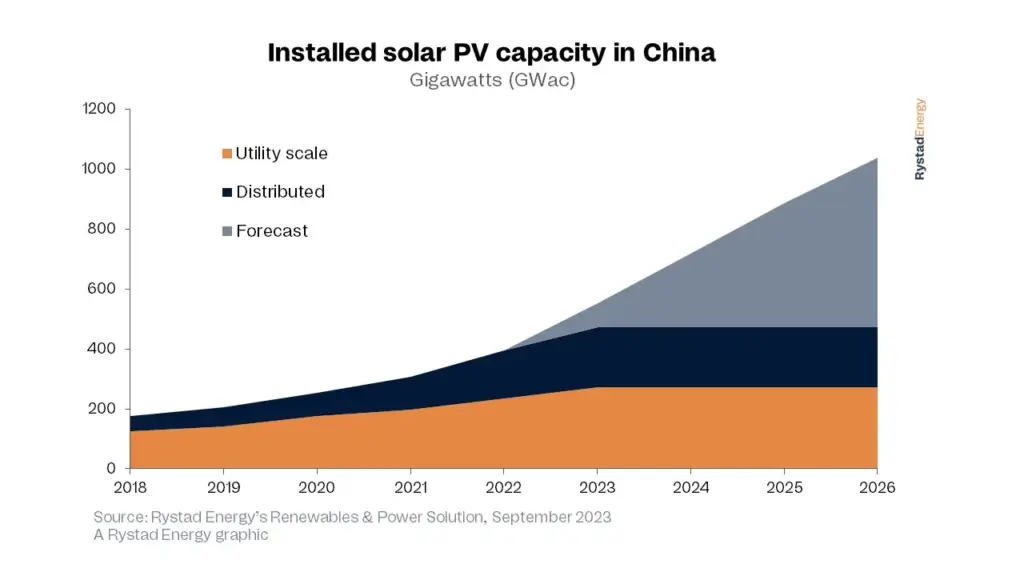
In 2023 alone, China added more than 200 gigawatts of solar capacity, according to data from the National Energy Administration (NEA). That figure exceeded total annual solar installations in many other countries combined.
Energy analysts say projects like the Ningxia plant illustrate how China is scaling up renewable deployment at unprecedented speed. “China is building renewables at a rate that reshapes global markets,” said Fatih Birol, Executive Director of the IEA, during a recent energy forum.
Reclaiming Coal Lands for Solar Power
Ningxia has long depended on coal mining for economic growth. Over time, underground extraction caused ground subsidence, making large areas unsuitable for agriculture or housing.
Local authorities identified these degraded lands as potential sites for renewable energy. By installing photovoltaic panels on stabilized terrain, developers can generate electricity without competing for farmland.
According to the United Nations Environment Programme (UNEP), repurposing post-mining land for renewable projects can reduce environmental hazards while supporting economic transition in coal-dependent regions.
“This model addresses both land restoration and energy development,” said Li Junfeng, a former senior climate policy adviser in China, in remarks carried by state media.
Technical and Operational Details
The solar plant uses high-efficiency monocrystalline photovoltaic modules mounted in rows across former mining terrain. Developers say the project integrates digital monitoring systems and automated cleaning technologies to improve output in the region’s dry, dusty climate.
With a capacity of 4 gigawatts, the plant rivals the output of multiple coal-fired generating units. A typical large coal power plant in China operates at about 1 gigawatt per unit.
Officials estimate the solar facility will offset several million metric tons of carbon dioxide emissions annually compared with coal-fired electricity generation. However, precise displacement depends on grid dispatch policies and regional energy demand.
Transmission infrastructure is critical. Northwestern China often generates surplus renewable electricity. The government has invested in ultra-high-voltage transmission lines to send power to eastern population centers.
“The real test is integration,” said David Fishman, a Shanghai-based energy analyst at The Lantau Group. “Building capacity is only part of the equation. Delivering and storing that energy matters just as much.”
Economic and Social Implications
Coal mining has historically provided employment and tax revenue in Ningxia. The transition toward solar changes the local labor structure.
Solar facilities require fewer workers than active mines, but they create construction jobs, grid management roles, and long-term maintenance positions. Local officials say training programs have helped former miners qualify for technical work in renewable projects.
The concept of a “just transition” has gained attention globally. The World Bank and other institutions argue that shifting away from coal requires investment in new industries to prevent economic decline in affected communities.
Chinese policymakers have framed renewable expansion as an opportunity to modernize regional economies. Officials say the Ningxia project forms part of a broader renewable energy base planned across western provinces.
Balancing Renewable Growth With Coal Reliance
Despite rapid renewable deployment, China continues to rely heavily on coal for energy security. According to the Centre for Research on Energy and Clean Air (CREA), China approved more new coal power capacity in recent years than any other country.
Energy planners argue that coal provides stability during peak demand and extreme weather. Renewable output can fluctuate due to sunlight and wind conditions.
This dual approach has drawn scrutiny from climate analysts. “China’s transition is significant but complex,” said Lauri Myllyvirta, lead analyst at CREA. “Renewables are growing quickly, yet coal remains embedded in the system.”
The China Launches Massive 4GW Solar Plant project reflects that broader strategy: expanding clean energy capacity while maintaining conventional generation as backup.
Global Significance
China produces more than 80 percent of the world’s solar panels, according to the IEA. Large domestic projects reinforce its dominance in renewable manufacturing and supply chains.
Global renewable investment reached record levels in 2024, surpassing $500 billion, according to BloombergNEF. Policymakers in the United States and Europe are studying China’s large-scale land-reuse approach as they design their own transition policies.

In the United States, federal incentives under the Inflation Reduction Act encourage renewable projects in former industrial areas. The European Union has established transition funds for coal regions seeking economic diversification.
China’s scale sets it apart. Few countries can deploy multi-gigawatt solar facilities within a single region.
Environmental Considerations
Large solar installations in arid regions can alter local ecosystems. Developers say environmental impact assessments were conducted before construction.
Chinese regulators have encouraged “agrivoltaic” practices in some regions, combining solar generation with vegetation growth to stabilize soil and improve biodiversity.
Experts note that careful management is necessary to prevent long-term ecological disruption. Dust accumulation, water use for panel cleaning, and land shading effects require monitoring.
Related Links
Solar After Sunset: The Breakthrough Tech Generating Electricity in the Dark
Outlook for China Launches Massive 4GW Solar Plant Expansion
Authorities have announced additional renewable bases in western China, integrating wind and solar projects with long-distance transmission corridors. Energy analysts say cumulative investment, rather than any single project, will determine whether China meets its 2030 emissions peak target.
The Ningxia solar plant stands as a visible marker of transformation. Where coal extraction once dominated, photovoltaic panels now stretch across the landscape.
Whether the China Launches Massive 4GW Solar Plant approach can balance economic stability, energy security, and climate commitments remains a central question for policymakers and global observers alike.