
Bi-directional charging is revolutionizing the future of electric vehicles (EVs) in 2026, offering the potential to use your EV to power your home for several days during outages or high-demand periods.
But how practical is this technology, and can your EV really power your home for up to three days? This guide explains how bi-directional charging is changing the way we think about energy and electric transportation.
2026 Guide to Bi-Directional Charging
| Key Fact | Detail |
|---|---|
| Bi-Directional Charging | Allows EVs to both charge and discharge energy |
| Energy Storage Capacity | EVs with large batteries (100+ kWh) can power homes for up to 3 days |
| Popular Vehicles with V2H | Ford F-150 Lightning, Tesla Cybertruck, Nissan Leaf |
| Home Energy Use | Average U.S. home uses 30 kWh/day; larger EV batteries can power for multiple days |
What Is Bi-Directional Charging?
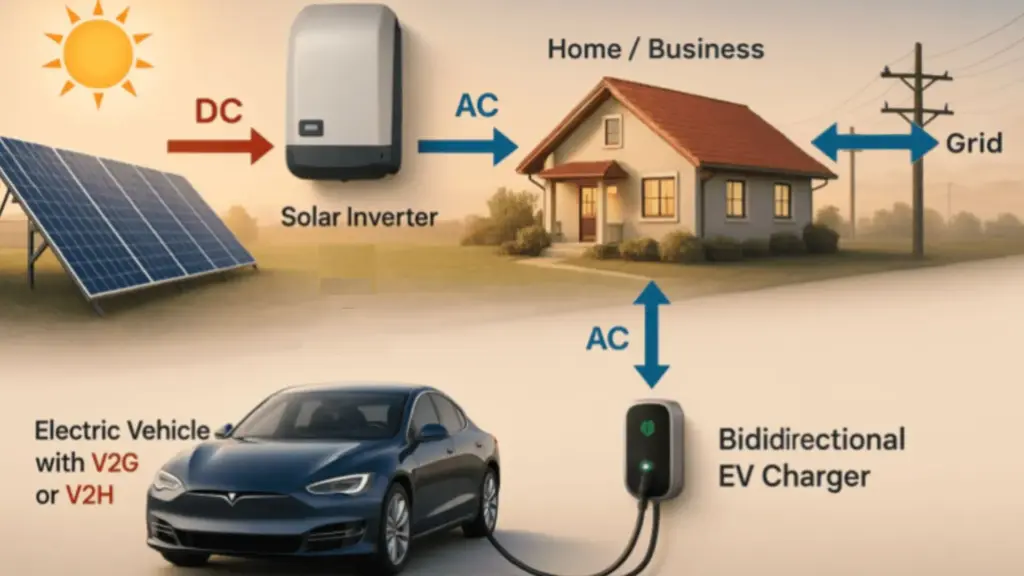
Bi-directional charging is an emerging technology that enables electric vehicles (EVs) to not only charge from the grid but also send power back to a home or even the electric grid.
This technology transforms EVs from simply being transportation devices to mobile energy storage systems that can help reduce dependence on grid power during peak times, emergencies, or outages.
Two key systems under bi-directional charging are:
- Vehicle-to-Home (V2H): This system allows an EV to send stored energy directly to a home, providing backup power or reducing energy bills by discharging during peak demand.
- Vehicle-to-Grid (V2G): This allows energy to be sent from the EV to the broader electric grid, supporting grid stability during high demand and offering consumers the opportunity to sell back excess power.
The technology is made possible by inverters, which convert the DC (direct current) power stored in EV batteries into AC (alternating current) power suitable for home use.
How Does Bi-Directional Charging Work?
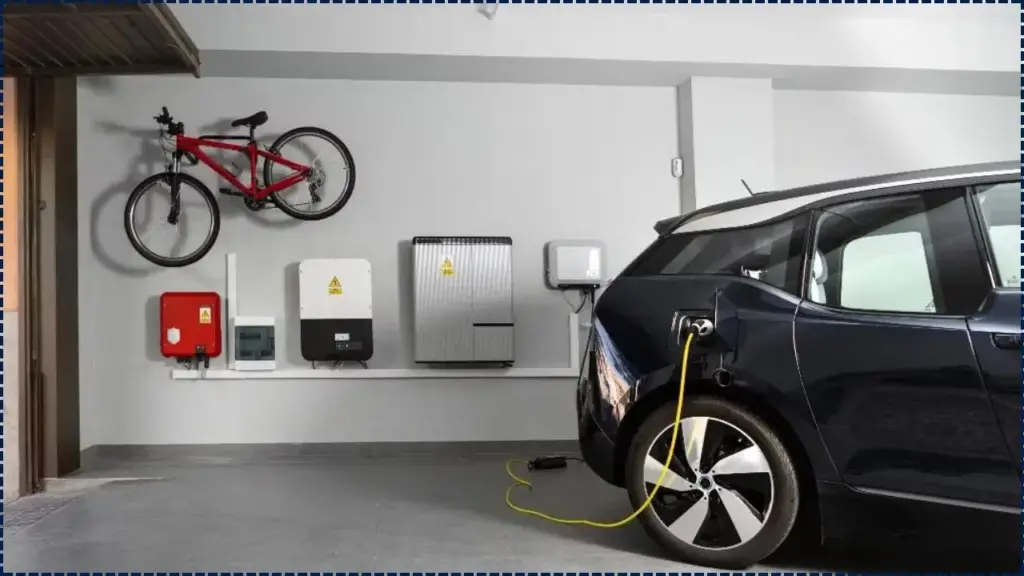
To make bi-directional charging functional, several components must be in place:
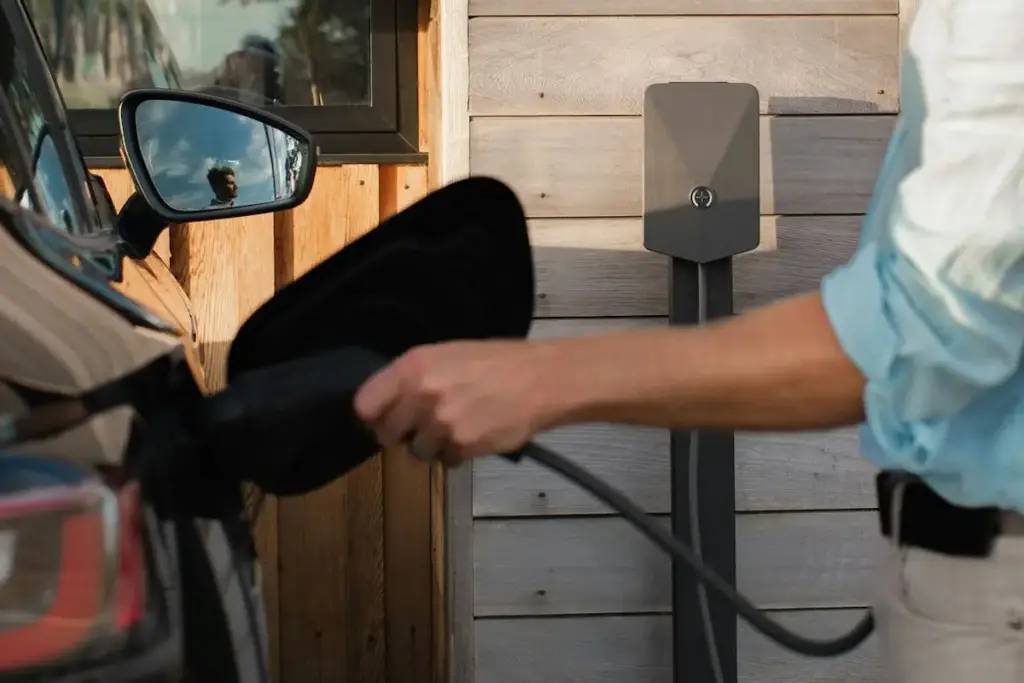
- Bidirectional Charger: This device allows energy to flow both to and from the EV’s battery. Unlike traditional chargers, which only allow charging, bi-directional chargers can reverse the process and discharge energy into the home.
- Home Inverter: A home inverter converts the DC power from the EV to AC power that household appliances can use. This allows for seamless integration with your home’s power system.
- Transfer Switch: A transfer switch ensures the home is isolated from the grid when using the EV’s battery, preventing back-feeding electricity into power lines and ensuring safety during power outages.
Can Your EV Power Your Home for 3 Days?
The ability for your EV to power your home for three days depends on several key factors:
Battery Capacity
EVs with large battery capacities, such as the Ford F-150 Lightning or Tesla Cybertruck, offer substantial energy storage, typically ranging from 100 kWh to 200 kWh. For instance:
- The Ford F-150 Lightning with its 131 kWh battery can supply power for up to three days with typical home energy use.
- The Tesla Cybertruck with a larger 200 kWh battery has the potential to power a home for multiple days, depending on the amount of energy consumed daily.
Energy Consumption
The average U.S. household uses around 30 kWh per day. Larger EV batteries that can provide 100-200 kWh of energy could theoretically supply enough energy for up to three days of power, assuming moderate energy consumption.
Power Management
Efficient power management systems, which prioritize essential devices like heating, refrigeration, and lighting, are crucial to extending battery life. Many V2H systems are designed to optimize energy usage based on household needs, ensuring that the most important appliances remain powered while minimizing the drain on the battery.
New Kia EV5 brings 530 km electric range and bi-directional charging https://t.co/ElrQU05hLu pic.twitter.com/ibDZRxw2q9
— Electric Cars Report (@ECarsReport) July 8, 2025
Real-World Use Cases: Powering Homes with EVs
Backup Power During Outages
One of the most compelling use cases for V2H is providing backup power during grid outages. In areas prone to natural disasters, such as hurricanes or wildfires, an EV with V2H capability can provide crucial power for lights, heating, and communication devices when the grid fails.
For example, during California wildfires and Texas winter storms, residents who owned compatible EVs were able to stay connected with power while others were left without electricity.
Cost Savings and Peak Shaving
In areas with Time-of-Use (TOU) billing, EVs with V2H systems allow homeowners to store electricity during off-peak hours when electricity rates are lower. They can then discharge that stored energy during peak periods when rates are higher, resulting in substantial cost savings over time.
Integration with Solar Systems
When paired with solar power systems, EVs with bi-directional charging can store excess solar energy produced during the day and use it to power the home during the night. This setup is especially advantageous for homeowners who want to increase self-consumption of their solar energy and reduce reliance on the grid.
Which EVs Support Bi-Directional Charging in 2026?
Several vehicles support bi-directional charging or will offer the feature by 2026:
- Ford F-150 Lightning: Equipped with Intelligent Backup Power, this EV can power a home with up to 9.6 kW of electricity, capable of providing power to a home during outages.
- Tesla Cybertruck: This highly anticipated EV from Tesla is expected to offer bi-directional charging capabilities, allowing users to power their homes using its large battery pack.
- Nissan Leaf: One of the earliest EVs to adopt V2H capability, the Nissan Leaf can power a home in case of emergencies.
- Rivian R1T: Rivian’s electric pickup includes a V2H system that allows it to serve as a backup power source.
By 2026, more manufacturers are likely to integrate V2H capabilities into their EV offerings, making bi-directional charging a standard feature.
Challenges and Barriers to Widespread Adoption
While the technology is promising, several challenges remain before bi-directional charging becomes mainstream:
High Installation Costs
Installing a bi-directional charging system typically requires a specialized charger and inverter, which can significantly increase the overall cost compared to a standard EV charger. The additional equipment and installation can add anywhere from $5,000 to $12,000, depending on the system’s complexity and regional factors.
Regulatory and Grid Integration Issues
While some utilities are experimenting with bi-directional charging, regulatory hurdles remain, particularly concerning how energy exported from EVs is priced and integrated into the grid. In some regions, utilities are still developing the necessary infrastructure to support V2G or V2H systems.
Consumer Awareness
Many consumers are still unaware of bi-directional charging’s potential benefits. Education and outreach are essential to encourage adoption, especially as more EVs with V2H capabilities enter the market.
Related Links
Storm-Ready: Top 8 Expert-Recommended Solar Generators for Reliable Home Backup
Speed & Sustainability: The Solar P1 Pro Scooter Offers 50mph Performance at a Competitive Price
The Road Ahead in 2026 and Beyond
The future of bi-directional charging looks promising. As automakers continue to enhance EV technology and regulatory frameworks evolve, bi-directional charging could become a mainstream feature of electric vehicles.
By 2030, it is expected that bi-directional charging will play a central role in energy resilience and cost savings, offering homeowners an additional tool in their fight against high energy costs and grid dependence.
Powering Homes with EVs for a Sustainable Future
Bi-directional charging is a game-changer for how we think about energy storage and electric vehicles. By 2026, with the ability to power a home for up to three days using energy stored in an EV, this technology offers homeowners greater flexibility in how they manage and reduce their energy consumption.
With advancements in smart grid integration, consumer incentives, and vehicle adoption, the vision of a more sustainable and energy-efficient future is becoming a reality.