

Governments across Europe, North America, and Asia are tightening climate policies that increasingly affect international trade. The emerging carbon border war—driven by so-called green tariffs—is reshaping the global solar module industry.
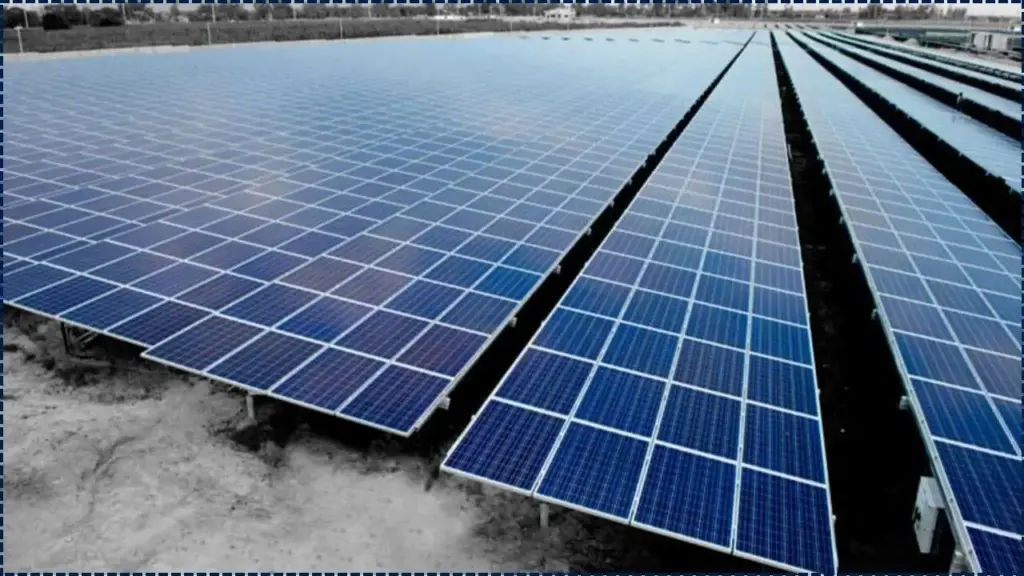
These policies aim to penalize carbon-intensive manufacturing while protecting domestic clean-energy industries, potentially altering supply chains, raising trade tensions, and influencing the cost of renewable energy worldwide.
The Carbon Border War
| Key Fact | Detail |
|---|---|
| Dominance of solar manufacturing | China controls more than 80% of the global solar module supply chain |
| EU carbon border mechanism | The Carbon Border Adjustment Mechanism (CBAM) began its transitional phase in 2023 and expands in 2026 |
| Solar energy expansion | Global solar capacity surpassed 1 terawatt in 2022 and continues rapid growth |
Understanding the Carbon Border War
The term carbon border war describes rising trade tensions as governments impose tariffs tied to the carbon emissions embedded in imported goods.
At the center of this policy shift is the European Union’s Carbon Border Adjustment Mechanism (CBAM), which seeks to ensure that imported goods face the same carbon price as products manufactured inside the European Union.
According to the European Commission, CBAM is designed to prevent “carbon leakage,” a scenario in which companies relocate production to countries with weaker climate regulations and then export those products back to markets with stricter environmental rules.
While the policy currently targets sectors such as steel, aluminum, cement, and fertilizers, analysts widely expect similar mechanisms to expand to clean-technology manufacturing, including solar modules.
“The idea is simple,” said Simone Tagliapietra, a senior fellow at the Bruegel think tank in Brussels. “If the EU charges companies for carbon emissions, imported products must face comparable costs. Otherwise, domestic industries would be at a disadvantage.”
Why Solar Modules Are Becoming a Trade Flashpoint
Solar panels are widely seen as essential for achieving global climate targets. However, their manufacturing process is energy-intensive, particularly during the production of polysilicon, wafers, and photovoltaic cells.
Many factories rely on electricity generated from fossil fuels, especially coal. This creates a paradox: solar panels help reduce emissions when deployed, but their manufacturing can produce significant carbon output.
China currently dominates most stages of the solar supply chain. The International Energy Agency (IEA) estimates that China accounts for:
- about 85% of solar cell manufacturing
- more than 80% of polysilicon production
- roughly three-quarters of global solar module assembly
Because most solar panels sold globally originate from these factories, any carbon-related trade measure has the potential to affect the entire renewable energy market.
Europe’s Carbon Border Adjustment Mechanism
The European Union introduced CBAM as part of its broader European Green Deal, a strategy designed to make the bloc climate-neutral by 2050.
During its initial phase, importers must report the carbon emissions associated with certain products entering the EU. Beginning in 2026, companies will be required to purchase carbon certificates tied to those emissions.
According to the European Commission, the policy aims to achieve three goals:
- Prevent carbon leakage
- Encourage global climate action
- Protect European industries facing strict environmental regulations
Critics, however, argue that the policy could function as a form of green protectionism. Countries including India, China, and South Africa have raised concerns within the World Trade Organization (WTO), warning that such tariffs could restrict exports from developing economies.
Solar Supply Chains Under Pressure
Even before solar modules are formally included in carbon border tariffs, companies across the industry are already adjusting their strategies.
Manufacturers are increasingly considering where to locate new production facilities to avoid potential trade barriers.
Several trends have emerged:
Manufacturing diversification
Solar manufacturers are expanding production outside China, particularly in:
- Vietnam
- Malaysia
- India
- the United States
These locations provide alternative export routes while reducing exposure to tariffs or trade restrictions.
Government subsidies
Governments are also offering incentives to build domestic manufacturing capacity.
The United States Inflation Reduction Act, enacted in 2022, provides billions of dollars in tax credits for clean-energy manufacturing, including solar modules. Europe has introduced similar incentives through initiatives such as the Net-Zero Industry Act, aimed at strengthening local clean-technology production.
Trade Tensions Between Major Economies
The carbon border war reflects broader geopolitical competition over clean-energy technologies. In recent years, governments have increasingly used trade policy to secure their positions in emerging energy markets.
The United States, for example, has imposed tariffs on certain Chinese solar imports for more than a decade, citing concerns over unfair subsidies and dumping practices.
Meanwhile, the European Union has pursued investigations into Chinese clean-technology exports, arguing that government subsidies may distort global markets. China has rejected these accusations.
In statements reported by international media, Chinese officials have warned that green tariffs could undermine global climate cooperation.
“Climate change requires international collaboration,” said a spokesperson from China’s Ministry of Commerce, according to state media. “Trade barriers in the name of climate policy risk slowing the global energy transition.”
The Economic Stakes for the Solar Industry
Solar power has become the fastest-growing renewable energy technology in the world.
According to the International Renewable Energy Agency (IRENA), global solar capacity has expanded dramatically over the past decade, driven by falling costs and supportive government policies.
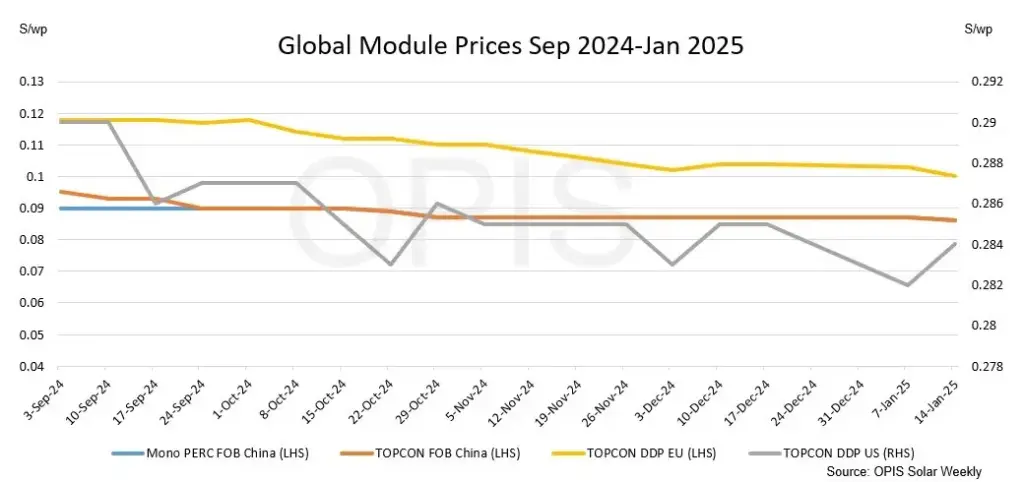
Solar modules that once cost more than $4 per watt in the early 2000s now sell for less than 30 cents per watt in many markets.
However, analysts warn that carbon border tariffs could influence pricing and market dynamics. “If solar manufacturing faces carbon tariffs, the cost of panels could increase in some regions,” said Jenny Chase, a solar analyst at BloombergNEF.
Higher costs might slow solar deployment in certain markets, particularly in developing countries where affordability remains a key factor.
Environmental Debate: Climate Policy or Protectionism?
Supporters of carbon border policies argue that they create incentives for cleaner manufacturing worldwide. By attaching a cost to carbon emissions, governments hope to encourage factories to adopt renewable electricity and low-carbon production techniques.
Opponents say the policies could unfairly penalize developing countries that rely on cheaper energy sources during their industrial development.
Economists warn that poorly coordinated climate tariffs could escalate into broader trade disputes.The World Bank has previously cautioned that unilateral climate trade measures may provoke retaliatory tariffs if governments perceive them as discriminatory.
सोलर पैनल सब्सिडी में नंबर 1 है ये राज्य! मिलते हैं सबसे ज्यादा सब्सिडी के पैसे Solar Panel Subsidy
How Manufacturers Are Responding
Solar companies are beginning to explore ways to reduce the carbon footprint of their supply chains. Some manufacturers are investing in renewable-powered factories, particularly in regions with abundant hydropower or solar energy.
Others are improving manufacturing efficiency to lower energy consumption during silicon processing. Several major companies have also begun publishing carbon-intensity reports for their solar products to reassure customers and regulators.
Industry experts say transparency could become a competitive advantage as climate policies expand.
A New Era of Carbon Accounting
Policy analysts believe that carbon border measures may eventually extend beyond heavy industries to include a wider range of products.
Potential future sectors include:
- solar modules
- batteries
- electric vehicles
- hydrogen technologies
If that happens, companies may need to measure and report the carbon footprint of nearly every stage of production.
Timeline: Key Events in the Carbon Border Debate
2019: European Green Deal proposes carbon border mechanism.
2021: European Commission formally proposes CBAM legislation.
2023: Transitional reporting phase begins.
2026: Full implementation begins for targeted industries.
Future: Analysts expect expansion to additional sectors including clean technologies.
Related Links
Green Breakthrough: Poland Crosses Historic 50% Renewable Energy Milestone
The carbon border war reflects a new phase of globalization in which climate policy increasingly intersects with international trade. As governments attempt to reduce emissions while protecting domestic industries, solar manufacturing may become one of the most closely watched sectors in the global energy transition.
For policymakers, the challenge will be balancing environmental goals with the need to maintain affordable renewable energy and cooperative global trade relations.
FAQs
What is a carbon border tariff?
A carbon border tariff is a tax imposed on imported goods based on the greenhouse gas emissions produced during their manufacturing.
Why could solar modules be affected?
Solar manufacturing is energy-intensive, and panels are often produced in regions with high carbon emissions from electricity generation.
Will solar panels become more expensive?
Prices could rise in some markets if tariffs increase manufacturing costs, though technological advances may offset some of these effects.
Which countries dominate solar manufacturing?
China currently leads the global solar supply chain, producing the majority of polysilicon, wafers, and photovoltaic cells.