

Rising geopolitical tensions in West Asia are forcing India to rethink its energy security strategy. As a major importer of Gulf oil, India faces significant risks from regional instability.
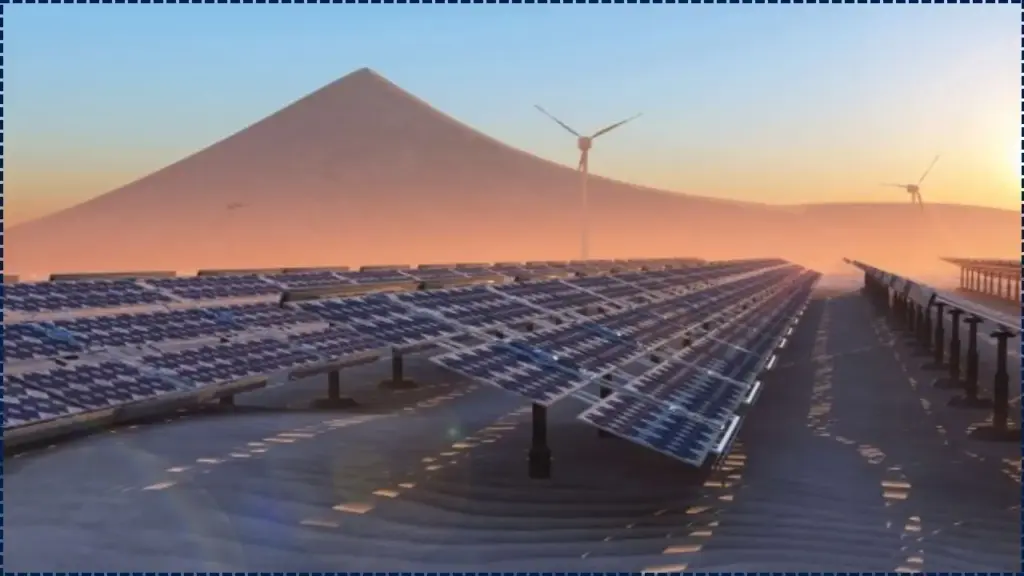
In response, the country is accelerating investments in solar power and other renewables, prompting debate over whether West Asia Tensions and Solar Energy together are driving a deeper shift in India’s energy paradigm.
West Asia Tensions and Solar Energy: A Strategic Question for India
For decades, India’s economic growth has relied heavily on imported fossil fuels. The country imports more than 85% of its crude oil needs, according to the Ministry of Petroleum and Natural Gas.
A large portion of those imports comes from West Asia, including Saudi Arabia, Iraq, the United Arab Emirates, and Kuwait. This reliance leaves India exposed to disruptions caused by geopolitical conflict.
Recent instability in the region — including tensions involving Iran, Israel, and shipping routes in the Persian Gulf — has revived concerns about energy security in New Delhi.
“Energy security is directly linked to geopolitical stability in West Asia,” said Ajay Mathur, Director-General of the International Solar Alliance, during a recent policy discussion. “India’s renewable transition must be viewed partly through this strategic lens.”
India’s Deep Dependence on West Asian Oil
India is the world’s third-largest consumer of oil, after the United States and China. Rapid economic growth, expanding transport networks, and rising urbanisation have steadily increased energy demand.
According to data from the International Energy Agency (IEA), India imported roughly 4.6 million barrels of crude oil per day in 2023. More than 60% of those imports came from the Middle East, making the region central to India’s energy supply chain. Several critical maritime routes amplify this vulnerability.
The Strait of Hormuz, located between Iran and Oman, carries nearly one-fifth of global oil shipments. Any disruption to this chokepoint can trigger immediate price volatility in international markets. Economists warn that such disruptions can quickly affect India’s economy.
“When oil prices spike, India’s import bill rises sharply, which puts pressure on inflation, currency stability, and fiscal balances,” said Karthik Ganesan, energy fellow at the Council on Energy, Environment and Water (CEEW), a New Delhi-based think tank.
Strategic Petroleum Reserves and Emergency Planning
To reduce risks from supply disruptions, India has developed Strategic Petroleum Reserves (SPR). These underground reserves in Visakhapatnam, Mangaluru, and Padur can store roughly 5.3 million tonnes of crude oil, equivalent to about 10 days of national consumption, according to the Indian Strategic Petroleum Reserves Limited (ISPRL).
A second phase of reserve expansion is underway to increase storage capacity. However, experts say reserves alone cannot eliminate vulnerability.
“Strategic reserves are a short-term buffer,” said Vandana Hari, founder of energy consultancy Vanda Insights. “Long-term energy security depends on diversifying energy sources.” This is where renewable energy enters the strategic conversation.
Solar Energy as a Strategic Alternative
India has rapidly expanded renewable energy capacity over the past decade, with solar power playing a central role.
The National Solar Mission, launched in 2010, initially targeted 20 gigawatts (GW) of solar capacity by 2022. The goal was later expanded to 100 GW, reflecting falling solar costs and growing policy ambition.
Today, India has installed more than 70 GW of solar power capacity, according to the Ministry of New and Renewable Energy (MNRE). Major solar projects include:
- Bhadla Solar Park (Rajasthan) – among the world’s largest solar parks
- Pavagada Solar Park (Karnataka)
- Kurnool Ultra Mega Solar Park (Andhra Pradesh)
Together, these large-scale installations represent a shift toward utility-scale renewable electricity generation.
The Economics of Solar Power
Solar energy has become increasingly competitive with fossil fuels.
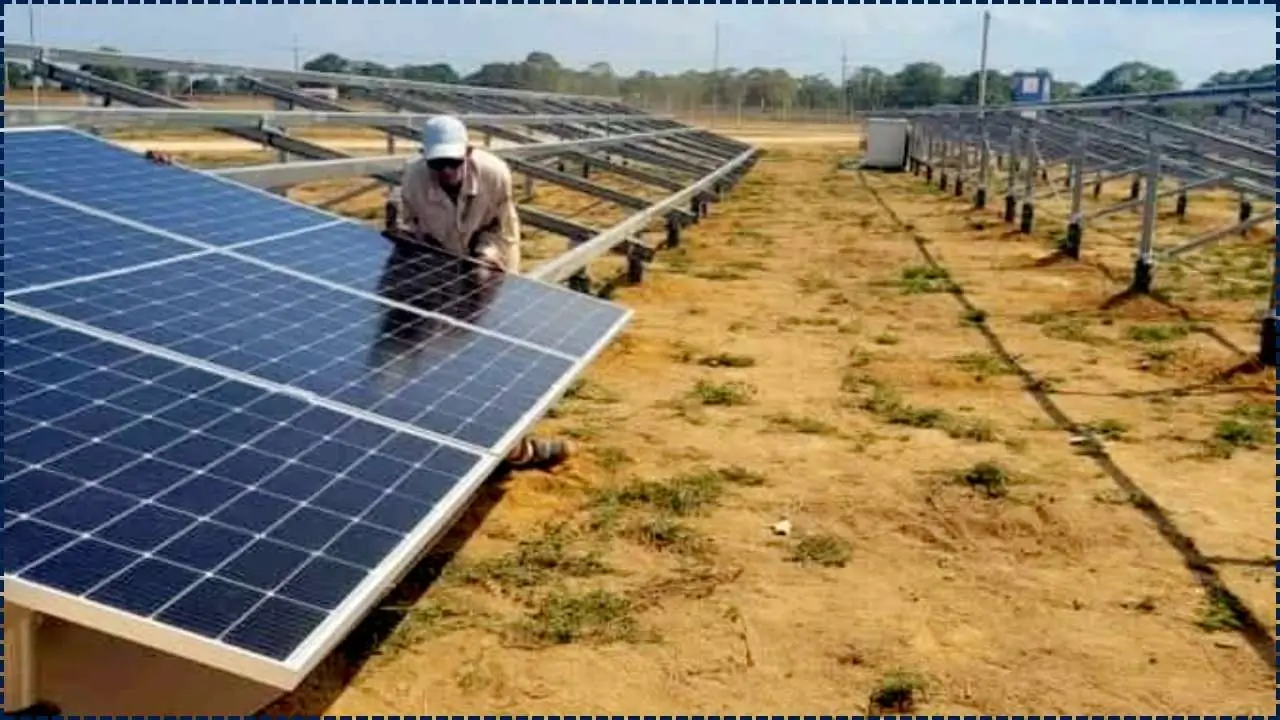
According to the International Renewable Energy Agency (IRENA), the global cost of solar photovoltaic electricity has fallen by nearly 90% since 2010. India now hosts some of the lowest solar tariffs in the world, with bids in certain auctions falling below ₹2 per kilowatt-hour.
Lower costs have encouraged utilities and state governments to scale up renewable installations. “Solar power is no longer only an environmental choice; it is also an economic one,” said Rahul Tongia, senior fellow at the Brookings Institution India Center.
Coal Still Dominates India’s Energy Mix
Despite rapid growth in renewables, fossil fuels remain dominant. Coal continues to generate more than 70% of India’s electricity, according to the Central Electricity Authority.
India is also the second-largest coal producer in the world, and domestic coal is seen as a reliable energy source for baseload power. Government officials argue that coal will remain important during the energy transition.
“We must balance sustainability with energy security and affordability,” Union Power Minister R. K. Singh has said in multiple public statements.
Green Hydrogen and Battery Storage
India’s long-term energy strategy extends beyond solar power. The government launched the National Green Hydrogen Mission in 2023 with the goal of making India a global hub for hydrogen production.
Green hydrogen, produced using renewable electricity, could eventually replace fossil fuels in industries such as steel, fertilisers, and heavy transport. Energy storage technologies are also expanding.
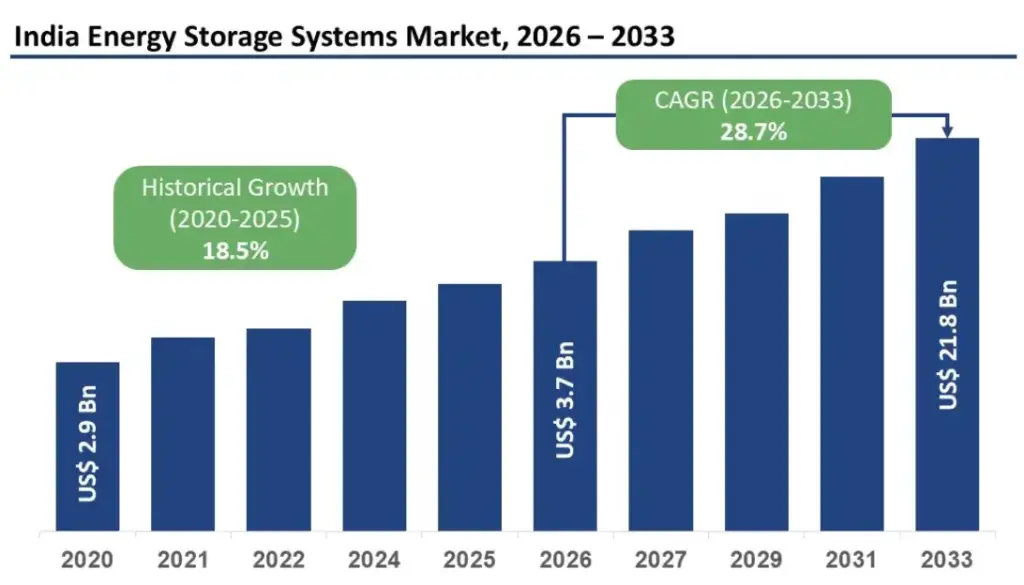
Battery storage systems allow solar electricity generated during the day to be used at night, addressing the intermittent nature of renewable power.
India’s Global Solar Diplomacy
India has also taken a leadership role in global solar cooperation. In 2015, India and France launched the International Solar Alliance (ISA) during the Paris Climate Conference.
The alliance aims to mobilise investment and technology for solar deployment in tropical countries. More than 110 countries have signed the ISA framework agreement, making it one of the largest renewable energy partnerships in the world.
“The alliance reflects India’s ambition to become a global leader in renewable energy diplomacy,” said Fatih Birol, Executive Director of the International Energy Agency.
Domestic Manufacturing Challenges
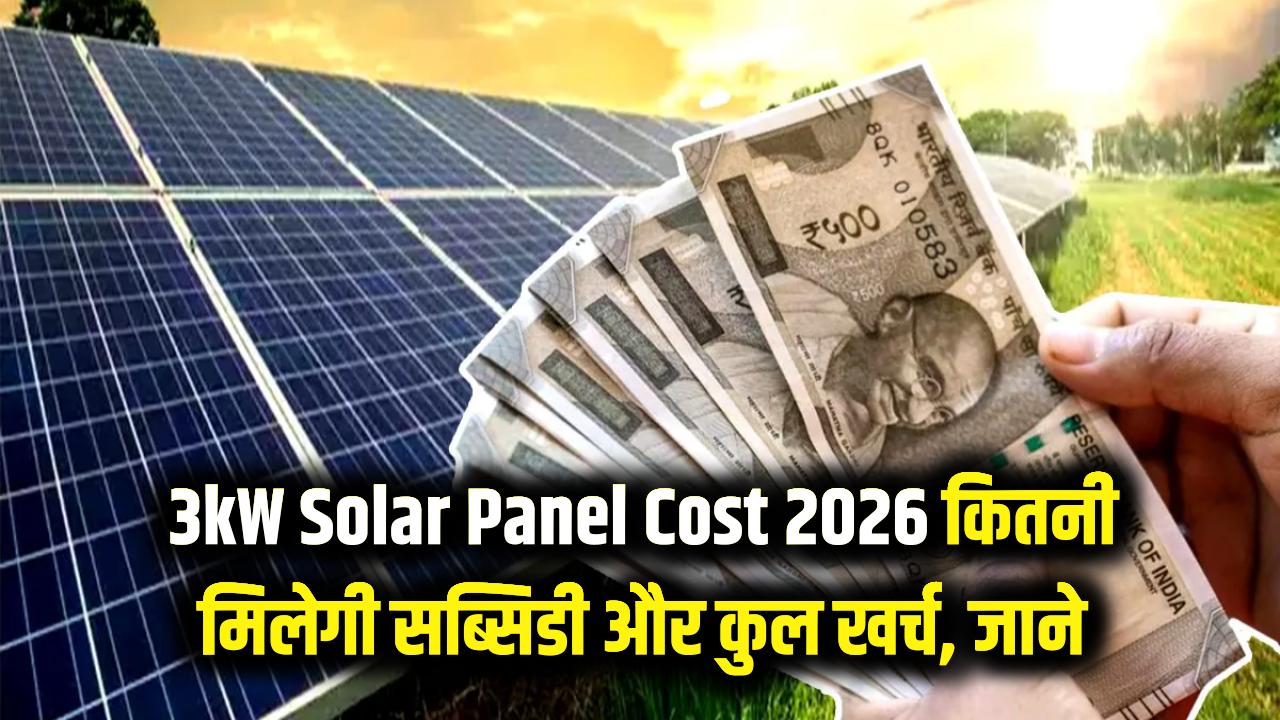
One major obstacle in India’s solar expansion is dependence on imported equipment. A large share of solar modules used in India are manufactured in China, which dominates the global supply chain.
To reduce reliance on imports, India has introduced incentives under the Production Linked Incentive (PLI) scheme to boost domestic solar manufacturing. Several large companies have announced investments in solar module factories and integrated renewable energy projects.
Balancing Geopolitics and Energy Demand
Even as India accelerates renewable deployment, policymakers acknowledge that fossil fuels will remain part of the energy mix for decades. Energy demand in India is expected to double by 2040, according to projections from the International Energy Agency.
Meeting that demand while reducing emissions will require a diversified energy strategy combining solar, wind, hydroelectric, nuclear, and cleaner fossil fuels.
India must also balance its diplomatic relations in West Asia, where millions of Indian expatriates live and trade ties remain strong.
“India’s engagement with the Gulf is not only about oil,” said Kabir Taneja, fellow at the Observer Research Foundation (ORF). “It includes investment, diaspora connections, and strategic partnerships.”
Related Links
Solar Upgrade Dilemma: Homeowners Spark Debate Over Avoiding Costly Long-Term Regrets
Solar Shingles vs. Solar Panels: Understanding the Tech and the Differences
The Road Ahead
India’s renewable expansion suggests a gradual but significant shift in the country’s energy paradigm. Solar power is no longer viewed solely as a climate solution. It is increasingly seen as a pillar of national energy security.
However, experts caution that the transition will take time. Infrastructure upgrades, storage technologies, grid expansion, and domestic manufacturing must keep pace with rising demand.
The intersection of West Asia tensions and solar energy reflects a deeper transformation in India’s energy strategy. Geopolitical uncertainty has reinforced the urgency of reducing reliance on imported oil, while falling renewable costs have made solar power an attractive alternative.
Although fossil fuels will remain central to India’s energy mix in the near term, the country’s accelerating investment in solar energy signals a long-term shift toward greater energy independence and sustainability.