
The global expansion of solar power has transformed electricity markets, but it has also created a new challenge: ensuring reliable energy supply when the sun is not shining.
Governments, utilities, and investors are accelerating the Race for Stable Solar Energy, investing billions in battery systems, hydrogen storage, and other technologies designed to stabilize renewable electricity grids.
The Race for Stable Solar Energy
| Key Fact | Detail |
|---|---|
| Solar capacity expanding rapidly | Global installed solar capacity exceeded 2,100 GW in 2024 |
| Clean energy investment rising | Clean energy spending projected to exceed $2 trillion annually |
| Battery storage deployment accelerating | Global storage capacity must grow sixfold by 2030 |
| Hydrogen investment increasing | Governments investing billions in green hydrogen |
Solar Power’s Growth Fuels the Race for Stable Solar Energy
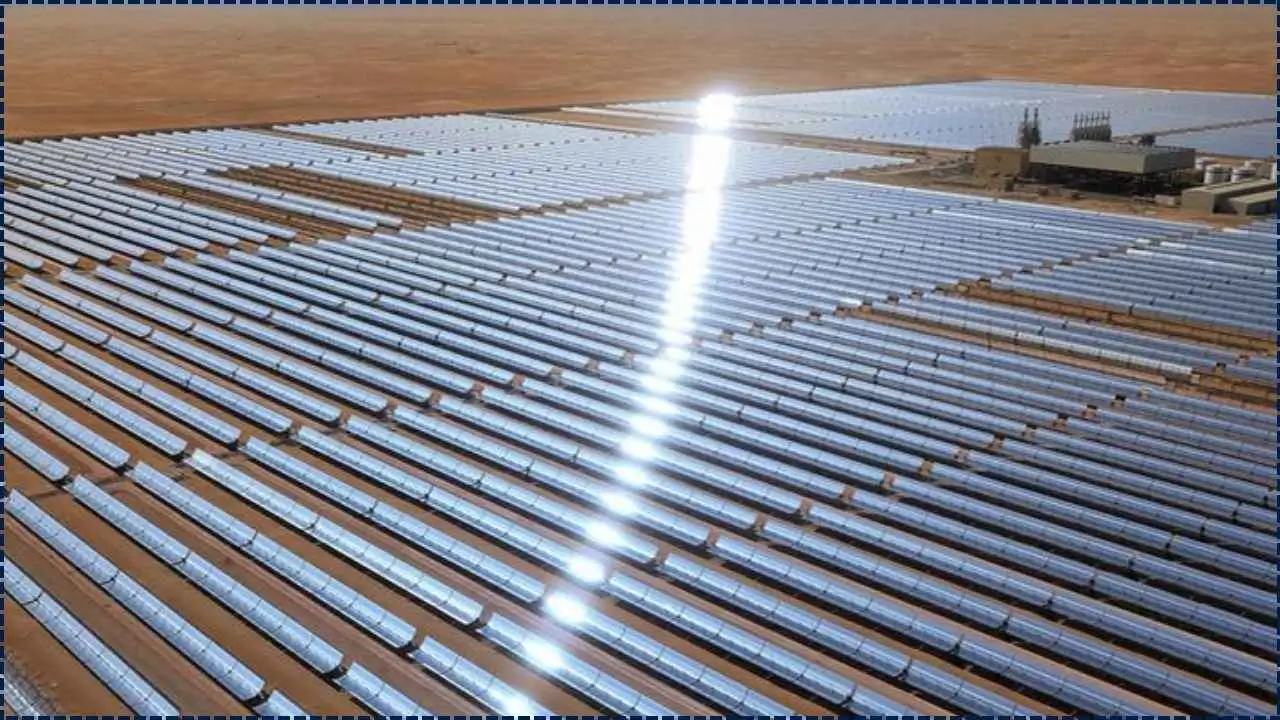
Solar energy has emerged as one of the fastest-growing sources of electricity worldwide. Falling technology costs and government policies aimed at reducing carbon emissions have fueled rapid deployment of photovoltaic systems.
Global installed solar capacity surpassed 2,100 gigawatts in 2024, according to the International Energy Agency Photovoltaic Power Systems Programme (IEA-PVPS).
Solar energy now plays a major role in electricity systems across China, the United States, India, and Europe. In some regions, solar generation accounts for a significant share of daytime electricity supply.
However, solar power has inherent variability. Electricity production depends on sunlight availability, which fluctuates throughout the day and across seasons. This variability creates operational challenges for electricity grids.
Grid operators must maintain a constant balance between electricity supply and demand. Without sufficient storage capacity, solar power systems may produce excess electricity during the day while facing shortages at night.
To address this issue, energy companies and policymakers are intensifying efforts in the Race for Stable Solar Energy by expanding investments in energy storage technologies.
Why Energy Storage Is Essential for Solar Power
Energy storage allows electricity produced during peak solar hours to be stored and used later when demand increases. This capability improves grid stability and reduces reliance on fossil-fuel backup power plants.
The International Energy Agency (IEA) notes that scaling up energy storage is essential for integrating large shares of renewable energy into electricity systems. Without sufficient storage capacity, solar and wind power may be curtailed during periods of oversupply.
Energy storage technologies therefore play a crucial role in maximizing the value of renewable electricity generation.
Historical Evolution of Solar Energy Storage
The concept of storing solar energy is not new. Early solar power plants relied on mechanical systems such as pumped hydro storage, where water is pumped uphill during periods of excess electricity and released later to generate power.
More recently, battery storage systems have become the dominant technology for managing solar variability. Lithium-ion batteries, originally developed for portable electronics, now power electric vehicles and grid-scale energy storage installations.
These batteries respond rapidly to changes in electricity demand and offer high round-trip efficiency. Advances in battery manufacturing have also reduced costs significantly over the past decade.
However, lithium-ion batteries typically provide only short-duration storage, often lasting between two and eight hours. This limitation has encouraged researchers to explore alternative technologies capable of storing energy for longer periods.
Massive Global Investment Is Driving the Storage Boom
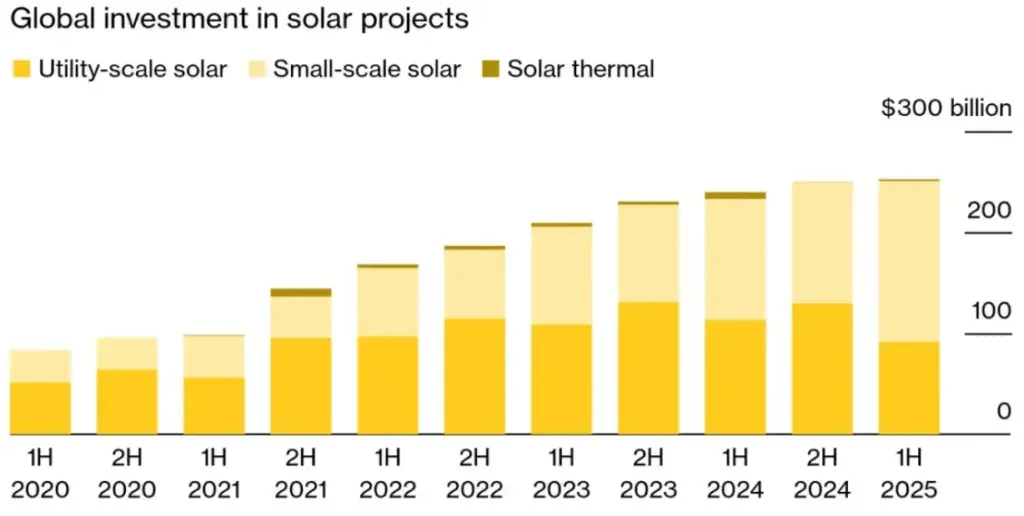
The push to stabilize renewable energy systems has triggered unprecedented investment in energy storage infrastructure. The IEA’s World Energy Investment report estimates that global energy investment will exceed $3 trillion annually, with roughly $2 trillion directed toward clean energy technologies.
Solar power alone is projected to receive approximately $450 billion in annual investment, making it the largest single category of energy spending. Battery storage investment has also surged. Global spending on battery storage exceeded $20 billion in recent years and continues to grow as renewable energy deployment accelerates.
Financial institutions, infrastructure funds, and sovereign wealth funds are increasingly investing in solar-plus-storage projects. These investments reflect the growing recognition that renewable energy systems cannot operate reliably without large-scale storage capacity.
Batteries Lead the Early Stage of the Storage Race
Lithium-ion batteries currently dominate energy storage deployment worldwide. Grid-scale battery installations can respond instantly to changes in electricity demand, helping stabilize power systems.
Countries including the United States, China, and Australia have built some of the world’s largest battery storage facilities. Many new solar projects now integrate battery storage directly into their design.

Solar-plus-storage systems allow electricity generated during the day to power homes and businesses in the evening. This integration improves the economic value of solar energy by enabling electricity sales during peak demand periods.
However, batteries alone may not be sufficient for future energy systems with very high shares of renewable energy.
Hydrogen and Long-Duration Storage Technologies
Hydrogen energy storage is emerging as a promising option for long-duration storage. In hydrogen systems, renewable electricity powers electrolysis equipment that splits water into hydrogen and oxygen.
The hydrogen can then be stored in tanks or underground formations and later used to generate electricity. Unlike batteries, hydrogen storage can last for weeks or even months.
This capability makes hydrogen particularly attractive for balancing seasonal fluctuations in renewable energy production. Governments around the world are investing heavily in hydrogen infrastructure as part of broader decarbonization strategies.
Despite its potential, hydrogen storage remains less efficient than battery storage and requires significant infrastructure development.
Case Studies: Solar-Plus-Storage Projects Around the World
Several major projects illustrate how solar and storage technologies are being deployed together. In California, large solar farms paired with battery storage now provide electricity to millions of homes during evening hours.
Australia has also invested heavily in battery storage projects to support renewable energy expansion. In India, the government has launched solar-plus-storage auctions designed to strengthen grid reliability as solar capacity increases.
These projects demonstrate how integrated solar and storage systems can deliver stable electricity supply while reducing dependence on fossil fuels.
Emerging Technologies Beyond Batteries and Hydrogen
Researchers are also exploring new energy storage technologies that could complement existing solutions. These include:
Flow Batteries
Flow batteries store energy in liquid electrolytes stored in external tanks, allowing longer-duration storage for grid applications.
Thermal Energy Storage
Thermal systems store electricity as heat using materials such as molten salt or sand.
Gravity-Based Storage
Some companies are developing systems that store energy by lifting heavy weights and releasing them later to generate electricity.
These technologies remain in early stages of commercialization but could expand the range of storage options available to renewable energy systems.
Environmental and Supply Chain Considerations
Energy storage technologies also raise environmental and supply-chain questions. Lithium-ion batteries require minerals such as lithium, cobalt, and nickel, which are mined in a limited number of countries.
Supply chain concentration has raised concerns about resource availability and geopolitical risks. Hydrogen production requires large amounts of electricity and water, depending on the production method.
Thermal storage systems often rely on more abundant materials but may require extensive infrastructure. Researchers say addressing these environmental considerations will be essential as storage technologies scale globally.
Grid Modernization and Digital Energy Systems
Energy storage alone cannot stabilize renewable power systems. Electricity grids must also evolve to accommodate decentralized renewable generation. Smart grid technologies, digital monitoring systems, and advanced forecasting tools are increasingly used to manage renewable electricity flows.
Artificial intelligence and predictive analytics are also being applied to optimize energy storage operations. These technologies help grid operators predict renewable energy production and manage electricity demand more efficiently.
Related Links
The Solar “Subscription”: Why Gen-Z Homeowners are Leasing Panels Instead of Buying Them
West Asia Tensions and Solar Energy: Is India’s Energy Paradigm Shifting?
The Future of the Race for Stable Solar Energy
The global energy transition is entering a new phase in which storage technologies play a central role. Early renewable energy policies focused primarily on expanding solar and wind generation. Today, policymakers recognize that storing renewable electricity is equally important.
Energy experts expect battery systems, hydrogen storage, pumped hydro, and emerging technologies to operate together in future electricity systems.
The International Energy Agency has emphasized that energy storage expansion will be essential for maintaining electricity security while scaling renewable power.
As governments and investors continue funding new storage technologies, the Race for Stable Solar Energy is likely to define the next stage of the global clean energy transition.
FAQs
Why does solar power need energy storage?
Solar electricity production varies with sunlight availability. Storage allows excess electricity generated during the day to be used later.
What technology currently dominates energy storage?
Lithium-ion batteries dominate global storage deployment due to their efficiency and falling costs.
Can hydrogen replace battery storage?
Hydrogen is unlikely to replace batteries but may complement them by providing long-duration energy storage.
How large is the energy storage market?
The market is expanding rapidly as renewable energy deployment increases worldwide.