
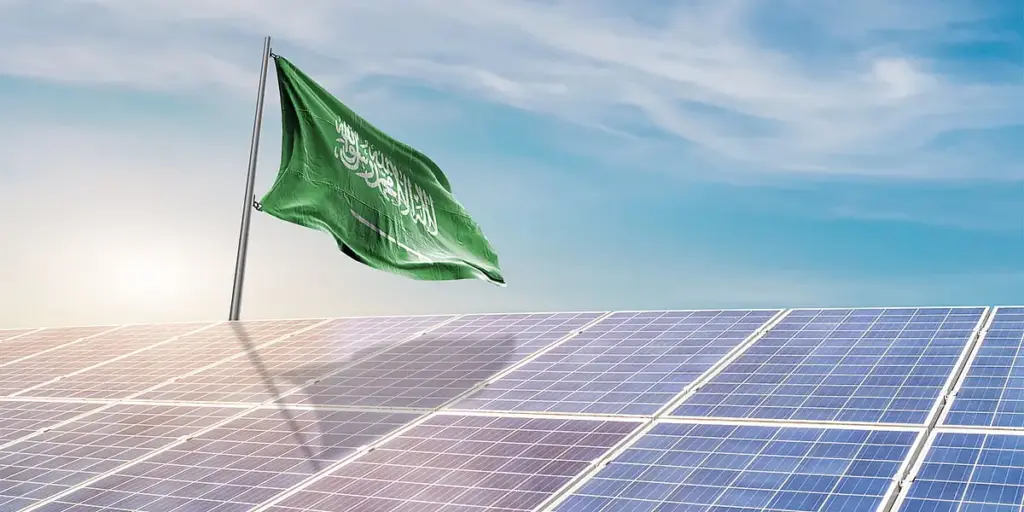
Elsewedy Electric has completed the 348.6-megawatt El Saad Solar Plant in Riyadh, marking a major milestone in Saudi Arabia’s renewable energy strategy.

The facility, designed to generate clean electricity, will support the Kingdom’s ambitious Vision 2030 programme and its ongoing efforts to reduce reliance on fossil fuels while expanding solar capacity.
348.6 MW El Saad Solar Plant in Riyadh
| Key Fact | Detail |
|---|---|
| Project capacity | 348.6 MW |
| Location | Riyadh, Saudi Arabia |
| Project role | Part of Saudi Arabia’s National Renewable Energy Program |
| EPC contractor | Elsewedy Electric |
El Saad Solar Plant: A Key Project in Vision 2030
The El Saad Solar Plant is one of the latest developments in Saudi Arabia’s renewable energy sector, which is being rapidly expanded under the country’s Vision 2030 strategy. Vision 2030, a national plan led by the Saudi government, aims to diversify the economy, reduce dependence on oil, and promote sustainable energy sources, including solar and wind.
The solar plant, with an installed capacity of 348.6 megawatts, is one of the largest solar developments in the Riyadh region.
The electricity produced by the plant will be integrated into the national grid, contributing to Saudi Arabia’s growing reliance on renewable energy to power cities, industries, and infrastructure across the Kingdom.
The project underscores the growing importance of solar power in Saudi Arabia, a country that has historically been heavily dependent on fossil fuels for both domestic energy consumption and economic growth.
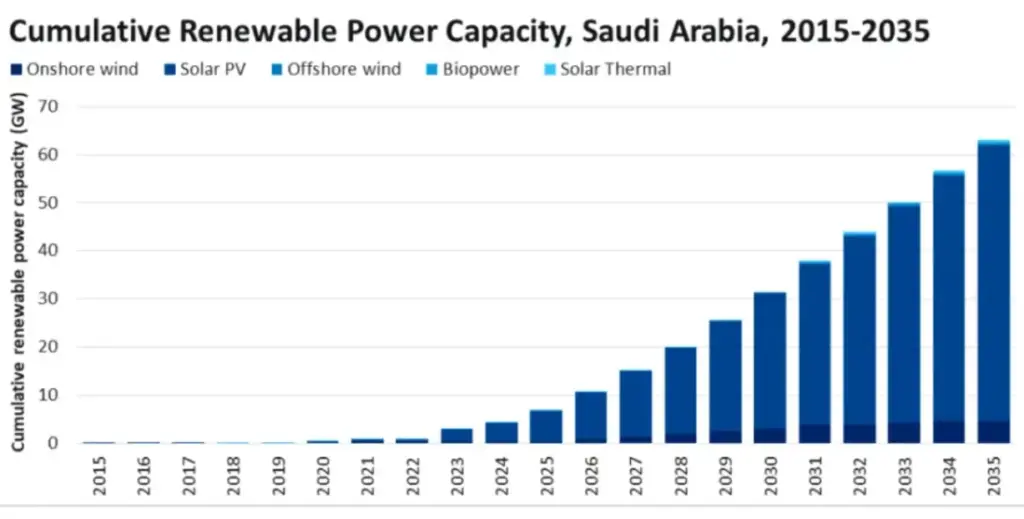
With its abundant solar resources and large expanses of open land, Saudi Arabia is poised to become a global leader in solar energy.
The Role of Elsewedy Electric in the Project
Elsewedy Electric, an Egyptian multinational group specializing in energy infrastructure, was the engineering, procurement, and construction (EPC) contractor for the El Saad Solar Plant. The company was responsible for delivering the solar project, which included everything from initial design and engineering to equipment procurement and final construction.
Elsewedy Electric’s role as an EPC contractor is central to its growth in the Middle East’s energy sector. The company has completed several major renewable energy projects across Africa, the Middle East, and Asia, making it one of the leading players in the global energy industry.
Vision 2030 and Saudi Arabia’s Renewable Energy Goals
Saudi Arabia’s renewable energy expansion is a central component of Vision 2030, which outlines the Kingdom’s strategic goals to diversify its economy and reduce its reliance on oil exports. Vision 2030 is also focused on ensuring environmental sustainability and increasing domestic energy capacity through cleaner, renewable sources.
The government’s target is to produce 50% of its energy from renewable sources by 2030. To achieve this, Saudi Arabia has launched a series of projects under the National Renewable Energy Program (NREP).
These initiatives focus on both wind and solar energy, with solar expected to play a dominant role due to the country’s vast sunlight resources. The El Saad Solar Plant is part of this overarching strategy, contributing significantly to meeting the Kingdom’s 2030 renewable energy goals.
Solar Power in Saudi Arabia: Growing Market and Global Leadership
Saudi Arabia’s solar energy sector is poised for explosive growth. With some of the highest levels of solar irradiation in the world, the country is becoming a hub for large-scale solar power projects. The El Saad Solar Plant is just one example of Saudi Arabia’s aggressive push to tap into its solar potential.
Not only is the Kingdom expanding its domestic renewable energy capacity, but it is also positioning itself as a global player in the renewable energy market. With massive projects like the Sudair Solar PV Project (1.5 GW) and the Al-Faisaliah Solar Project (600 MW), Saudi Arabia aims to lead the region in solar energy production and exports.
Jeddah, Medina, and Mecca are expected to follow suit with additional solar and wind projects. Government incentives, large-scale investments, and favourable climatic conditions make Saudi Arabia one of the most attractive solar markets in the Middle East.
Economic Impact: Local Job Creation and Investment
Beyond electricity generation, the El Saad Solar Plant is creating significant economic benefits for Saudi Arabia. Large-scale projects like this one often provide employment opportunities during the construction phase, with roles for engineers, construction workers, technicians, and logistics staff.
इस घर में AC, पंखा, लाइट और कूलर चलते हैं बिना बिजली बिल के! जानिए कैसे आप भी पा सकते हैं यह सुविधा
Once operational, the plant will provide long-term jobs in maintenance, operations, and monitoring. The Saudi government also benefits from increased tax revenues and the potential for job creation in associated industries, such as equipment manufacturing and research & development.
In total, solar energy projects contribute more than $1.5 billion in economic activity annually, with investment flowing into infrastructure, energy technology, and human capital development.
Experts say the job creation and economic opportunities from these projects are crucial for Saudi Arabia’s transition to a more diversified and sustainable economy.
Environmental and Social Impact of Solar Projects
The El Saad Solar Plant will help reduce Saudi Arabia’s carbon footprint by replacing fossil-fuel-based electricity generation. Saudi Arabia, like many countries, faces the challenge of balancing economic growth with environmental sustainability.
Solar projects such as El Saad help address this challenge by providing clean, renewable energy without carbon emissions.
In addition to environmental benefits, solar projects can help preserve valuable resources like water, which is often used for cooling in thermal power plants. The clean nature of solar energy also reduces the environmental costs associated with extracting and using fossil fuels.
However, large-scale solar developments must take into account land use considerations, including impacts on local communities and ecosystems.
In Saudi Arabia, where land is a precious resource, solar developers often work with local communities to mitigate these impacts and ensure that projects are integrated into the landscape in ways that benefit both the environment and local populations.
Integration with the Grid: Challenges and Solutions
As Saudi Arabia scales up its solar power capacity, grid integration remains a significant challenge. Solar energy production is intermittent and depends on sunlight, which requires advanced grid management strategies to ensure that electricity is distributed efficiently.
Grid operators in Saudi Arabia are working to integrate renewable energy into the existing energy system. Solutions include smart grid technologies, energy storage systems, and demand-side management.
The Saudi Electricity Company (SEC) and the Saudi Power Procurement Company (SPPC) have been working on enhancing transmission networks and storage solutions to accommodate the rapid influx of renewable energy sources.
Future of Solar Power in Saudi Arabia
The El Saad Solar Plant represents a major step forward in Saudi Arabia’s transition to clean energy. As the Kingdom continues to pursue its renewable energy targets, more large-scale solar projects are expected to follow.
The growth of the solar sector will be supported by continued government investment, favourable regulatory policies, and the involvement of international energy players like Elsewedy Electric.
As Saudi Arabia moves closer to meeting its Vision 2030 renewable energy targets, solar power will play an increasingly important role in the Kingdom’s energy mix and its efforts to combat climate change.
Related Links
Persistent Blackouts Drive Cameroon Residents Toward Independent Private Solar Grids
Breaking Red Tape: New ‘Plug-and-Play’ Solar Solutions Empower Renters and Apartment Dwellers
The 348.6 MW El Saad Solar Plant in Riyadh is a significant development in Saudi Arabia’s quest for energy diversification and sustainability. As part of the broader Vision 2030 strategy, the project supports the Kingdom’s goal of generating 50% of its energy from renewable sources by 2030.
With the successful completion of this project, Elsewedy Electric has not only contributed to Saudi Arabia’s renewable energy ambitions but also further cemented its role in the global renewable energy market.
FAQs
What is the capacity of the El Saad Solar Plant?
The El Saad Solar Plant has a capacity of 348.6 megawatts and is located in the Riyadh region of Saudi Arabia.
Who is responsible for the development of the solar plant?
Elsewedy Electric was the engineering, procurement, and construction (EPC) contractor for the project, overseeing the full development process.
What is Vision 2030 and how does it relate to renewable energy?
Vision 2030 is Saudi Arabia’s long-term plan to diversify its economy away from oil dependency and includes ambitious goals for renewable energy, with a target of generating 50% of the Kingdom’s energy from renewables by 2030.