

The Inflation Reduction Act (IRA) 2026 solar tax credit, officially known as the Residential Clean Energy Credit, remains a crucial incentive for homeowners investing in solar energy. Taxpayers can claim 30 percent of their solar installation costs as a tax credit, significantly reducing upfront expenses and promoting energy efficiency.

However, with the evolving legislative landscape and deadlines approaching, it is essential for homeowners to understand how to maximize this opportunity.
Inflation Reduction Act 2026
| Key Fact | Detail |
|---|---|
| Credit Value | 30% of eligible installation costs for solar systems |
| Eligibility | Homeowners installing solar systems on primary or secondary residences |
| How to Claim | Complete IRS Form 5695 when filing a federal tax return |
| Covered Costs | Includes solar panels, inverters, batteries, labor, installation, and permits |
| Policy Context | Part of Inflation Reduction Act 2022 to boost renewable energy |
Understanding the Inflation Reduction Act Solar Tax Credit
The Inflation Reduction Act (IRA), signed into law in August 2022, is the largest federal investment in clean energy in U.S. history. It aims to combat climate change, reduce greenhouse gas emissions, and accelerate the nation’s transition to clean, renewable energy sources.
One of the pivotal components of this legislation is the Residential Clean Energy Credit, which provides a 30% tax credit for solar energy systems installed in U.S. homes. This incentive is intended to make solar energy more accessible and affordable for homeowners across the country.
Whether installing rooftop solar panels or energy storage systems, homeowners can reduce their installation costs by leveraging this federal credit, allowing them to not only save on utility bills but also contribute to reducing overall carbon footprints.
What Costs Are Covered by the 30% Solar Tax Credit
Qualified Equipment
The 30% solar tax credit applies to the following eligible costs:
- Solar panels (including photovoltaic systems)
- Inverters (which convert solar energy into electricity)
- Solar batteries (to store energy generated during the day for nighttime use)
- Mounting hardware for attaching panels to roofs
- Wiring and electrical components necessary for installation
- Permitting and inspection fees
Labor costs associated with the installation process are also covered under the credit, which can add substantial savings for homeowners.
Energy Storage Systems
Under the Inflation Reduction Act, solar battery storage systems are eligible for the tax credit when paired with new or existing solar panels. These systems enable homeowners to store excess electricity generated by their solar panels, providing backup power during grid outages and helping to optimize energy use.
Eligibility for the 30% Solar Tax Credit
Home Ownership Requirement
To qualify for the Residential Clean Energy Credit, homeowners must own the solar system. This rule excludes leased systems and those financed through power purchase agreements (PPAs), as the leasing company or financier typically claims the tax credit instead.
Eligible Properties
The tax credit applies to solar systems installed on:
- Primary residences in the United States
- Secondary residences (such as vacation homes)
Solar installations on rental properties are generally not eligible unless the homeowner also resides in the property for part of the year.
Installation Dates and Deadlines
To qualify for the 30% tax credit, the solar system must be installed and operational during the eligible tax year.
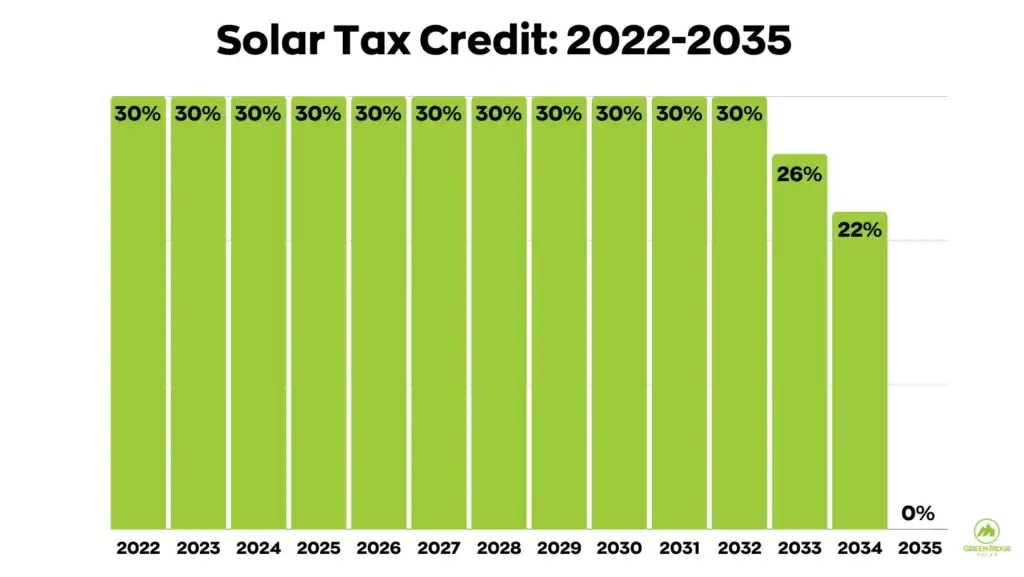
For example, if a homeowner installs solar in 2026, they can claim the credit on their 2026 tax return, which they file in 2027. The credit will remain at 30% for installations through 2032, as extended by the IRA. However, changes in tax law could affect incentives in subsequent years.
Claim the 30% Solar Tax Credit
Claiming the 30% solar tax credit involves several steps. Homeowners must carefully track their expenses and submit the required forms to the Internal Revenue Service (IRS).

Confirm Eligibility
Ensure the solar system meets eligibility criteria. This includes confirming that the system is owned, installed in an eligible property, and operational during the tax year. Homeowners should retain receipts, contractor invoices, and system installation records as proof.
Calculate Total Qualified Costs
Add up the total costs associated with the solar system, including panels, installation, inverters, and storage systems. Labor and permitting costs also count toward the total.
Complete IRS Form 5695
To claim the credit, homeowners must file IRS Form 5695 (Residential Energy Credits) along with their annual tax return. Form 5695 calculates the eligible amount of the tax credit based on the qualified costs.
Apply the Credit to Your Taxes
The tax credit is applied directly to reduce your federal tax liability. If the credit exceeds the tax liability, homeowners may carry forward the remaining balance to future tax years.
Real-Life Example of Claiming the Solar Tax Credit
Example 1: Homeowner in California
A California homeowner installs a $25,000 solar energy system on their rooftop. After qualifying for the 30% solar tax credit, they will receive $7,500 in tax relief. This reduces their overall tax bill, effectively lowering the system’s net cost.
In this case, the homeowner claims the credit on their 2026 tax return and uses IRS Form 5695 to calculate and submit the credit.
State-Specific Variations and Additional Benefits
In addition to the federal tax credit, many states offer solar incentives such as rebates, additional tax credits, or net metering policies.
State Tax Credits and Rebates
Some states offer their own solar incentives, which can be claimed in conjunction with the federal tax credit. These incentives may include:
- State tax credits for solar installation
- Rebates for specific solar equipment or installations
- Property tax exemptions for solar systems
For instance, California provides a solar rebate program that can be combined with the federal tax credit, significantly reducing the upfront cost of installing solar panels.
Net Metering and Other Benefits
Net metering policies allow homeowners to sell excess energy generated by their solar systems back to the grid, offsetting their utility costs. These policies vary by state, but they can result in additional savings for solar customers.

Solar Tax Credit Global Comparison
The U.S. solar tax credit is part of a broader global trend of government incentives aimed at accelerating solar energy adoption.
Countries such as Germany, China, and India have similar solar tax incentives designed to lower costs and promote renewable energy solutions. However, the 30% tax credit in the U.S. remains one of the most generous globally, offering significant savings for homeowners.

Potential Changes or Expirations
While the 30% tax credit is available until 2032 under the Inflation Reduction Act, there are ongoing discussions in Congress about potential sunset provisions and adjustments to the program after 2032.
Experts suggest that the program’s extension could depend on future political decisions, emphasizing the need for homeowners to act within the current tax credit window.
Related Links
Elsewedy Electric Completes 348.6 MW El Saad Solar Plant in Riyadh
Zelestra Breaks Ground on 441 MW Solar Projects in Texas, Backed by Meta
The 30% solar tax credit introduced under the Inflation Reduction Act of 2022 is one of the most important incentives for homeowners looking to install renewable energy systems. By reducing upfront costs, the tax credit encourages clean energy adoption and helps the U.S. meet its climate goals.
Homeowners interested in claiming the credit should ensure they meet eligibility requirements, calculate their qualified installation costs, and file IRS Form 5695 with their tax returns.
By doing so, they can take full advantage of the financial incentives available under this important federal program.