

The US solar manufacturing boom is rapidly transforming the renewable energy industry as new factories open across the country and domestic production capacity expands. Fueled by federal incentives, supply‑chain concerns, and rising electricity demand, the United States is rebuilding its solar manufacturing base.
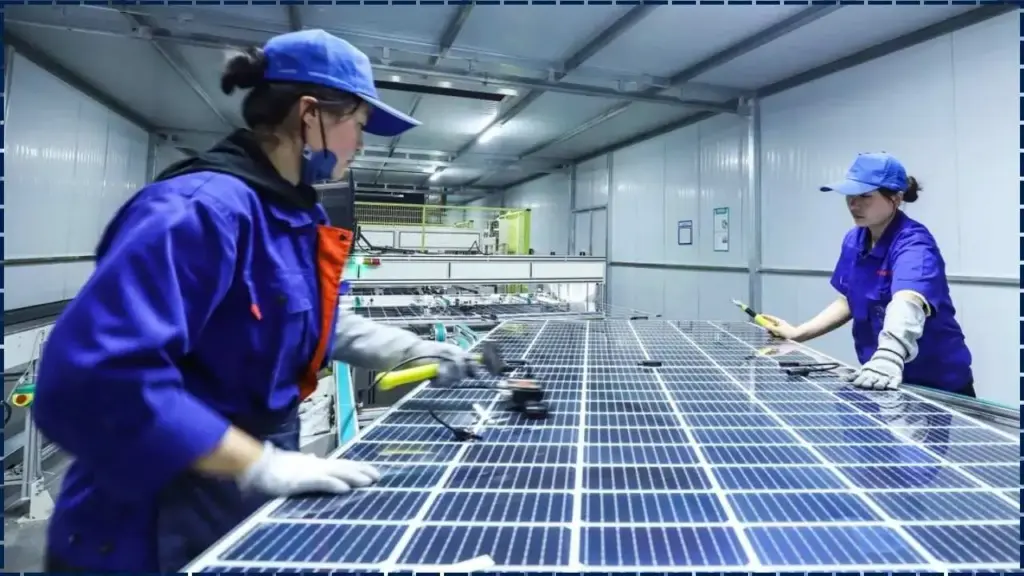
Analysts say locally made solar panels are increasingly attractive because they strengthen supply security, support domestic jobs, and qualify for additional government incentives.
US Solar Manufacturing Boom
| Key Fact | Detail |
|---|---|
| Domestic manufacturing capacity | More than 60 gigawatts of U.S. solar module production capacity as of 2025 |
| Solar installations | Solar accounted for 69% of new electricity capacity in early 2025 |
| Solar power growth | Total U.S. solar generation reached nearly 389 TWh in 2025 |
| Supply chain shift | Domestic manufacturing expanded more than fivefold since 2022 |
A Rapid Rise in Domestic Solar Manufacturing
The US solar manufacturing boom represents one of the fastest expansions of clean‑energy industrial capacity in the country’s history.
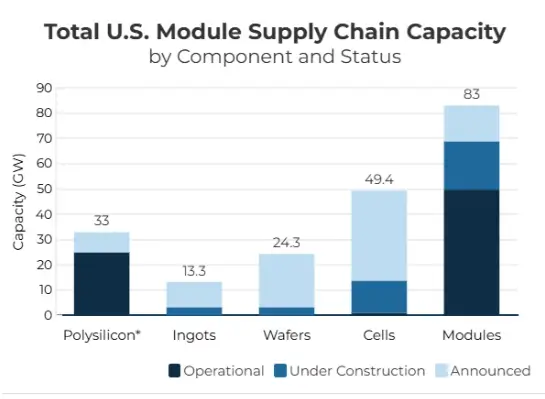
According to the Solar Energy Industries Association (SEIA), the United States now has more than 60 gigawatts of solar module manufacturing capacity, a significant increase from levels just a few years earlier.
Industry data suggest that domestic capacity has expanded more than fivefold since major federal clean‑energy incentives were introduced. Factories producing solar panels, solar cells, and other components have been announced or constructed in states such as:
- Texas
- Georgia
- Ohio
- South Carolina
- Arizona
Many of these manufacturing plants are located in regions historically associated with traditional manufacturing industries. Energy analysts say the expansion reflects a strategic shift in U.S. energy policy toward rebuilding domestic clean‑energy supply chains.
The Role of Federal Policy in the Manufacturing Boom
Government incentives have played a central role in driving investment in domestic solar manufacturing. The Inflation Reduction Act (IRA), passed in 2022, introduced several provisions aimed at strengthening American clean‑energy supply chains. These policies include:
- Production tax credits for domestic solar manufacturers
- Investment tax credits for renewable energy projects
- Additional incentives for projects using domestically produced components
These measures encourage solar developers to purchase American‑made panels rather than imported alternatives. Energy policy analysts say the incentives significantly changed the economics of solar manufacturing.
“Domestic manufacturing incentives are reshaping global supply chains for clean energy technologies,” said energy policy researchers studying U.S. industrial policy.
Why Locally-Made Solar Panels Are Gaining Favor
Several factors are contributing to the growing popularity of domestically manufactured solar panels.
Supply Chain Security
For years, the global solar supply chain has been heavily concentrated in Asia, particularly China. Industry experts say this concentration created vulnerabilities for energy markets.
Shipping delays, trade disputes, and geopolitical tensions highlighted the risks of relying heavily on overseas manufacturing. By producing panels domestically, developers can reduce exposure to international supply disruptions.
Faster Delivery and Logistics
Importing solar panels often requires long shipping times and complex logistics. Domestic production allows energy developers to obtain equipment faster and avoid shipping delays.
Policy Incentives
Solar projects that use American‑made components may qualify for additional tax incentives under federal law. These incentives can offset higher manufacturing costs compared with imported panels.
Job Creation
Domestic solar manufacturing creates jobs across multiple sectors, including engineering, manufacturing, logistics, and construction.
The Global Context of Solar Manufacturing
Although the United States is expanding domestic production, the global solar manufacturing industry remains dominated by Asian producers. China, in particular, accounts for the majority of global solar panel production.
Energy economists say this concentration emerged because of economies of scale and long‑term industrial policies that supported renewable energy manufacturing.
However, several countries—including the United States, India, and members of the European Union—are now investing heavily in domestic solar supply chains. These efforts aim to reduce dependence on imports and improve energy security.

Economic Impact of the Solar Manufacturing Boom
The expansion of domestic solar manufacturing has significant implications for the U.S. economy. Industry analysts estimate that hundreds of thousands of jobs could be created as new factories open and supply chains expand.
Many facilities are located in regions seeking new economic opportunities following declines in traditional industries. Economic development officials say renewable energy manufacturing can help diversify local economies.
Solar factories also stimulate related industries, including glass manufacturing, semiconductor processing, and electrical component production.
Solar Power’s Growing Role in the U.S. Energy Mix
The manufacturing boom is occurring alongside rapid growth in solar energy deployment. Solar power has become one of the fastest‑growing sources of electricity in the United States. Energy data show that total solar electricity generation reached nearly 389 terawatt‑hours in 2025, reflecting a sharp increase compared with previous years.
Solar energy now accounts for a growing share of new electricity capacity added to the U.S. grid. Industry analysts say this trend is likely to continue as electricity demand increases due to electric vehicles, data centers, and electrification of buildings.
Challenges Facing Domestic Solar Manufacturing
Despite rapid expansion, the U.S. solar manufacturing sector still faces several challenges.
Upstream Supply Chain Gaps
Although module assembly capacity has expanded significantly, other components—such as wafers and solar cells—are still often imported. Developing a fully domestic supply chain remains a long‑term goal.
Policy Uncertainty
Changes in federal policy could affect the economics of manufacturing investments. Industry groups have warned that removing key incentives could slow the pace of new factory construction.
Recent policy debates in Washington have created uncertainty about the long‑term future of some clean‑energy incentives.
Global Competition
International manufacturers continue to produce solar panels at very large scales. Lower production costs overseas can make imported panels more competitive in some markets.
Industry Perspectives
Supporters of domestic manufacturing say the benefits extend beyond economic growth. Abigail Ross Hopper, president of the Solar Energy Industries Association, said the expansion of domestic manufacturing is strengthening the nation’s clean‑energy supply chain.
Industry leaders argue that local manufacturing helps ensure reliable access to renewable energy technologies. However, some economists caution that tariffs and trade restrictions designed to support domestic manufacturing could increase costs for solar developers.
Balancing industrial policy with affordable renewable energy deployment remains a key challenge for policymakers.

What the Manufacturing Boom Means for Consumers
For homeowners and businesses considering solar installations, the growth of domestic manufacturing may offer several advantages. Locally produced panels may provide:
- Greater supply reliability
- Faster installation timelines
- Eligibility for domestic‑content incentives
- Improved transparency in supply chains
Although imported panels can sometimes cost less, analysts say domestic production may become increasingly competitive as manufacturing capacity expands.
Future Outlook for U.S. Solar Manufacturing
Energy researchers expect domestic solar manufacturing to continue growing in the coming years. Forecasts from industry analysts suggest the United States could add hundreds of gigawatts of solar capacity during the next decade.
If current investment trends continue, the country may develop a more complete solar supply chain capable of meeting much of its own demand.
Experts say the success of the US solar manufacturing boom will depend on stable policy support, continued investment, and technological innovation.
Related Links
ISA Report: Global Solar Capacity Surges 33% in 2024, But Africa and LDCs Face Huge Funding Gap
Surging Gas Prices Countered by Germany’s Solar Boom: A Major Relief for Energy Costs
The expansion of domestic solar manufacturing marks a significant shift in the U.S. energy economy. As investments continue and factories scale up production, locally made solar panels may play an increasingly important role in the nation’s transition toward clean electricity.
FAQs
Why is solar manufacturing expanding in the United States?
Federal incentives, supply chain concerns, and rising electricity demand are encouraging companies to build solar panel factories in the United States.
Are American‑made solar panels more expensive?
In some cases, domestically produced panels cost slightly more, but government incentives and shorter supply chains can offset the price difference.
How much solar manufacturing capacity does the U.S. have?
Industry data show the United States has more than 60 gigawatts of solar module manufacturing capacity.
Will the U.S. become self‑sufficient in solar manufacturing?
Experts say the country is expanding rapidly but still depends on imports for some components.