India’s rapid solar power expansion has created a new environmental concern: managing the waste generated by ageing photovoltaic panels.
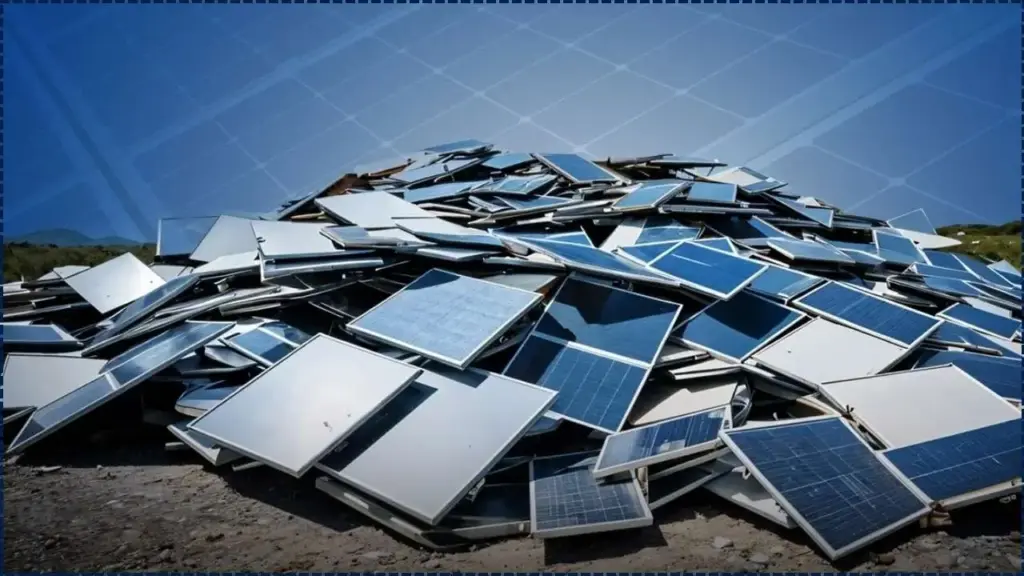
The New CPCB Guidelines: How India Plans to Manage Growing Solar E-Waste Challenges outline the government’s strategy to regulate disposal, storage, and recycling of solar equipment as the country prepares for a sharp rise in solar waste over the coming decades.
India’s Solar Expansion Brings New Environmental Pressures
India’s solar sector has expanded dramatically over the past decade. According to the Ministry of New and Renewable Energy (MNRE), installed solar capacity surpassed 100 gigawatts in 2024, making India one of the world’s largest solar markets.
This growth forms a central pillar of the country’s climate strategy. India has pledged to achieve 500 gigawatts of non-fossil fuel electricity capacity by 2030, as part of its commitments under the Paris Climate Agreement. But rapid deployment of solar infrastructure has created a less visible challenge: solar panel waste.
Solar photovoltaic panels typically operate efficiently for 20 to 25 years. Panels installed during the early years of the Jawaharlal Nehru National Solar Mission, launched in 2010, will begin reaching end-of-life in the coming decade.
Researchers warn that without proper recycling systems, the country could face a growing waste stream from outdated or damaged panels.
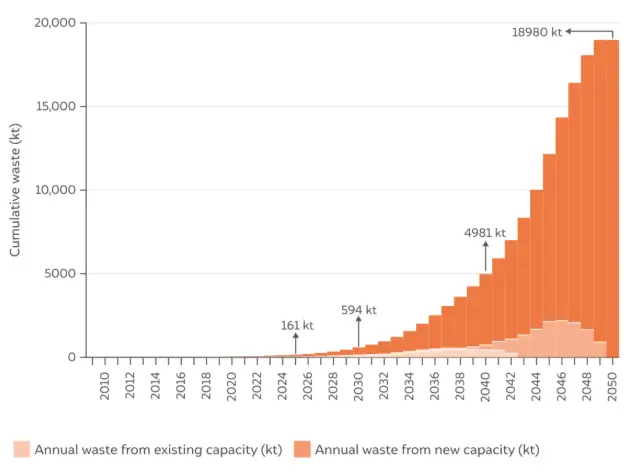
A study by the Council on Energy, Environment and Water (CEEW) estimates that India could generate 11 million tonnes of solar photovoltaic waste by 2050.
What the New CPCB Guidelines Aim to Achieve
The Central Pollution Control Board (CPCB), operating under the Ministry of Environment, Forest and Climate Change, has introduced new regulatory measures to manage solar waste within India’s broader electronic waste framework.
Solar photovoltaic modules, panels, and cells are now officially included under the E-Waste (Management) Rules, 2022. The new framework aims to ensure that discarded solar components are collected, stored, transported, and recycled responsibly.
Government officials say the policy reflects the need to anticipate waste challenges early rather than respond after environmental damage occurs. “India’s solar programme is expanding quickly, and waste management systems must grow alongside it,” a senior environment ministry official said during a policy briefing.
Temporary Storage Requirement Until 2034
One of the most distinctive aspects of the CPCB guidelines is the temporary storage provision. Under the rules, manufacturers and developers must safely store solar panel waste until around 2034–2035.
The government says this period will allow time for India to build a dedicated recycling industry capable of handling large volumes of photovoltaic waste. Unlike traditional electronic waste such as computers or smartphones, solar panel recycling requires specialised equipment and industrial processes.
Industry analysts say the delayed recycling requirement reflects the fact that most solar installations in India are still relatively new. Large volumes of waste are expected only after 2030.
Extended Producer Responsibility: Shifting Responsibility to Manufacturers
A central feature of the new policy is Extended Producer Responsibility (EPR).Under this approach, manufacturers and importers of solar equipment are responsible for managing waste generated from their products. Companies must:
- Register on the CPCB’s EPR portal
- Report the volume of solar equipment placed on the market
- Ensure collection and recycling of panels at end-of-life
- Meet recycling targets as regulations evolve
The model mirrors global practices in electronics recycling, where producers finance collection and treatment systems. Environmental economists say EPR helps ensure that waste management costs are included in the product lifecycle rather than falling solely on governments.
What Solar Panels Are Made Of
Solar panels consist of several valuable materials. The typical photovoltaic module contains:
- Glass (around 70-75%)
- Aluminium frames
- Silicon cells
- Copper wiring
- Silver contacts
Most of these materials are recyclable. However, the process of separating and recovering them requires advanced technology. Small quantities of hazardous elements such as lead or cadmium may also be present in certain types of panels. This makes proper recycling essential to avoid environmental contamination.
The Economics of Solar Panel Recycling
Recycling solar panels can recover valuable materials, but the process remains expensive. Glass and aluminium can be easily recycled. However, extracting high-purity silicon or silver from solar cells requires advanced chemical processing.

पतंजलि 1kWh Solar Panel: बिजली का बिल होगा ZERO, ₹60,000 की सब्सिडी का सुनहरा मौका, जानें पूरी डिटेल
Dr Rahul Tongia, a senior fellow at the Centre for Social and Economic Progress, notes that recycling economics remain uncertain. “Solar waste volumes are still relatively low in India,” Tongia said during an energy policy forum. “Until larger quantities accumulate, recycling facilities may struggle to operate at scale.”
Experts say government incentives or subsidies could accelerate the development of recycling infrastructure.
The Role of India’s Informal Recycling Sector
India already faces significant challenges managing electronic waste. Much of the country’s e-waste is processed by the informal sector, where workers dismantle electronics without proper safety equipment.
Environmental groups warn that solar panels could eventually enter similar informal recycling streams if strict enforcement is not maintained.
Improper dismantling can expose workers to hazardous materials and release pollutants into the environment. The CPCB guidelines attempt to prevent this by requiring that solar waste be handled only by authorised recyclers and treatment facilities.
Emerging Solar Recycling Companies in India
A small number of Indian companies have already begun developing solar recycling technologies. Firms such as Attero Recycling, one of India’s largest e-waste recycling companies, are exploring processes to recover metals and silicon from photovoltaic modules.
Attero says it has developed technology capable of extracting high-purity materials from solar panels. Other recycling startups are also entering the sector as investors anticipate future waste volumes.
Industry analysts say a domestic recycling ecosystem could create new green jobs and economic opportunities.
Global Approaches to Solar Waste Management
Countries around the world are beginning to confront solar waste challenges. The European Union regulates photovoltaic panels under its Waste Electrical and Electronic Equipment (WEEE) Directive, which requires manufacturers to finance recycling programmes.
The directive mandates collection and recycling targets for solar equipment sold in EU markets. The United States has taken a more fragmented approach, with some states developing their own solar recycling laws.
Japan and South Korea are also investing in solar recycling technologies as renewable energy installations expand. Policy experts say India’s framework aligns with global trends but includes unique provisions such as the temporary storage requirement.
Environmental Risks of Poor Solar Waste Management
While solar panels are designed to produce clean energy, improper disposal could create environmental hazards. If panels are dumped in landfills or broken during informal recycling, toxic elements may seep into soil or groundwater.
Researchers say the risk increases as the number of decommissioned panels rises. The International Renewable Energy Agency (IRENA) estimates that global solar waste could reach 78 million tonnes by 2050.

₹55 के नीचे आया Suzlon Energy का शेयर, एक्सपर्ट बोले– फिलहाल दूरी बनाना बेहतर, बिकवाली का दबाव तेज
Preventing environmental damage requires proper collection systems, recycling technology, and regulatory enforcement.
Circular Economy Opportunities
Some experts view solar waste not only as an environmental challenge but also as an economic opportunity. Recovered materials from solar panels could be reused in manufacturing new panels or other electronics.
This approach forms part of the broader circular economy, which focuses on recycling materials to reduce demand for raw resources. Analysts say the value of recoverable materials from solar waste globally could reach billions of dollars by mid-century. India’s policy framework aims to encourage innovation in this area.
Policy Gaps and Future Regulations
While the CPCB guidelines represent a significant step, analysts say several policy gaps remain. Key issues include:
- Limited recycling capacity in India
- Lack of clear recycling targets for solar waste
- Insufficient incentives for private investment
- Monitoring challenges across large solar installations
Experts expect additional regulations to emerge as the solar sector matures. Future policies may include mandatory recycling quotas or financial incentives for panel recovery.
The Road Ahead for Solar Waste Management
India’s renewable energy expansion is expected to continue at a rapid pace. The International Energy Agency (IEA) forecasts that solar power will play a dominant role in India’s future electricity system.
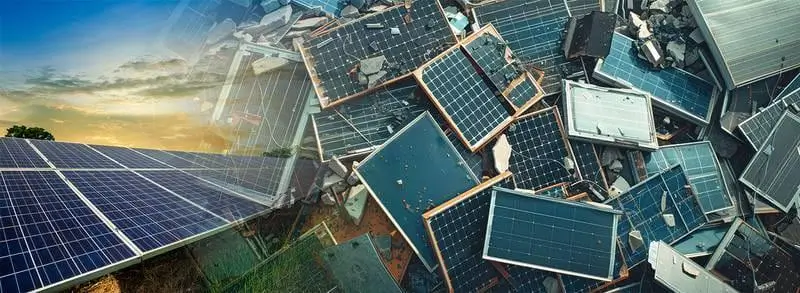
As installations grow, the challenge of managing end-of-life solar equipment will become increasingly important. The New CPCB Guidelines: How India Plans to Manage Growing Solar E-Waste Challenges represent an early attempt to address this issue before waste volumes escalate.
Experts say the success of the policy will depend on enforcement, industry cooperation, and investment in recycling technologies.
Related Links
India’s Solar Module Imports Surged Ahead of 2024 ALMM Deadline: MNRE Data Reveals
Net Metering Changes: What the new grid regulations mean for your solar savings
India’s solar revolution has helped accelerate the country’s transition toward cleaner energy. Yet the expansion of photovoltaic infrastructure has created a new environmental responsibility.
Through regulatory measures such as Extended Producer Responsibility, waste tracking systems, and safe storage rules, the Central Pollution Control Board is laying the foundation for a national solar recycling framework.
If implemented effectively, the guidelines could help ensure that India’s renewable energy transition remains sustainable not only in energy production but also in waste management.