

Repeated disruptions in global oil, gas, and coal supplies are accelerating a historic shift toward renewable energy, with solar power and battery storage emerging as central solutions.

Analysts say fossil fuel disruptions—from geopolitical conflicts to price spikes—are pushing governments, utilities, and businesses to invest rapidly in solar and energy storage systems that offer greater energy security and cost stability.
Global Boom in Solar and Battery Storage
| Key Fact | Detail / Statistic |
|---|---|
| Record solar expansion | Nearly 600 GW of solar installed globally in 2024 |
| Battery price decline | Lithium-ion battery costs have fallen over 80% since 2010 |
| Renewable competitiveness | 90% of new renewable projects are cheaper than fossil fuels in many markets |
| Energy investment shift | Global clean energy investment exceeded $1.7 trillion in 2023 |
Fossil Fuel Disruptions Are Catalyzing a Global Boom in Solar and Battery Storage
Energy Shocks Reveal Vulnerabilities in Fossil Fuel Systems
Energy crises have historically reshaped the global energy landscape. Today’s shift toward renewables is being accelerated by repeated disruptions in fossil fuel markets.
Over the past decade, the world has faced multiple shocks: supply chain disruptions during the COVID-19 pandemic, volatile oil markets, and geopolitical tensions affecting gas exports.
The most significant event occurred in 2022 when Russia’s invasion of Ukraine disrupted natural gas flows to Europe. According to the International Energy Agency (IEA), the resulting price spike forced European countries to rapidly diversify their energy supplies.
“Energy security has become the primary driver of the clean energy transition,” said Fatih Birol, executive director of the IEA, in the agency’s World Energy Outlook. Solar power and battery storage technologies are increasingly viewed as reliable alternatives to fossil fuels.

Historical Context: Energy Crises Often Trigger Innovation
Energy transitions are often triggered by crises. The oil embargo of 1973 led many Western countries to introduce energy efficiency policies and invest in alternative energy research. That period also saw the early development of solar photovoltaic technology.
Today’s energy disruptions are driving a similar shift. “The current energy crisis is accelerating structural changes that were already underway,” said Dr. Samantha Gross, director of energy security at the Brookings Institution.
Unlike earlier transitions, however, solar and battery technologies are now economically competitive.
Solar Power Reaches Global Scale
Solar energy has become the fastest-growing source of electricity generation worldwide. According to the International Renewable Energy Agency (IRENA), the cost of utility-scale solar power has fallen dramatically over the past decade due to manufacturing scale and technological improvements.
China, the United States, India, and the European Union are now the largest solar markets. The IEA estimates that nearly 600 gigawatts of solar capacity were added globally in 2024, a record increase and more than any other energy source.
Analysts say the economics of solar energy have fundamentally changed. “Solar is now the cheapest source of electricity in many countries,” said Jenny Chase, lead solar analyst at BloombergNEF.
Battery Storage Solves Renewable Energy’s Reliability Challenge
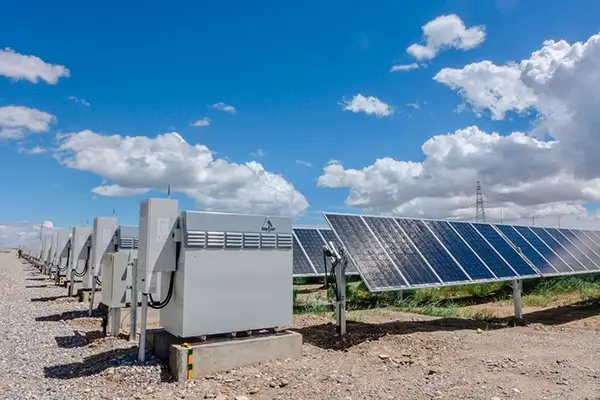
Solar power generates electricity only when sunlight is available. Battery storage systems address this limitation by storing excess power for use during periods of high demand. Lithium-ion battery technology—originally developed for consumer electronics and electric vehicles—has become the dominant form of grid-scale storage.
BloombergNEF reports that battery prices have fallen by more than 80 percent since 2010, enabling utilities to deploy large-scale storage facilities. “Energy storage allows renewable energy to function as reliable power,” said David Turk, deputy secretary of the U.S. Department of Energy.
Large battery installations are now common in regions with high solar penetration, including California, Australia, and parts of Europe.
Energy Security Becomes a Strategic Priority
Energy security concerns have become a powerful driver of renewable investment. Countries that rely heavily on imported fossil fuels face risks from geopolitical instability and market volatility. In response to the 2022 gas crisis, the European Union launched the REPowerEU strategy to expand renewable energy and reduce reliance on Russian gas.
European Commission President Ursula von der Leyen described renewable energy as “the cornerstone of Europe’s energy independence.” Similar policies are emerging worldwide.
India is expanding solar capacity to reduce coal imports, while several Middle Eastern countries are investing in solar power to diversify oil-dependent economies.
Corporate Investment Accelerates Renewable Deployment
Private companies are also driving the expansion of solar and battery storage. Technology firms, manufacturers, and utilities increasingly sign long-term power purchase agreements for renewable electricity.
Companies such as Amazon, Microsoft, and Google have become among the world’s largest buyers of renewable energy. Corporate sustainability targets are pushing firms to transition away from fossil fuels. According to BloombergNEF, corporate renewable energy contracts reached record levels in recent years.
Supply Chains and Critical Minerals
While renewable energy technologies reduce dependence on fossil fuels, they require new supply chains. Solar panels depend on materials such as silicon, silver, and aluminum, while batteries rely on critical minerals including lithium, cobalt, and nickel.
The International Energy Agency warns that demand for lithium alone could grow more than 40-fold by 2040 under ambitious climate scenarios. China currently dominates much of the global supply chain for solar panels and battery components.
This concentration has prompted the United States and Europe to invest heavily in domestic manufacturing. The Inflation Reduction Act in the United States includes billions of dollars in incentives for clean energy manufacturing.
Grid Infrastructure Must Expand
As renewable energy grows, electricity grids must adapt to handle decentralized generation. Traditional grids were designed around large fossil fuel power plants. Solar farms and distributed rooftop installations require new transmission networks and digital grid management systems.
According to the International Energy Agency, global investment in electricity grids must double by 2030 to support the energy transition.
Developing Countries Join the Renewable Expansion
Solar power is also expanding rapidly in emerging economies. Many developing countries lack extensive power infrastructure. Solar mini-grids and battery storage offer a cost-effective alternative to building large fossil fuel plants.
In Africa and South Asia, solar microgrids are providing electricity to remote communities for the first time. The World Bank has supported numerous projects aimed at expanding renewable energy access in developing nations.
“Solar energy offers an opportunity to leapfrog traditional infrastructure,” said Riccardo Puliti, vice president for infrastructure at the World Bank.
Climate Policy Reinforces the Shift
Global climate commitments are also reinforcing the transition to renewable energy. Under the Paris Climate Agreement, nearly every country has pledged to reduce greenhouse gas emissions.
Achieving these targets requires rapid expansion of renewable electricity. According to the United Nations, renewable energy capacity must triple by 2030 to meet global climate goals. Solar power and battery storage are expected to play central roles in reaching those targets.

SAEL IPO: क्लीन एनर्जी सेक्टर की यह कंपनी ला रही है IPO, जानें कब होगी लिस्टिंग और क्या है प्लान
Fossil Fuels Still Dominate Global Energy
Despite rapid growth in renewable energy, fossil fuels remain the primary source of global energy. The IEA estimates that oil, gas, and coal still account for about 80 percent of total global energy consumption.
Replacing that infrastructure will require massive investment and decades of sustained policy support. Energy historian Daniel Yergin, vice chairman of S&P Global, says energy transitions typically unfold slowly.
“Energy systems evolve over decades because infrastructure lasts a long time,” Yergin said during an industry conference.
Long-Term Outlook for Solar and Battery Storage
Nevertheless, most energy forecasts show renewables expanding rapidly. IEA projections indicate that renewable sources could generate nearly half of global electricity by 2030 if current policies continue.
Solar power is expected to dominate new electricity capacity additions, while battery storage will increasingly support grid reliability. As technology costs continue to fall, analysts say solar and storage could become the backbone of future electricity systems.
Related Links
Global Solar Market Outlook (2025-2033): Key Trends and Growth Drivers Revealed
Solar vs. Nature: Jefferson County Project Faces Backlash Over Rare Ecosystem Impact
While fossil fuels continue to dominate global energy supply, recurring market disruptions are accelerating investment in renewable technologies. Solar power and battery storage—once considered niche solutions—are rapidly becoming central components of national energy strategies aimed at improving resilience, lowering costs, and strengthening energy security.
FAQs
Why are fossil fuel disruptions accelerating renewable energy growth?
Supply disruptions and price spikes make fossil fuels less reliable. Solar power and battery storage provide stable energy costs and improved energy security.
How do batteries support solar energy?
Battery systems store electricity produced during sunny periods and release it later when demand is high or sunlight is unavailable.
Which countries lead solar deployment?
China, the United States, India, and the European Union are among the largest producers of solar electricity.
Are renewable energy sources now cheaper than fossil fuels?
In many regions, renewable energy projects produce electricity at lower costs than new fossil fuel power plants.