
India’s largest solar module manufacturer, Waaree Energies Ltd., has announced plans to invest about ₹6,200 crore in a 10-gigawatt integrated solar ingot and wafer manufacturing facility in Nagpur, Maharashtra.
The project aims to strengthen India’s domestic solar supply chain, reduce reliance on imports, and support the country’s expanding renewable energy sector. (scanx.trade)
Waaree Energies to Invest ₹6,200 Crore in India’s Largest 10 GW Ingot-Wafer Facility
Major Investment in India’s Solar Manufacturing Ecosystem
The Waaree Energies to Invest ₹6,200 Crore in India’s Largest 10 GW Ingot-Wafer Facility project represents one of the largest manufacturing investments in India’s solar sector.
According to company announcements, the facility will be built in the Butibori industrial area near Nagpur, covering roughly 300 acres and producing 10 gigawatts of solar ingots and 10 gigawatts of wafers annually.
Solar ingots and wafers form the foundation of photovoltaic manufacturing. By building domestic capacity for these components, India aims to reduce dependence on imported solar materials.
The project is expected to generate more than 8,000 direct and indirect jobs, creating a significant economic boost for the region. Industry analysts say the facility will strengthen India’s upstream solar manufacturing ecosystem and help improve supply chain resilience.
Government Support and Groundbreaking Ceremony
The project’s groundbreaking ceremony was attended by senior state leaders and industry officials. Speaking at the event, Maharashtra Chief Minister Devendra Fadnavis emphasised India’s rapid shift toward renewable energy and domestic manufacturing of solar components.
He noted that India previously relied heavily on imports of wafers and ingots, primarily from China, but is now developing domestic manufacturing capabilities to support the country’s growing solar industry.
Fadnavis also highlighted the state government’s efforts to expand renewable energy capacity, including programmes supporting solar agricultural pumps and solar power generation.
According to the state government, Maharashtra has installed a majority of India’s solar agricultural pumps under national energy programmes.
Understanding the Solar Manufacturing Value Chain
Solar panel production involves several stages that convert raw materials into electricity-generating modules. The process typically includes:
- Polysilicon production – silicon material purified for photovoltaic use
- Ingot formation – molten silicon crystallised into cylindrical blocks
- Wafer slicing – thin slices cut from ingots
- Cell manufacturing – wafers processed into photovoltaic cells
- Module assembly – cells combined into solar panels
India has already developed strong capabilities in solar module assembly. However, upstream components such as wafers and ingots are still largely imported. Waaree’s Nagpur facility aims to address this gap by manufacturing these components domestically.
India’s Expanding Solar Energy Market
India has emerged as one of the fastest-growing solar power markets globally. The country aims to achieve 500 gigawatts of non-fossil fuel electricity capacity by 2030, with solar expected to contribute a large share of that target. Government initiatives supporting renewable energy include:
- Production Linked Incentive (PLI) schemes for solar manufacturing
- Import duties on solar components
- Policies promoting domestic manufacturing under the “Atmanirbhar Bharat” initiative
These measures are designed to strengthen India’s clean energy supply chain while reducing reliance on imports.
Waaree Energies’ Growth Strategy
Founded in 1990 and headquartered in Mumbai, Waaree Energies has grown into one of India’s largest solar technology companies. The company currently operates significant manufacturing capacity in solar modules and cells.
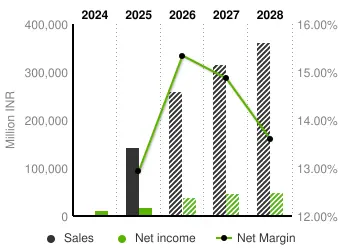
Industry reports estimate Waaree’s solar module manufacturing capacity could exceed 22 gigawatts by 2027, while solar cell capacity may rise above 15 gigawatts. The new ingot-wafer facility is part of the company’s strategy to vertically integrate its production capabilities.
By producing raw components internally, Waaree aims to control supply chains, improve cost competitiveness, and meet growing global demand for solar equipment. The company has also expanded internationally, including manufacturing operations in the United States and exports to global markets.
Competition in India’s Solar Manufacturing Sector
Waaree’s investment reflects a broader trend of expansion in India’s solar manufacturing industry. Several major companies are investing in upstream manufacturing facilities. For example, Tata Power Renewable Energy Ltd. has announced plans to build a 10-GW solar ingot and wafer manufacturing plant, aiming to strengthen India’s domestic solar supply chain.
Similarly, the Adani Group has also expanded integrated solar manufacturing capacity as part of its renewable energy strategy. Analysts say the growing competition reflects India’s ambition to become a global hub for solar manufacturing.
Global Supply Chain Challenges
Despite strong growth in domestic manufacturing, the global solar industry remains highly concentrated. China currently dominates solar supply chains, producing a large share of the world’s wafers, cells, and modules.
This concentration has created supply risks for countries seeking to expand renewable energy deployment. India’s strategy therefore focuses on building domestic capacity for critical solar components.
By developing facilities like the Nagpur plant, policymakers aim to reduce dependence on imports and improve energy security.
Economic and Regional Impact
Large industrial investments can transform regional economies. The Waaree facility is expected to attract supporting industries such as:
- equipment suppliers
- logistics providers
- engineering services
- raw material vendors
This could help establish Nagpur as a major solar manufacturing cluster. Local officials believe the project will also boost infrastructure development and skill training programmes in the region.
Challenges Facing Solar Manufacturing
Despite strong market growth, solar manufacturing remains a capital-intensive industry. Companies must navigate several challenges, including:
- global competition from established manufacturers
- fluctuating prices of raw materials such as polysilicon
- evolving photovoltaic technologies
- international trade policies affecting solar equipment
Maintaining cost competitiveness will therefore remain essential for Indian manufacturers entering global markets.

Related Links
Goa’s Green Initiative: 11,000+ Rooftop Solar Systems to be Installed Under PM Surya Ghar
New CPCB Guidelines: How India Plans to Manage Growing Solar E-Waste Challenges
Outlook for India’s Solar Industry
Analysts expect solar energy to remain one of the fastest-growing electricity sources worldwide. India’s large electricity demand, favourable climate, and government policy support position it as a key market for renewable energy.
Domestic manufacturing investments are expected to accelerate as companies seek to capture growing global demand for solar technology.
Projects like the Waaree Nagpur facility could play an important role in strengthening India’s renewable energy supply chain and improving the country’s competitiveness in global clean energy markets.
The ₹6,200-crore investment by Waaree Energies marks a significant milestone in India’s effort to build a comprehensive solar manufacturing ecosystem. As renewable energy deployment accelerates across the country, projects like the Nagpur facility may help strengthen domestic supply chains while supporting India’s transition toward cleaner and more secure energy systems.