

India has reached a major renewable energy milestone as installed solar power capacity approaches 136 gigawatts (GW), according to Union Minister for New and Renewable Energy Pralhad Joshi.

The development highlights the country’s rapid solar expansion and reflects India’s broader strategy to accelerate clean energy deployment while strengthening energy security and reducing dependence on fossil fuels.
India’s Solar Power Milestone: Installed Capacity Approaches 136 GW
Solar Growth Reflects India’s Energy Transformation
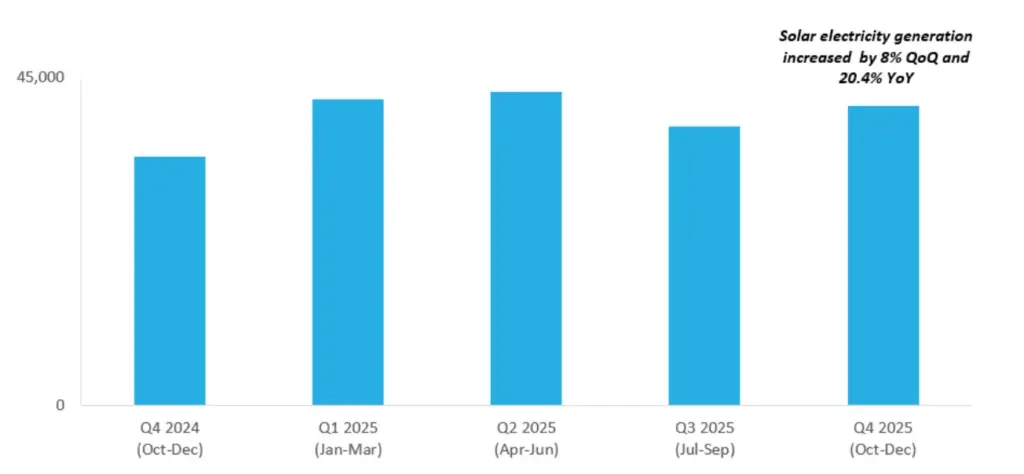
India’s renewable energy sector has expanded significantly over the past decade, with solar power emerging as the fastest-growing component of the country’s electricity mix. According to Union Minister Pralhad Joshi, India’s installed solar capacity has reached nearly 136 GW, marking an important milestone in the country’s clean energy transition.
Speaking at an event marking the International Solar Alliance (ISA) Foundation Day, Joshi emphasised that solar energy now accounts for almost half of India’s renewable energy capacity.
The milestone highlights the scale of solar deployment achieved through government initiatives, declining technology costs, and increased participation from private investors. Energy analysts say the growth reflects India’s commitment to transitioning toward sustainable energy while meeting rapidly rising electricity demand.
A Decade of Rapid Solar Expansion
India’s solar sector has experienced extraordinary growth since the mid-2010s. In 2014, the country’s installed solar capacity was approximately 2.8 GW. Within a decade, that figure has increased nearly fifty-fold. Several factors contributed to this rapid expansion:
- declining solar module prices
- competitive government auctions for solar projects
- improved financing options for renewable energy
- strong policy support from central and state governments.
As a result, India has emerged as one of the world’s largest solar markets and currently ranks among the top three countries globally in solar power capacity. Industry experts note that India’s favourable climate and abundant sunlight make solar energy an attractive long-term solution for electricity generation.
Government Policies Driving Solar Deployment
India’s solar expansion has been supported by several major policy initiatives designed to accelerate renewable energy development. One of the most significant programmes is the Jawaharlal Nehru National Solar Mission, which aims to increase solar power generation across the country.
Other key initiatives include:
- Production Linked Incentive (PLI) scheme for domestic solar manufacturing
- PM Surya Ghar rooftop solar scheme for residential installations
- renewable energy auctions conducted by the Solar Energy Corporation of India (SECI).
These policies aim to attract private investment while building a robust domestic solar industry. Government officials say these programmes have helped mobilise billions of dollars in renewable energy investment.
India’s Renewable Energy Targets
India has established ambitious targets for expanding renewable energy capacity. The government aims to achieve 500 GW of non-fossil fuel electricity capacity by 2030, which will include solar, wind, hydro, and nuclear energy.
Solar power is expected to contribute the largest share of this target. The expansion also aligns with India’s broader climate commitment to achieve net-zero carbon emissions by 2070.Energy experts say renewable energy growth will play a crucial role in meeting both energy demand and climate goals.
Leading Solar States in India
Solar capacity growth is distributed across several Indian states, many of which have developed large renewable energy parks. The states leading India’s solar installations include:
- Rajasthan, home to the Bhadla Solar Park
- Gujarat, which has significant solar infrastructure
- Karnataka, a major renewable energy producer
- Tamil Nadu, with both solar and wind resources
- Andhra Pradesh, hosting multiple utility-scale solar projects.
These regions benefit from strong solar irradiation, making them ideal for large photovoltaic installations.
Private Sector Investment Drives Solar Boom
India’s solar growth has been supported by strong participation from private developers and global investors. Major renewable energy companies such as Adani Green Energy, Tata Power Renewable Energy, ReNew Power, and NTPC Renewable Energy have invested heavily in solar infrastructure.
International investors and development banks have also financed several large solar projects across the country. Competitive solar auctions have helped lower electricity prices while attracting investment in renewable energy.

Style Meets Solar: This Turtle-shaped LED garden light is the viral outdoor decor trend of 2026
Industry analysts say private sector participation will remain essential for achieving India’s renewable energy targets.
Solar Manufacturing Capacity Expands
India has also increased efforts to strengthen domestic solar manufacturing capacity. Government incentives have encouraged companies to build factories for producing solar modules, photovoltaic cells, and other components.
India’s solar module manufacturing capacity has expanded significantly and now exceeds 140 GW annually, according to industry estimates. The expansion supports the government’s Atmanirbhar Bharat (self-reliant India) initiative, which aims to reduce dependence on imported solar equipment.
Developing a strong domestic manufacturing base is expected to improve supply chain resilience and create employment opportunities.
Employment and Economic Benefits
Solar energy expansion has generated substantial economic benefits across multiple sectors. The renewable energy industry creates employment in areas such as:
- project development and construction
- manufacturing of solar components
- engineering and technical services
- operation and maintenance of solar plants.
Energy analysts estimate that India’s renewable energy sector supports hundreds of thousands of jobs. As solar deployment continues to grow, the sector is expected to become an increasingly important source of employment.
Challenges Facing India’s Solar Sector
Despite impressive growth, the solar sector faces several challenges. Experts highlight several issues that could affect future expansion:
- land availability for large solar parks
- transmission infrastructure limitations
- integration of intermittent solar generation into the power grid
- financial challenges for distribution companies.
Grid infrastructure upgrades will be essential as renewable energy becomes a larger share of electricity generation. Energy storage technologies, such as large battery systems, may also play a crucial role in stabilising the electricity grid.
Grid Modernisation and Energy Storage
As solar capacity expands, managing fluctuations in electricity generation becomes more important. Solar energy production varies depending on weather conditions and time of day.
To address this challenge, India is investing in:

- battery energy storage systems
- pumped hydro storage projects
- advanced grid management technologies.
These systems allow excess solar electricity to be stored and used during periods of high demand. Grid modernisation will therefore be critical for integrating increasing levels of renewable energy into India’s electricity network.
India’s Global Role in Solar Energy
India has also emerged as a key player in global renewable energy cooperation. The International Solar Alliance, launched by India and France in 2015, aims to promote solar energy deployment in countries located in tropical regions.
The alliance now includes more than 120 member countries and works to mobilise investment and technical support for solar projects worldwide. India’s leadership in the alliance has strengthened its role in global climate diplomacy.
Experts say India’s solar experience could serve as a model for other developing nations seeking to expand renewable energy.
Related Links
Goa’s Green Initiative: 11,000+ Rooftop Solar Systems to be Installed Under PM Surya Ghar
Global Solar Market Outlook (2025-2033): Key Trends and Growth Drivers Revealed
Future Outlook for Solar Power in India
Energy analysts expect India’s solar capacity to continue expanding rapidly over the coming decade. New solar parks and hybrid renewable projects are being developed across several states.
Advances in solar technology, including higher-efficiency photovoltaic modules and improved energy storage systems, are expected to further reduce electricity costs. Many experts believe India could become one of the world’s largest renewable energy markets by 2030.
The continued expansion of solar power will play a key role in ensuring sustainable economic growth while reducing environmental impacts.
India’s solar capacity milestone—approaching 136 GW of installed power—demonstrates the rapid transformation of the country’s energy system. While infrastructure challenges remain, continued policy support, private investment, and technological innovation are expected to drive further expansion.
As Minister Pralhad Joshi emphasised, solar energy will remain central to India’s strategy for building a cleaner and more secure energy future.