
Programs known as community solar in the US are expanding access to renewable energy by allowing households to subscribe to shared solar farms instead of installing rooftop panels.
Supported by state policies and federal clean-energy goals, these programs can reduce electricity bills by 5% to 15%, offering a practical option for renters and homeowners without suitable roofs.
Community Solar in the US
| Key Fact | Detail |
|---|---|
| Savings Range | 5%–15% lower electricity bills |
| Accessibility Gap | ~44% of households cannot install rooftop solar |
| Market Size | 6+ GW installed capacity |
| Target Goal | 5 million households access by 2025 |
What Is Community Solar in the US?
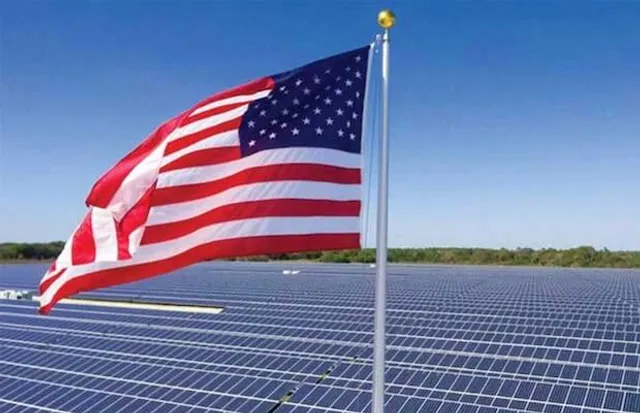
Community solar refers to shared solar energy systems that provide electricity to multiple subscribers through a single project.
Participants subscribe to a portion of a solar farm located within their utility service territory. The electricity generated flows into the grid, and subscribers receive credits on their electricity bills based on their share.
The U.S. Department of Energy (DOE) defines community solar as a model that “allows multiple customers to benefit from a single solar array,” expanding access beyond traditional rooftop systems.
This model relies on virtual net metering, which tracks electricity generation and distributes credits to subscribers.
A Brief History of Community Solar in the US
Community solar has evolved over the past two decades as policymakers sought to address barriers to rooftop solar adoption.
Early Development (2000s–2015)
Initial pilot projects emerged in states such as Colorado and Washington, supported by early renewable energy policies.
Expansion Phase (2015–2020)
States including New York, Massachusetts, and Minnesota introduced structured programs with incentives for developers and subscribers.
Rapid Growth (2020–Present)
Community solar capacity expanded significantly, driven by climate policies, declining solar costs, and federal support under legislation such as the Inflation Reduction Act (IRA).
According to the National Renewable Energy Laboratory, the model has become one of the fastest-growing segments of distributed solar energy.
How Community Solar Cuts Electricity Bills
The Subscription Model
The savings offered by community solar in the US are based on a subscription model. Subscribers are allocated a portion of a solar project and receive bill credits for the electricity generated. They then pay for those credits at a discounted rate.
Example:
- Utility bill credit: $100
- Subscriber payment: $85–$95
- Net savings: $5–$15
This structure ensures consistent savings without requiring upfront investment.
“Community solar programs are designed to deliver guaranteed savings to participants,” said Jenny Heeter, a researcher at the National Renewable Energy Laboratory, in published studies on solar market models.
Real Subscriber Example
A renter in New York enrolled in a community solar program serving their utility region. Before joining:
- Monthly electricity bill: $120
After joining:
- Bill credits applied: $100
- Payment for credits: $90
- Total bill: ~$110
Annual savings: approximately $120–$150 While savings vary, this example reflects typical outcomes reported by solar providers.
Why Community Solar Is Needed
A major driver behind community solar is the limited accessibility of rooftop systems. According to the U.S. Department of Energy, nearly half of U.S. households cannot install rooftop solar due to:
- Renting rather than owning
- Roof shading or structural issues
- Upfront installation costs
- Regulatory or zoning restrictions
Community solar addresses these barriers by separating energy production from the consumer’s physical location.
Who Benefits Most?
Renters and Multifamily Housing Residents
Community solar provides access to renewable energy without requiring property ownership.
Low- and Moderate-Income Households
Many programs include incentives or reserved capacity for underserved populations.
Small Businesses
Small commercial customers can also subscribe to reduce operating costs. According to the World Resources Institute (WRI), community solar is one of the most effective tools for expanding equitable access to clean energy.
Growth of Community Solar in the US
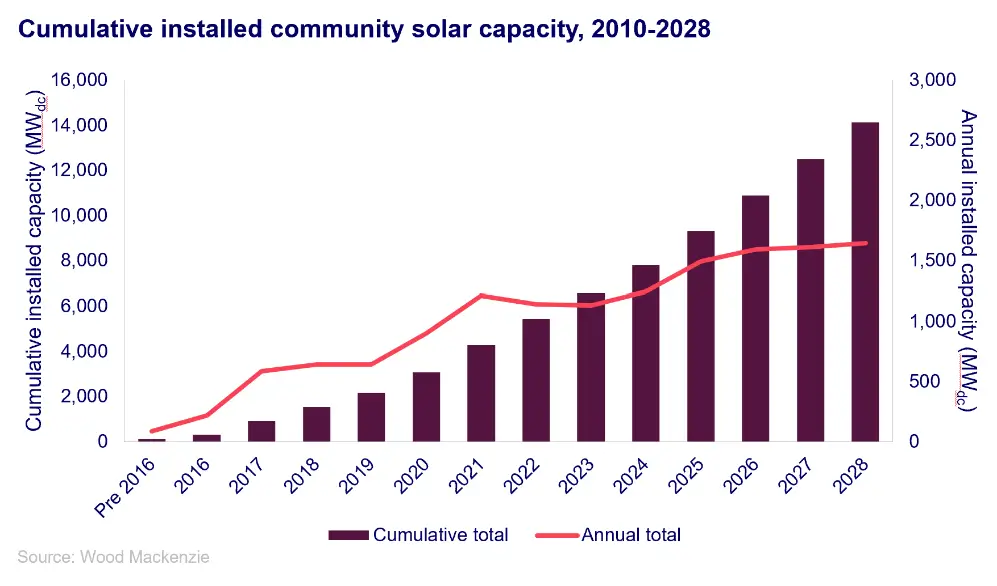
The sector has grown steadily over the past decade. Industry data shows:
- Over 6 gigawatts of installed capacity
- More than one million subscribers nationwide
However, growth has not been uniform.
A Reuters report citing Wood Mackenzie found that new installations declined in early 2025 after a record year, reflecting policy changes and market adjustments. Despite short-term fluctuations, analysts expect long-term expansion.
State Policies Driving Adoption
Community solar programs depend heavily on state-level regulations. Leading states include:
- New York
- Massachusetts
- Minnesota
- Illinois
- Colorado
These states have implemented policies such as:
- Virtual net metering
- Developer incentives
- Low-income participation requirements
According to the National Renewable Energy Laboratory, policy design is the primary factor influencing adoption rates.
Federal Role and Clean Energy Goals
The federal government has also supported community solar expansion. The U.S. Department of Energy launched initiatives aimed at expanding access to community solar for 5 million households, with a focus on underserved communities.
Federal incentives under the Inflation Reduction Act (IRA) have also encouraged solar development by reducing project costs and attracting investment.
Utility Perspective and Policy Debate
Community solar has sparked debate among utilities and policymakers. Some utilities argue that shared solar programs may shift grid maintenance costs to non-participating customers.
Others express concerns about managing distributed energy resources. However, solar advocates argue that community solar strengthens grid resilience and reduces long-term infrastructure costs.
“Distributed energy resources can improve grid flexibility and reliability,” said analysts from the Brookings Institution in energy policy research.
Economic and Environmental Impact
Community solar provides multiple benefits:
Economic Benefits
- Lower electricity costs for households
- Job creation in construction and maintenance
- Local economic development
Environmental Benefits
- Reduced greenhouse gas emissions
- Increased renewable energy adoption
- Lower reliance on fossil fuels
According to the International Energy Agency (IEA), solar energy remains a key driver of global clean energy growth.
Risks and Consumer Considerations
Despite its advantages, community solar is not without risks.
Contract Terms
Some programs require long-term commitments or include exit fees.
Variable Savings
Savings may fluctuate based on electricity production and market conditions.
Availability
Programs are not universally available and may have waiting lists. Experts recommend reviewing contract terms carefully before enrolling.
Future Trends: What Comes Next?
The future of community solar in the US may include new innovations.
Battery Integration
Combining community solar with energy storage could improve grid efficiency.
Virtual Power Plants (VPPs)
Networks of distributed energy resources may support grid stability.
Digital Energy Platforms
Smart technology could optimize energy usage and billing. Analysts expect these developments to expand the role of community solar in the broader energy system.
Related Links
Why Fossil Fuel Disruptions are Catalyzing a Global Boom in Solar and Battery Storage
Should You Buy First Solar or Enphase Energy? Side-by-Side Comparison
Community solar is reshaping how Americans access renewable energy by removing traditional barriers such as upfront costs and property limitations. As policy support continues and technology advances, shared solar systems may become a central component of the United States’ clean energy transition.
FAQs
Do I need solar panels at home?
No. Community solar requires no installation or equipment.
How much can I save?
Most programs offer savings between 5% and 15%.
Is it available nationwide?
Availability depends on state policies and local utility programs.
Can renters participate?
Yes. Community solar is designed for renters and those without suitable rooftops.
Are savings guaranteed?
Many programs guarantee savings, but terms vary by provider.