
India is preparing for a sweeping transformation in its power sector, with solar capacity projected to quadruple and wind capacity to triple by 2036.
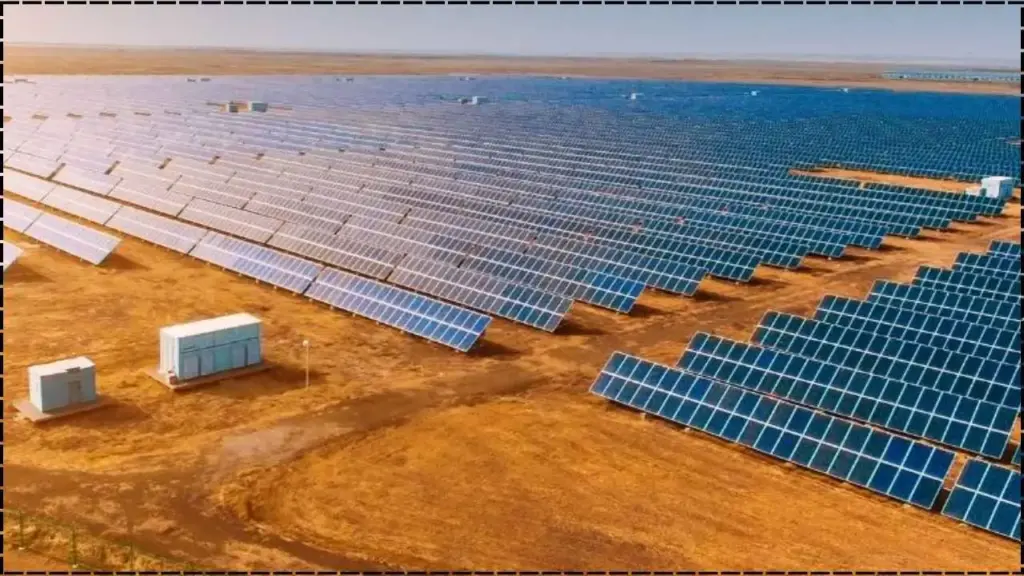
The India’s Decadal Power Shift signals a structural transition toward renewable energy as the country seeks to meet rising electricity demand, reduce dependence on coal, and strengthen long-term energy security.
India’s Decadal Power Shift: Scale and Ambition
India’s long-term electricity plan, prepared by the Central Electricity Authority (CEA), outlines one of the world’s most ambitious renewable expansion programmes.
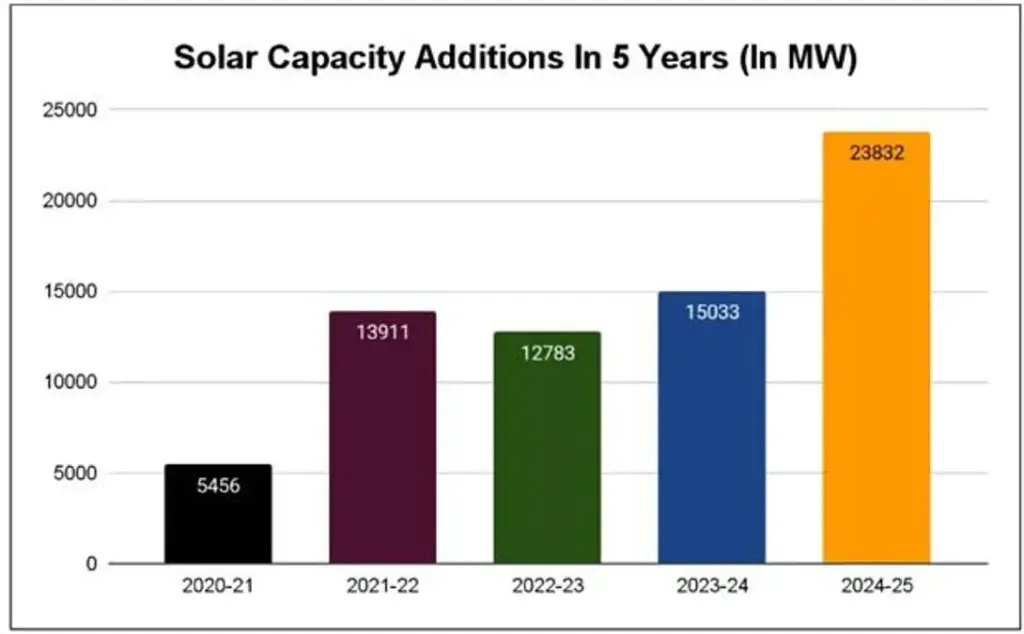
Solar capacity is expected to grow nearly four times, while wind capacity is projected to triple by 2035–36. Together, they will form the backbone of India’s future power system.
The plan estimates total non-fossil fuel capacity reaching around 786 GW, with solar alone contributing nearly two-thirds. “This represents a structural transformation of the power system,” said an energy policy expert involved in sector planning. “Renewables are no longer supplementary—they are becoming central.”
Regional Growth: Where Solar and Wind Will Expand
Solar Hotspots
India’s solar expansion is concentrated in:
- Rajasthan
- Gujarat
- Maharashtra
- Andhra Pradesh
These regions offer high solar irradiance, large land availability, and strong grid connectivity.
Wind Corridors
Wind power growth is expected in:
- Tamil Nadu
- Gujarat
- Karnataka
- Maharashtra
These states already host the majority of India’s wind installations and are expected to see further expansion.
Declining Role of Coal, But Not Its Disappearance
Coal’s share in power generation is expected to decline from over 70% to around 49% by 2036. However, it will remain an important part of the energy mix.
Why Coal Will Still Matter
- Provides baseload power
- Supports grid stability
- Meets peak demand when renewables fluctuate
“India cannot completely move away from coal in the near term,” said a senior official in the power sector. “The transition will be gradual and balanced.”
The Role of Storage: Making Renewables Reliable
Battery Energy Storage Systems (BESS)
Battery storage is expected to grow from negligible levels today to tens of gigawatts by 2036. These systems:
- Store excess solar generation
- Supply power during peak demand
- Stabilise grid frequency
Pumped Hydro Storage
India is also expanding pumped hydro projects, which act as large-scale energy storage systems. Together, these technologies are critical to ensuring renewable energy reliability.
Grid Modernisation: The Hidden Backbone
Green Energy Corridors
India is investing heavily in transmission infrastructure through programmes such as the Green Energy Corridor. These corridors are designed to:
- Connect renewable-rich regions to demand centres
- Reduce transmission losses
- Enable large-scale integration
Smart Grid Technologies
The future grid will include:
- Real-time monitoring systems
- Demand-response mechanisms
- Digital control systems
Experts say grid modernisation is as important as generation capacity.
Tariffs and Market Dynamics
Falling Renewable Tariffs
Solar and wind tariffs in India have declined sharply due to competitive bidding. Solar power is now among the cheapest sources of electricity, often priced below ₹3 per unit.
Risks of Ultra-Low Tariffs
However, analysts warn that aggressive bidding can:
- Reduce developer margins
- Increase financial stress
- Delay project execution
“Tariff discipline will be important for sustainable growth,” said a power sector analyst.
Discom Reforms: A Critical Bottleneck
Financial Health of Distribution Companies
State-run distribution companies (DISCOMs) remain a weak link in the power sector. Challenges include:
- Payment delays to generators
- High aggregate technical and commercial (AT&C) losses
- Tariff inefficiencies
Ongoing Reforms
Government initiatives aim to:
- Improve billing efficiency
- Reduce losses
- Digitise operations
Experts say successful reform of DISCOMs is essential for renewable sector stability.
Private Sector vs Public Sector Role
Public Sector Leadership
Companies like NTPC are leading large-scale renewable deployment due to:
- Access to capital
- Policy support
- Strong balance sheets
Private Sector Innovation
Private companies such as Adani Green, ReNew Power, and ACME Solar are driving:
- Technological innovation
- Hybrid project development
- International investment
This combination is accelerating sector growth.
Supply Chain and Manufacturing Challenges
Dependence on Imports
India still relies heavily on imported solar modules, particularly from China. This creates:
- Supply chain risks
- Currency exposure
Domestic Manufacturing Push
Government incentives aim to build local manufacturing capacity, reducing dependence on imports and strengthening energy security.
Green Hydrogen: The Next Frontier
India’s renewable expansion is closely linked to its green hydrogen mission. Solar and wind energy will power hydrogen production, which can be used in:
- Fertiliser production
- Steel manufacturing
- Heavy transport
Experts say this could create a new industrial ecosystem around renewable energy.
Economic Impact: Investment and Jobs
Investment Scale
India’s renewable transition will require massive investment in:
- Generation capacity
- Transmission infrastructure
- Storage systems
This is expected to attract both domestic and global capital.
Employment Generation
The sector is expected to create jobs across:
- Manufacturing
- Installation
- Operations and maintenance
This aligns with India’s broader economic development goals.

Consumer Impact: What It Means for Households
Electricity Prices
In the long term, increased renewable capacity could stabilise or reduce electricity prices.
Reliability Improvements
With better storage and grid management, consumers may experience:
- Fewer outages
- More stable supply
Risks and Uncertainties
Land and Environmental Constraints
Large-scale renewable projects require significant land, which can lead to:
- Land acquisition challenges
- Environmental concerns
Financing Risks
High capital requirements and interest rates could affect project viability.
Policy Stability
Stable and predictable policy frameworks are essential for maintaining investor confidence.
Global Context: India’s Strategic Position
India is emerging as one of the world’s fastest-growing renewable energy markets.Its energy transition is driven by:
- Rapid demand growth
- Climate commitments
- Competitive costs
This positions India as a key player in the global clean energy transition.
Related Links
Free Solar PV Training 2026: Gain Industry Skills & Placement Support with Top Solar Programs
ACME Solar Shares Poised for 34% Upside: Brokerage Remains Bullish Despite Recent Market Volatility
Scenario Analysis: Possible Outcomes
Optimistic Scenario
- Strong policy support
- Rapid infrastructure development
- Continued cost reductions
Result: India becomes a global leader in renewable energy.
Cautious Scenario
- Grid constraints
- Financing challenges
- Policy delays
Result: Slower-than-expected transition.
The India’s Decadal Power Shift represents a defining transformation in the country’s energy landscape. With solar capacity set to quadruple and wind capacity to triple by 2036, India is moving decisively toward a cleaner and more sustainable power system.
While challenges remain, including infrastructure constraints and financial risks, the scale of planned expansion underscores a clear commitment to long-term energy security and climate goals.