The rapid rise of perovskite tandem cells is challenging the long-standing dominance of silicon solar technology, with laboratory efficiencies exceeding 34% in 2026 and early commercial deployments underway.
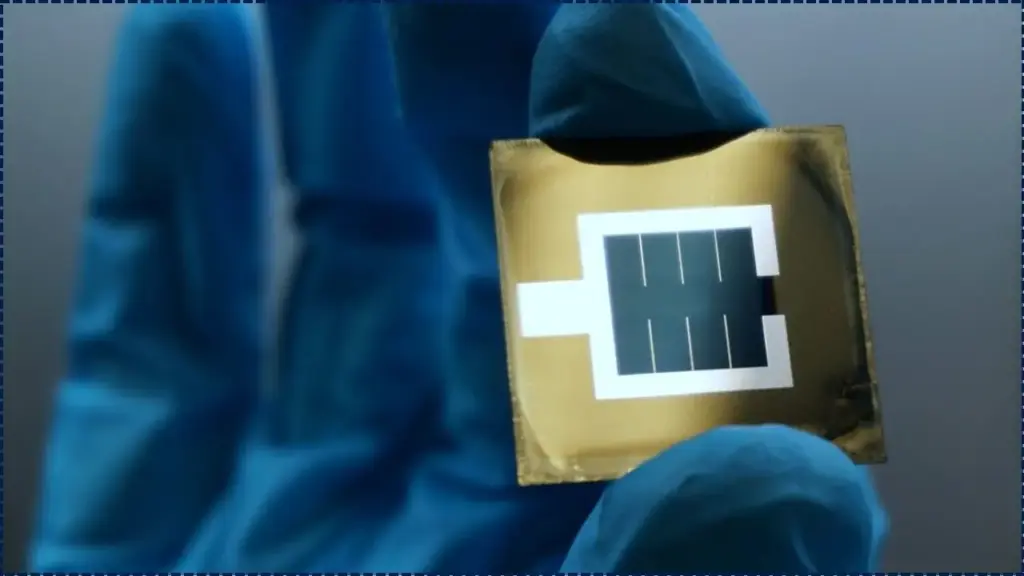
As global energy demand grows and climate targets tighten, the technology is emerging as a potential cornerstone of next-generation solar power.
Perovskite Tandem Cells
| Key Fact | Detail |
|---|---|
| Silicon Efficiency Limit | ~29–30% theoretical ceiling |
| Tandem Efficiency Record | 34–35% achieved in 2026 |
| Commercial Status | Pilot production and early modules emerging |
| Key Advantage | Multi-layer spectrum capture |
| Main Challenge | Stability and long-term durability |
The emergence of perovskite tandem cells represents a significant shift in solar technology. While challenges remain, their ability to exceed silicon’s efficiency limits and move toward commercialization marks a critical step in the evolution of renewable energy.
The pace of progress suggests that the future of solar power will be defined not by replacing silicon, but by enhancing it.
Why Silicon Solar Technology Is Nearing Its Limits
Silicon solar cells have dominated global photovoltaic installations for decades due to their reliability and declining costs. However, their performance is constrained by the Shockley–Queisser limit, which caps efficiency at roughly 30% for single-junction cells.
This limitation arises because silicon can only absorb a specific portion of the solar spectrum efficiently. Higher-energy photons generate excess heat, while lower-energy photons pass through without being converted into electricity.
According to energy researchers, further improvements in silicon efficiency require increasingly complex engineering, offering diminishing returns. This has driven interest in alternative materials and hybrid architectures.
How Perovskite Tandem Cells Break the Efficiency Barrier
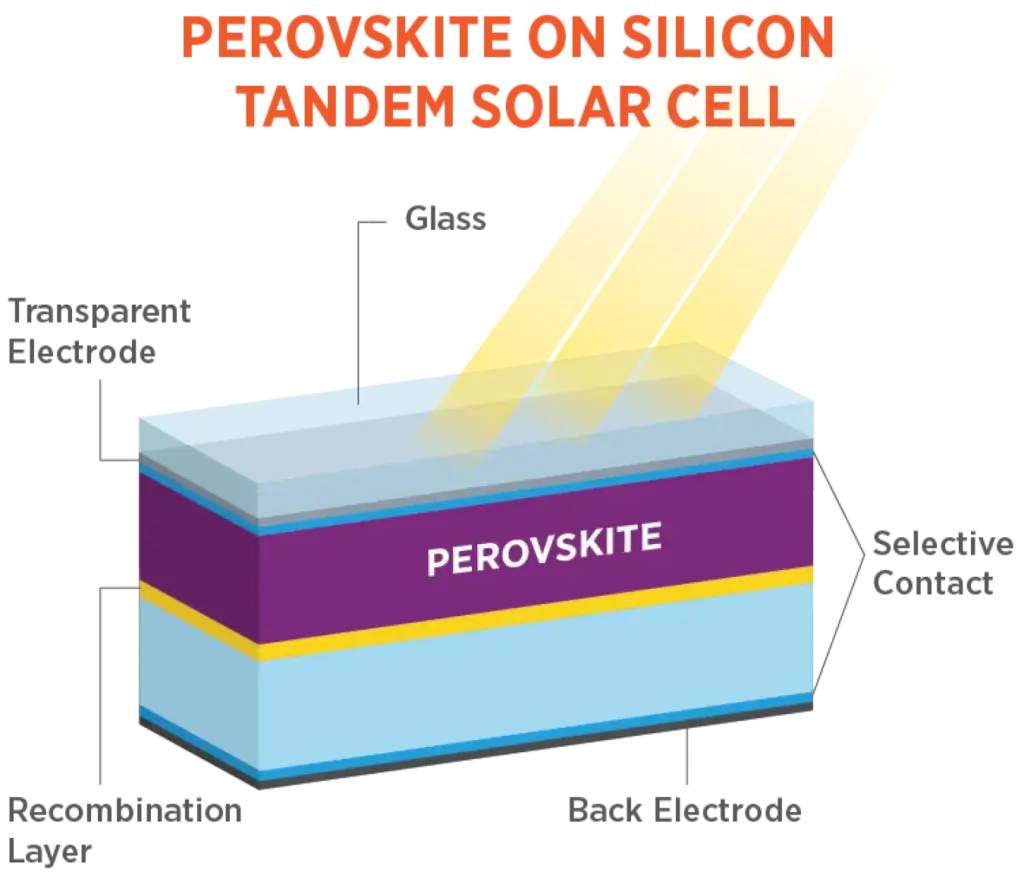
Perovskite tandem cells address silicon’s limitations by stacking multiple light-absorbing layers.
- A perovskite top layer captures high-energy photons
- A silicon base layer absorbs lower-energy light
This layered approach allows the system to convert a broader range of sunlight into electricity, significantly reducing energy losses.
“Stacking materials with complementary bandgaps is one of the most effective ways to push solar efficiency beyond traditional limits,” said a materials scientist at a U.S. national laboratory.
Efficiency Records Accelerate in 2026
Perovskite tandem technology has advanced at an unusually rapid pace. In 2026, laboratory efficiencies have surpassed 34%, with some prototypes approaching 35%.
These figures exceed the practical limits of silicon and rival high-cost multi-junction solar cells used in aerospace applications.
Importantly, large-area tandem cells—closer to commercial formats—have also crossed the 30% threshold, narrowing the gap between laboratory performance and real-world deployment. Experts describe this as a “breakthrough phase,” where incremental gains are translating into meaningful commercial potential.
From Research to Commercialization
The transition from laboratory success to market readiness is now underway. Several companies have established pilot manufacturing lines, producing early modules for field testing. These deployments aim to evaluate long-term performance under real-world conditions, including temperature fluctuations and environmental exposure.
Industry executives say the focus has shifted. “The challenge is no longer just efficiency—it’s scalability and reliability,” said a senior engineer at a European solar firm.
Cost Economics: Can Tandem Cells Compete?
One of the most critical questions for adoption is cost per watt. Perovskite materials offer several economic advantages:
- Lower-temperature manufacturing processes
- Reduced material usage
- Compatibility with existing silicon production lines
Analysts suggest that tandem cells could reduce the cost per watt of solar electricity if manufacturing challenges are resolved.
However, initial production costs may remain higher during early commercialization phases due to scaling complexities and quality control requirements.

Supply Chain and Manufacturing Realities
Unlike silicon, which benefits from a mature global supply chain, perovskite materials are still in early-stage production. Key considerations include:
- Availability of precursor materials
- Manufacturing consistency at scale
- Integration with existing production infrastructure
Some manufacturers are exploring hybrid production lines that retrofit existing silicon facilities to incorporate perovskite layers, reducing capital investment.
Policy and Regulatory Landscape
Government policy is expected to play a critical role in the adoption of perovskite tandem technology. In regions such as the European Union and the United States, clean energy incentives and manufacturing subsidies are supporting research and early deployment.
However, regulatory scrutiny may increase due to concerns about lead content in some perovskite formulations.
Environmental agencies are likely to require strict recycling and containment measures before large-scale deployment.
Environmental Impact and Lifecycle Analysis
Perovskite tandem cells could improve the environmental profile of solar energy by increasing efficiency and reducing material usage.
Higher efficiency means fewer panels are required to generate the same amount of electricity, lowering land use and resource demand. However, lifecycle assessments must consider:
- Material sourcing
- Manufacturing emissions
- End-of-life recycling
Experts emphasize that sustainability will be a key factor in determining long-term viability.
Grid Impact and Energy System Integration
Higher-efficiency solar panels could have significant implications for energy systems.
- Increased output per installation reduces land requirements
- Higher energy density supports urban deployment
- Improved efficiency enhances grid stability in high-renewable systems
Energy planners say such advancements could accelerate the transition to renewable energy, particularly in regions with limited space.
Investment Trends and Industry Competition
The rapid progress of perovskite tandem cells has attracted significant investment from both startups and established energy companies.
Global competition is intensifying, with major players in China, Europe, and the United States racing to secure intellectual property and manufacturing capacity.
अब AC चलाओ बिना बिजली बिल की टेंशन! आ गई है धूप से चलने वाली Solar AC – गर्मी में और तेज चलेगी
Venture capital funding and government grants are fueling innovation, while partnerships between research institutions and industry are accelerating commercialization.
What This Means for Silicon’s Future
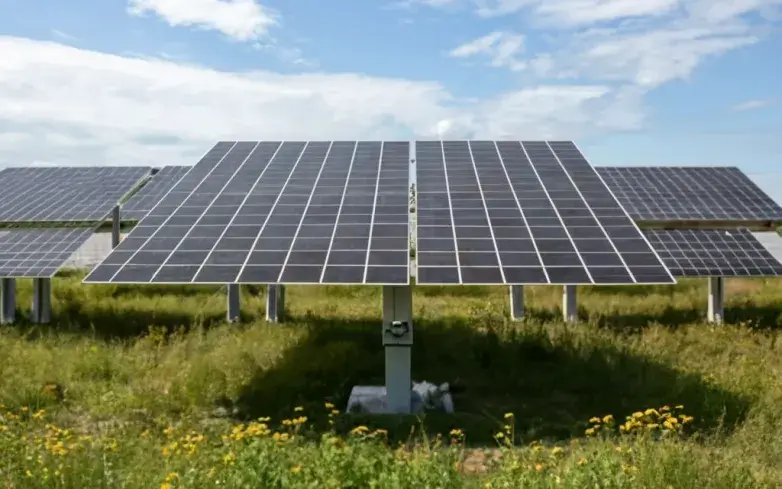
Despite the headline question, silicon is unlikely to disappear. Instead, it is evolving into a foundational component of tandem systems. This hybrid approach allows manufacturers to build on decades of silicon expertise while improving efficiency.
“Silicon remains essential—it’s just no longer working alone,” said an industry analyst.
Related Links
AI-Powered Solar 2026: How Smart Energy Management Can Cut Your Household Bills by 25%
Made in America’ Solar: Can US Manufacturers Outpace Chinese Imports Under 2026 Tariffs?
Regional Adoption Outlook
Adoption is expected to vary by region:
- Europe: Strong policy support and early deployment
- China: Rapid scaling and manufacturing leadership
- United States: Innovation-driven growth with federal incentives
- Emerging markets: Potential leapfrogging technology if costs decline
Regional differences in regulation, infrastructure, and investment will shape the pace of adoption.
FAQs
Are perovskite tandem cells replacing silicon?
No, they are currently enhancing silicon in hybrid designs.
Why are they more efficient?
They capture a broader range of sunlight using multiple layers.
What is the biggest challenge?
Durability and large-scale manufacturing remain key obstacles.
When will they become mainstream?
Wider adoption is expected within the next several years, depending on commercialization success.