

Canada’s $40,000 interest-free solar loan, a cornerstone of the federal Canada Greener Homes Loan program, helped thousands of homeowners finance renewable energy upgrades.
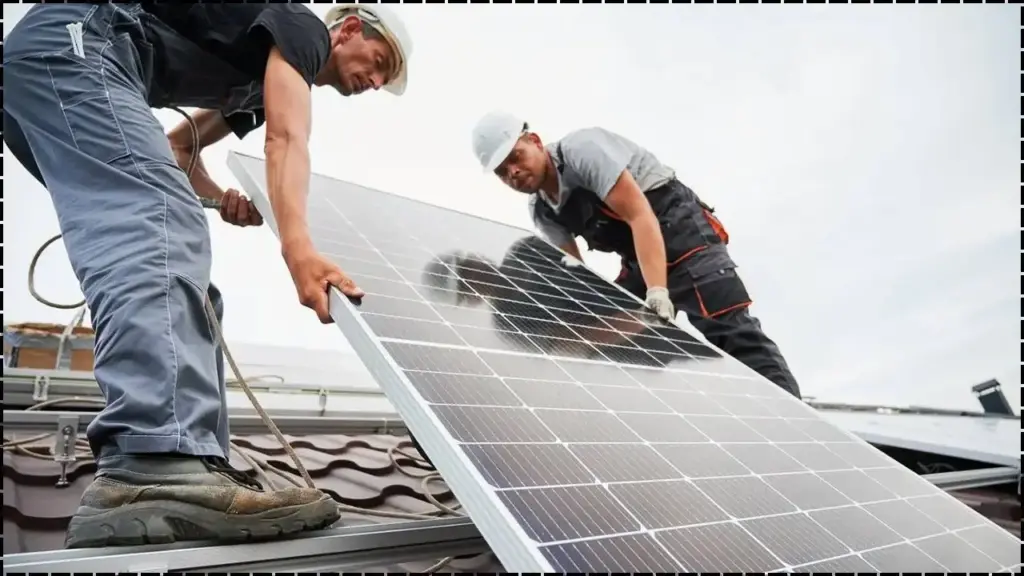
Although closed to new applicants in late 2025, the program remains a key benchmark in climate policy, shaping how governments support residential solar adoption in 2026 and beyond.
Canada’s $40,000 Interest-Free Solar Loan
| Key Fact | Detail | Significance |
|---|---|---|
| Maximum Loan | $40,000 interest-free | Eliminated upfront cost barrier |
| Repayment Term | 10 years | Affordable long-term financing |
| Program Status (2026) | Closed to new applicants | Funding fully allocated |
| Popular Use | Solar panel installations | High ROI and energy savings |
Canada’s $40,000 interest-free solar loan marked a significant shift in how governments support clean energy adoption. While the program has closed, its success highlights strong demand for accessible financing.
Policymakers are now under pressure to design the next generation of incentives that are faster, fairer, and more inclusive.
Canada’s $40,000 Interest-Free Solar Loan: A Policy Overview
The Canada Greener Homes Loan, introduced in 2022, was part of a broader federal effort to reduce residential carbon emissions. Administered by Natural Resources Canada (NRCan) and supported by the Canada Mortgage and Housing Corporation (CMHC), the program provided zero-interest financing for energy-efficient upgrades.
The initiative aimed to address a major barrier to clean energy adoption: upfront cost. Solar installations, which can cost tens of thousands of dollars, became more accessible through structured, interest-free repayment.
Government officials stated the program was designed to “help Canadians make their homes more energy-efficient while lowering energy bills and emissions.”
Timeline: From Launch to Closure
Rapid Adoption Phase
- June 2022: Program launch nationwide
- 2023: Application demand surged amid rising energy costs
- 2024: Solar installations increased significantly
Final Phase
- Mid–Late 2025: Funding limits approached
- Late 2025: New applications halted
- 2026: Only pre-approved projects continue
Energy analysts note that the program’s popularity exceeded expectations, leading to early closure.
How the Loan Functioned
Financial Structure
The program offered:
- Loan range: $5,000–$40,000
- Interest rate: 0%
- Repayment: Up to 10 years
This structure made it one of the most consumer-friendly clean energy financing programs globally.
Eligibility and Compliance Requirements
Applicants needed to:
- Own a home in Canada
- Complete a pre-retrofit EnerGuide evaluation
- Select government-approved upgrades
- Use certified contractors
A second evaluation after installation ensured compliance and verified energy improvements.
Canada’s $40,000 Interest-Free Solar Loan Application Workflow
- EnerGuide Audit – Baseline energy performance assessment
- Contractor Quotes – Detailed cost estimates
- Application Submission – Through CMHC platform
- Approval Wait Period – Mandatory before work begins
- Installation Phase – Solar panels or upgrades installed
- Post-Retrofit Audit – Verification of improvements
- Loan Disbursement – Funds released and repayment begins
Solar Economics: Cost vs Savings (ROI Analysis)
Typical Solar System Cost in Canada
- $15,000 to $30,000 for residential installations
Estimated Savings
- 30–70% reduction in electricity bills
- Payback period: 7–10 years
Long-Term Value
- 20+ years of solar panel lifespan
- Increased home resale value
Financial analysts note that pairing zero-interest loans with net metering policies significantly improves return on investment.
Environmental Impact and Climate Alignment
The program contributed to:
- Reduced household carbon emissions
- Increased renewable energy adoption
- Progress toward Canada’s net-zero emissions by 2050 target
Climate experts emphasize that residential energy efficiency is a critical component of national climate strategies.
Why the Program Closed
Key Factors Behind Closure
- High demand exceeding budget allocation
- Administrative bottlenecks
- Need for program redesign
The Canadian Renewable Energy Association (CanREA) described the closure as “disruptive but indicative of strong demand for clean energy solutions.”
Challenges and Criticism
Despite its success, the program faced several concerns:
Accessibility Issues
- Complex application process
- Dependence on certified audits
Administrative Delays
- Long approval timelines
- Processing backlogs
Equity Concerns
- More accessible to middle- and high-income homeowners
- Limited reach among lower-income households
Policy analysts argue that future programs must address these gaps.
Global Comparison: How Canada Stacks Up
United States
- Federal solar tax credits (Investment Tax Credit)
- State-level incentives
Germany
- Subsidized solar loans via KfW bank
United Kingdom
- Limited grants but expanding green financing
Canada’s program stood out for its zero-interest structure, which removed financial risk for homeowners.
What Happens Next in 2026?
Although the federal loan is closed, alternatives remain:
Provincial Incentives
- CleanBC rebates
- Ontario energy programs
Municipal Loans
- Toronto HELP program
Expected Federal Developments
Experts anticipate:
- Revised loan programs
- Expanded funding
- Targeted support for low-income households
Expert Analysis
Energy policy expert Dr. Michael Grant said, “Programs like this demonstrate that demand for clean energy is not the issue—access to financing is.”
He added that future programs may combine grants, loans, and tax incentives to maximize adoption.
Related Links
Agrivoltaics 2026: How Farmers are Growing Crops and Solar Power on the Same Land
Goodbye Lithium? Sodium-Ion Batteries Enter Mass Production for Home Solar in 2026
Future Outlook: What a New Program Could Look Like
Policy discussions suggest future programs may include:
- Faster digital approval systems
- Tiered incentives based on income
- Integration with smart grid technology
- Expanded battery storage funding
Such changes could make programs more inclusive and efficient.
FAQs
Is Canada’s $40,000 interest-free solar loan available in 2026?
No. The program is closed to new applicants.
Why was it so popular?
It removed interest costs and reduced upfront investment barriers.
Will a similar program return?
Experts widely expect a revised version in the future.
Are there alternatives now?
Yes. Provincial and municipal programs are available.