
Australian households are increasingly turning to what is being dubbed the “NSW Solar Hack”, a strategy that combines federal battery subsidies with New South Wales state incentives to reduce installation costs.
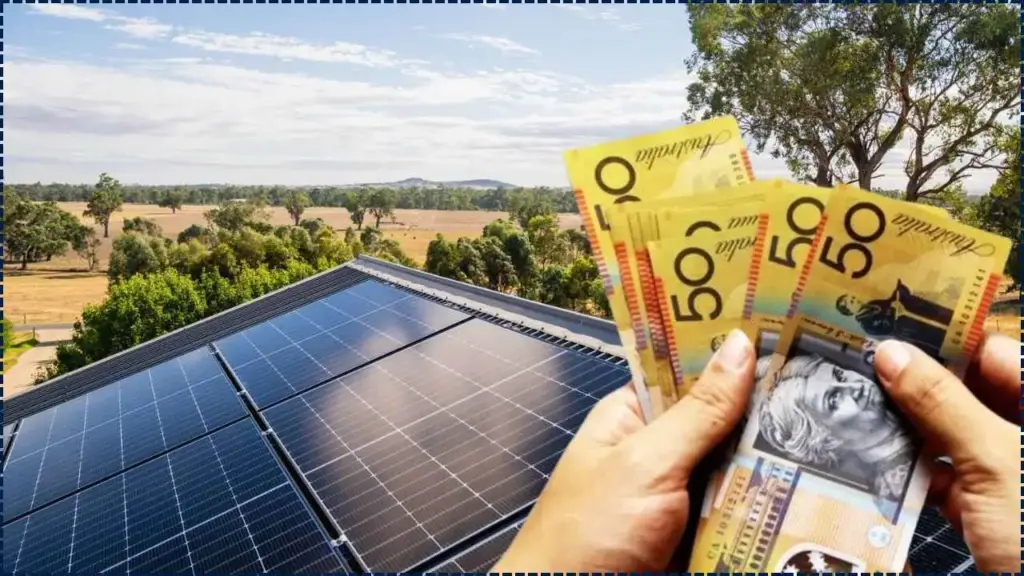
The approach, emerging after the rollout of federal battery discounts in 2025, highlights how policy alignment is reshaping energy adoption across Australia.
NSW Solar Hack
| Key Fact | Detail |
|---|---|
| Federal Battery Discount | ~30% cost reduction via STCs |
| NSW VPP Incentive | Up to ~$1,500 additional benefit |
| Optimal Timing | Install before rebate step-down dates |
The NSW Solar Hack illustrates how overlapping policies can accelerate clean energy adoption while reducing costs for consumers. Yet, the strategy requires careful planning, awareness of eligibility rules, and an understanding of long-term implications.
As incentives evolve, households and policymakers alike face the challenge of balancing affordability, transparency, and energy reliability.
What Is the NSW Solar Hack?
The term NSW Solar Hack refers to a consumer strategy rather than a policy loophole. It involves legally combining federal and state incentives to lower the upfront cost of home battery systems. The federal government introduced a nationwide battery subsidy in 2025 under the Small-scale Renewable Energy Scheme (SRES).
At the same time, New South Wales shifted its policy focus away from direct installation rebates toward incentives tied to participation in Virtual Power Plants (VPPs). Together, these programs allow households to stack benefits—provided eligibility conditions are met.
According to energy analysts, this alignment is accelerating adoption. “We’re seeing a convergence of policy that finally makes batteries financially viable for many households,” said one clean energy consultant cited in industry reports.
How Federal Battery Discounts Work
The federal incentive operates through Small-scale Technology Certificates (STCs). These certificates reduce the upfront cost of installing eligible battery systems.
Key Features:
- Covers roughly 30% of installation costs.
- Value depends on system size and market pricing.
- Applies only to new installations.
- Delivered through accredited installers.
This subsidy is structured to gradually decline over time, encouraging early adoption.
How NSW Incentives Complement Federal Support
Unlike earlier rebate schemes, New South Wales now offers incentives tied to grid participation.
NSW Virtual Power Plant (VPP) Incentive
Households can receive additional payments by connecting their battery systems to a VPP. These networks allow utilities to draw stored energy during peak demand periods. Benefits include:
- Upfront or ongoing payments (up to ~$1,500)
- Reduced electricity bills through grid participation
- Contribution to grid stability
Energy officials say this shift reflects broader system needs. “The goal is not just adoption, but integration,” according to NSW energy policy briefings.
Why Some Incentives Cannot Be Stacked
Not all incentives are compatible. Earlier NSW battery rebates were phased out when the federal scheme expanded. This means:
- Old NSW installation rebates cannot be combined with federal subsidies
- Only VPP-based incentives remain stackable
This distinction has caused confusion among consumers, particularly those comparing older policy frameworks with current programs.
Economic Impact on Households
The combined incentives can significantly reduce the cost of a battery system.
Example Scenario:
- 10 kWh battery system
- Federal rebate: ~$3,000
- NSW incentive: ~$800–$1,200
- Total savings: ~$4,000+
Energy market analysts note that these savings can shorten payback periods to 5–8 years, depending on electricity usage and tariffs. However, upfront costs remain substantial, often exceeding $10,000 even after incentives.
Timing: A Critical Factor in Maximizing Savings
Timing plays a crucial role in the NSW Solar Hack. Federal rebates are designed to decline annually. As a result:
- Early adopters receive higher per-kWh subsidies
- Delayed installations may reduce total savings
Industry experts emphasize urgency. “Consumers who act early benefit the most from the current structure,” said a renewable energy advisor in a recent market briefing.
Technical Requirements and Eligibility
To qualify for stacked incentives, systems must meet strict criteria:
- Installed by accredited professionals.
- Compatible with VPP programs.
- Paired with solar generation systems.
- Compliant with Australian safety standards.
Failure to meet these requirements can result in loss of eligibility for one or both incentives.
Broader Policy Context: Why Governments Support Battery Adoption
The NSW Solar Hack reflects broader national energy goals. Australia is undergoing a transition toward renewable energy, with rooftop solar already widespread. However, solar generation alone does not solve grid instability. Batteries provide:
- Energy storage during peak production
- Supply during high demand
- Reduced reliance on fossil fuels
Government policies aim to:
- Stabilize electricity networks
- Reduce emissions
- Encourage distributed energy systems
According to official data, household batteries are expected to play a growing role in managing grid reliability.
Risks and Considerations for Consumers
While incentives reduce costs, experts caution against oversimplifying the benefits.
Key Risks:
- VPP participation terms vary (some limit control over battery usage).
- Electricity savings depend on tariff structures.
- Technology lifespan and maintenance costs must be considered.
Consumer advocates recommend reviewing contracts carefully. “Not all VPP agreements deliver the same value,” noted one energy policy researcher.
Market Response and Industry Growth
The alignment of incentives has triggered strong demand for battery systems. Industry reports indicate:
- Increased installation bookings
- Supply chain pressures
- Rising competition among providers
Battery manufacturers and installers are expanding capacity to meet demand, while new entrants are entering the market. Analysts suggest the sector could see sustained growth if policy stability continues.
Related Links
$35,000 Solar Rebates for Farmers: How to Cut Agricultural Energy Costs in 2026
Australia’s VPP Payouts Hit Record Highs: How to Get Paid for Your Battery Power
Expert Perspectives
Energy economists highlight both opportunities and limitations.
- Some view the NSW Solar Hack as a natural outcome of policy coordination.
- Others warn that complexity may deter less-informed consumers.
“There’s a balance between encouraging adoption and ensuring transparency,” said a senior researcher in energy systems.
FAQs
Can all NSW residents use the NSW Solar Hack?
Most homeowners can participate, but eligibility depends on system type, installer accreditation, and VPP compatibility.
Is the federal battery rebate permanent?
No. The rebate is structured to decrease over time, encouraging early adoption.
Do VPP programs reduce control over my battery?
In many cases, yes. Providers may access stored energy during peak demand periods.
Is it worth installing a battery now?
It depends on electricity usage, local tariffs, and willingness to participate in VPP programs.