

The UK is on the brink of a major housing transformation, as new regulations under the Future Homes Standard move toward requiring solar panels on most new homes.
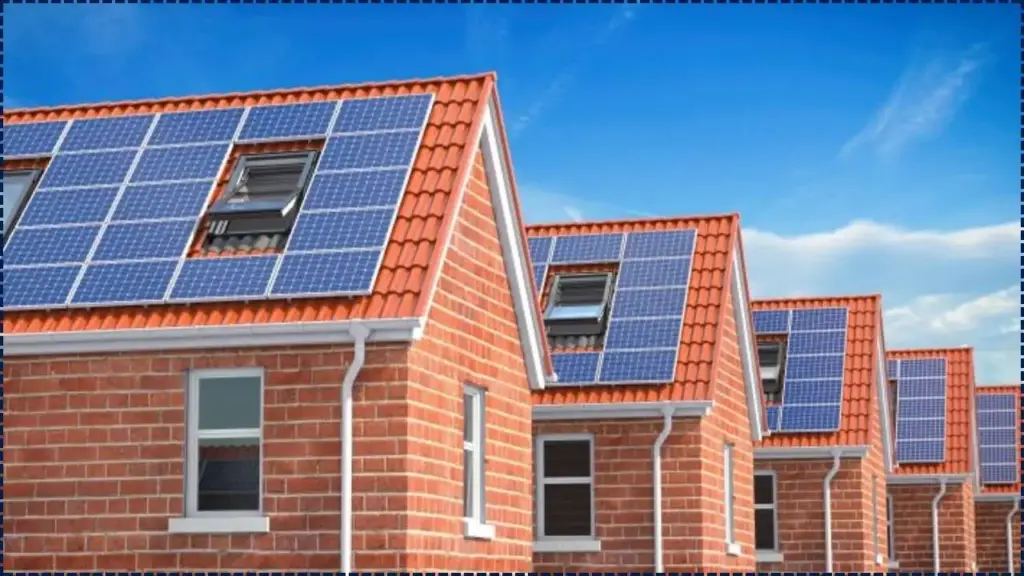
Central to the policy is a proposed “40% solar mandate,” which could require panels to cover a substantial portion of each roof—reshaping how homes are designed, built, and powered.
The 40% Solar Mandate
| Key Fact | Detail | Context |
|---|---|---|
| Solar Coverage | ~40% of floor/roof area | Proposed requirement |
| Implementation | From 2026–2028 | Future Homes Standard rollout |
| Adoption Rate | Up to 80–99% of homes | With exemptions |
| Energy Savings | £500–£1,000 annually | Government estimates |
The UK’s 40% solar mandate marks a fundamental shift in how homes are built, embedding renewable energy directly into new construction. While challenges remain around cost, feasibility, and implementation, the policy signals a clear direction: future homes will not just consume energy—they will generate it.
Understanding the 40% Solar Mandate in the UK
At the heart of the UK’s housing policy shift is a requirement that new homes include on-site renewable energy generation. Under proposals linked to the Future Homes Standard, solar panels must:
- Cover approximately 40% of the building’s ground-floor area.
- Be installed on the vast majority of new homes.
- Contribute to significant emissions reductions.
This rule is not just about adding solar panels—it is about embedding renewable energy directly into the fabric of new housing.
Why 40%? The Logic Behind the Policy
The 40% figure is designed to strike a balance between:
- Maximizing energy generation
- Maintaining architectural flexibility
- Ensuring cost-effectiveness
Energy policymakers argue that this level of coverage allows homes to generate a meaningful portion of their electricity needs while remaining practical for most roof designs.
A De Facto Solar Requirement for New Homes
Although framed as part of broader efficiency standards, the policy effectively makes solar panels standard in new construction. Government announcements confirm that:
- Solar will be installed “by default” in new homes
- Nearly all new builds will include solar systems
- Exceptions will apply only in limited cases
These exceptions may include:
- Heavy shading
- Structural limitations
- Roof orientation issues
How This Changes UK Housing Design
Architectural Impact
Developers must now design homes with solar integration in mind, influencing:
- Roof orientation and pitch
- Structural layout
- Placement of windows and chimneys
This marks a shift from optional renewable features to mandatory design elements.
Construction Practices
Builders will need to:
- Coordinate with solar installers during construction
- Ensure electrical integration from the outset
- Meet stricter energy performance standards
Installing solar during construction is significantly cheaper than retrofitting later.
Economic Impact: Costs vs Savings
Upfront Costs
Industry estimates suggest solar installation could add:
- £3,000–£4,000 per home
Developers warn that these costs may be passed on to buyers.
Long-Term Savings
However, homeowners are expected to benefit from:
- Annual energy savings of £500–£1,000 (GE Solutions UK)
- Reduced exposure to energy price volatility
- Increased property value
Government officials argue that savings could outweigh costs within a few years.
BREAKING: UK to mandate solar panels and heat pumps on new homes.
— Jordan – The EV Guy (@JordanEVGuy) March 24, 2026
This isn’t a proposal anymore, it’s happening.
The UK is set to introduce new building standards that will require most new homes to be fitted with solar panels and low-carbon heating like heat pumps.
Every new… pic.twitter.com/uXdLXYBXS6

Industry Reaction: Support and Resistance
Support from Renewable Sector
Renewable energy groups have welcomed the policy, arguing it:
- Accelerates decarbonization
- Reduces household energy bills
- Strengthens energy security
Concerns from Homebuilders
Construction industry representatives have raised concerns:
- The 40% target may be impractical for some homes
- Roof design constraints could limit compliance
- Additional regulations could slow housing development
Some developers argue that a lower threshold, such as 20%, would be more feasible.
Political Debate and Policy Adjustments
The solar mandate has become part of a broader political debate about:
- Net-zero policies
- Housing affordability
- Speed of implementation
Recent reports indicate that:
- Implementation timelines may be delayed to 2028.
- Flexibility may be introduced for difficult cases.
- Ongoing consultations could refine requirements.
Integration with Heat Pumps and Energy Efficiency
The solar mandate does not exist in isolation. It is part of a broader package that includes:
- Heat pumps replacing gas boilers.
- Improved insulation standards.
- Reduced overall energy demand.
Together, these measures aim to reduce emissions by around 75% compared to older homes.
What This Means for Homebuyers
For New Homes
- Solar panels will become standard.
- Lower energy bills expected.
- Homes designed for energy efficiency.
For Existing Homes
- No immediate requirement to install solar.
- Potential future incentives or mandates.
- Increasing value gap between homes with and without solar.
Global Context: A Growing Trend
The UK is part of a global movement toward mandatory solar in new construction.
- Wales is introducing similar rules from 2027.
- Other countries are adopting rooftop solar mandates.
- Renewable integration is becoming standard practice.
This reflects a broader shift toward decentralized energy systems.
Related Links
ACT Sustainable Household Scheme: Is the $15,000 Interest-Free Loan Still Worth It?
BC Hydro’s $10,000 Reward: Everything About the 2026 Solar & Battery Rebates
Future Outlook: What Comes Next
Experts expect several developments:
- Expansion of solar mandates to renovations.
- Integration of battery storage (currently not required).
- Increasing use of smart energy systems.
- Further tightening of emissions standards.
Over time, solar could become as standard as insulation or plumbing in new homes.
FAQs
Will all new homes have solar panels?
Most will, though some exceptions apply for technical reasons.
Why 40% coverage?
It balances energy generation with practical building constraints.
Will this increase house prices?
Yes initially, but savings are expected to offset costs over time.
When does the mandate start?
Implementation is expected between 2026 and 2028, depending on final regulations.