The expansion of balcony solar in flats is set to reshape household energy use across the United Kingdom, as new plug-in solar systems—requiring no electrician—promise annual savings of up to £300 while opening renewable energy access to millions of renters and apartment dwellers.
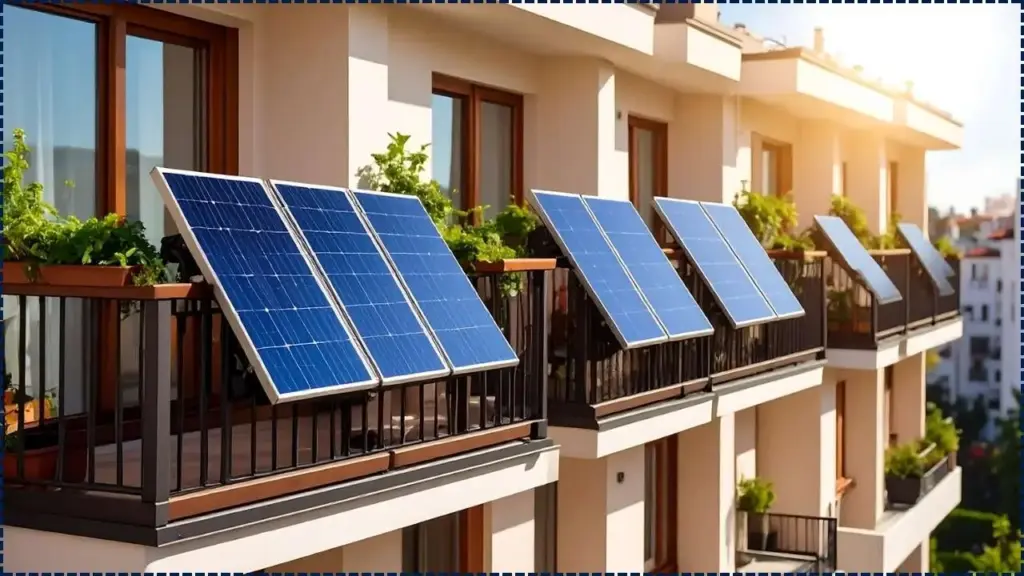
Balcony Solar in Flats
| Key Fact | Detail / Statistic |
|---|---|
| Installation | Plug-and-play, no electrician required |
| Typical savings | £70–£110 annually (baseline) |
| Potential savings | Up to £300 in optimal conditions |
| Availability | Expected rollout by 2026 |
Balcony solar in flats represents a significant evolution in how energy is accessed and used in urban environments. By lowering cost and complexity barriers, the technology enables millions of UK households to participate in renewable energy generation.
As regulatory frameworks mature and technology advances, balcony solar could become a standard feature of modern apartment living.
Balcony Solar in Flats Gains Momentum in UK Energy Policy
The UK government is moving to legalize and standardize plug-in solar panels, often referred to as balcony solar systems, marking a significant shift in national energy policy.
These compact systems allow households to generate electricity without structural modifications, offering a practical alternative for urban residents who have historically been excluded from rooftop solar adoption.
Officials describe the move as part of a broader strategy to expand decentralized energy production and reduce reliance on volatile global energy markets.
How Balcony Solar Works Without an Electrician
Plug-and-Play Design
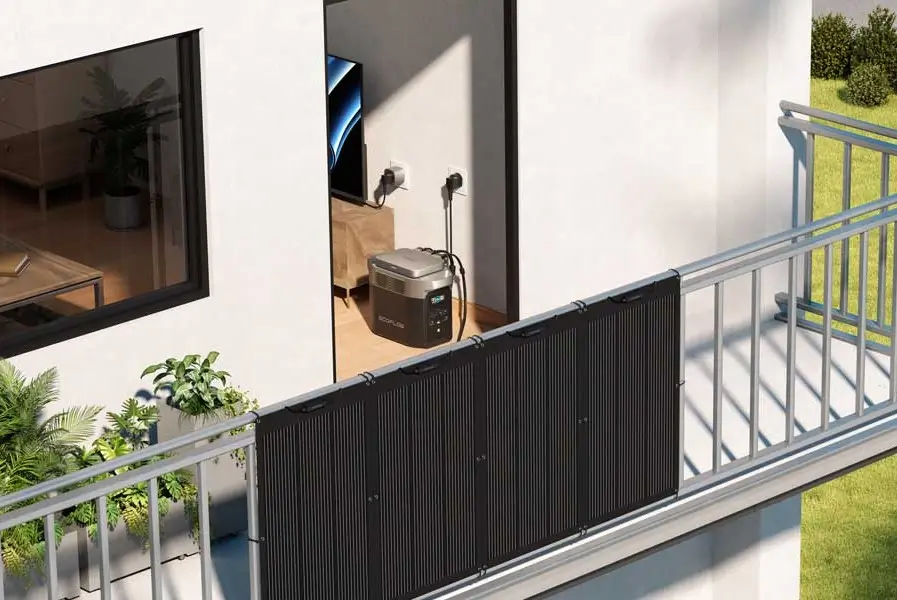
Balcony solar systems consist of:
- One or two photovoltaic panels.
- A micro-inverter converting DC to usable AC electricity.
- A standard plug connection.
Once connected, electricity flows directly into the home’s circuit, where it is immediately consumed by active appliances. This eliminates the need for certified installation, significantly reducing both cost and complexity.
Savings Potential: From £70 to £300 Per Year
Understanding the Range
Baseline estimates suggest annual savings of £70–£110. However, higher savings—approaching £300—are possible under optimal conditions:
- South-facing balcony orientation.
- High daytime electricity usage.
- Larger system capacity (600–800W).
A typical system generating 600W could offset a meaningful portion of daytime electricity consumption, especially for appliances like refrigerators, routers, and lighting.
Detailed ROI Breakdown
Cost vs Payback
| System Cost | Estimated Savings | Payback Period |
|---|---|---|
| £400 | £70/year | ~5–6 years |
| £800 | £150–£300/year | ~3–5 years |
Energy analysts note that rising electricity prices could further shorten payback periods, improving long-term value.
Legal and Landlord Considerations
Tenant Rights and Restrictions
While balcony solar offers flexibility, legal considerations remain:
- Lease agreements may restrict external modifications.
- Building management may impose aesthetic guidelines.
- Safety approvals could be required for installations.
Housing experts advise tenants to seek written permission where necessary, even though systems are non-invasive. A property law specialist noted that “while plug-in systems avoid structural changes, visual impact on shared buildings may still trigger landlord oversight.”
Safety Standards and Regulatory Updates
Historically, plug-in solar was restricted due to concerns about:
- Reverse electricity flow into the grid.
- Circuit overload risks.
- Compatibility with UK wiring standards.
The UK is now updating regulations to allow systems up to approximately 800W, provided they meet strict safety certifications. Regulators are expected to introduce:
- Standardized plug designs.
- Automatic shut-off mechanisms.
- Certification requirements for approved devices.
These measures aim to align the UK with established European safety frameworks.
Virtual Energy Impact: What It Means for the Grid
Although small individually, widespread adoption of balcony solar could have a measurable impact on the national grid.

Potential Benefits
- Reduced peak demand during daylight hours.
- Lower strain on centralized generation systems.
- Increased resilience through distributed energy.
However, grid operators must also manage challenges such as:
- Monitoring decentralized inputs.
- Maintaining voltage stability.
- Updating infrastructure for bidirectional energy flow.
Energy system analysts say these systems represent “a foundational step toward a more distributed energy future.”
Lessons From Europe: Proven Adoption at Scale
Countries such as Germany have already demonstrated the viability of balcony solar.
- Over 1.5 million systems installed.
- Significant household energy savings.
- High consumer satisfaction rates.
Known as Balkonkraftwerk, these systems have become mainstream in urban areas, supported by simplified regulations and consumer awareness campaigns. The UK’s policy shift mirrors this model, suggesting strong potential for rapid adoption.
Market Transformation: Solar Becomes a Consumer Product
Industry experts predict that balcony solar systems will soon be sold alongside household electronics. Retail distribution is expected to include:
- Supermarkets.
- Online marketplaces.
- Home improvement retailers.
This shift reframes solar energy as a consumer-accessible product, rather than a specialized infrastructure investment.
Emerging Innovation: Future of Balcony Solar
Next-Generation Developments
The next phase of balcony solar may include:
- Micro-battery integration for energy storage.
- Smart plugs for real-time energy optimization.
- App-based monitoring systems for usage tracking.
These advancements could significantly increase savings and usability, bringing balcony solar closer to full home energy solutions.
Limitations and Risks
Despite its benefits, balcony solar has constraints:
- Limited output compared to rooftop systems.
- Dependence on daylight conditions.
- No built-in storage in basic models.
- Potential regulatory variation across buildings.
Experts emphasize that while not a complete energy solution, balcony solar is a meaningful step toward energy independence.
Related Links
The Rise of Sodium-Ion: Will Cheaper Batteries Kill the Federal Rebate Program Early?
Solar ROI 2026: Which Australian Capital City Offers the Fastest Payback Period?
Consumer Checklist Before Buying
Key Questions to Ask
- Does my balcony receive sufficient sunlight?
- Are there any building or landlord restrictions?
- Is the system certified for UK use?
- What warranty and lifespan does the system offer?
- Will my usage patterns maximize savings?
FAQs
Do I need an electrician?
No. These systems are designed for plug-and-play installation.
Are they legal now?
Full legalization is expected by 2026 under updated UK regulations.
Can renters use them?
Yes, they are specifically designed for renters and portable use.
Can they power my entire flat?
No, but they can significantly reduce daytime electricity consumption.