
The 0% VAT rule on solar installations in the UK has transformed the economics of renewable energy, making 2026 one of the most affordable years for homeowners to install solar panels.

By eliminating a tax that previously added up to 20% to installation costs, households can save approximately £1,500, significantly accelerating adoption and lowering financial barriers. This unique opportunity makes 2026 a key year for renewable energy investments.
Best SEG Rates March 2026
| Key Fact | Detail | Relevance |
|---|---|---|
| VAT Rate | Reduced to 0% | Immediate cost reduction |
| Policy End Date | March 2027 | Limited-time opportunity |
| Average Savings | £1,200–£1,600 | Household benefit |
| Battery Inclusion | Since 2024 | Increased system value |
Why the 0% VAT Rule Makes 2026 the Cheapest Year for Solar Installations
The 0% VAT rule introduced by the UK government in April 2022 applies to solar panels and other energy-saving materials. This policy eliminates the 20% VAT previously added to the cost of solar installations, directly reducing the financial burden for homeowners.
With the rule set to expire in 2027, 2026 represents a critical year for those seeking to maximize savings on their solar investments. The policy aims to accelerate the transition to clean energy by reducing upfront costs for solar adoption and supporting the UK’s net-zero carbon emissions goal by 2050.
Breaking Down the £1,500 Saving
The removal of VAT directly impacts the overall cost of solar installations.
Example Cost Breakdown
- Typical system cost (before VAT): £7,500
- VAT saving (20%): £1,500
- New system cost (after VAT): £6,000
- Total saving: £1,500
This applies across the board to 3–4 kW residential systems but can increase depending on the system size or additional components like batteries.
Why 2026 Represents a Unique Opportunity
1. Policy Timing
The 0% VAT rule is a temporary benefit, expiring in 2027. Once the policy ends, VAT will return at a reduced rate of 5%, but that still represents an increase in installation costs.
2. Falling Technology Costs
Solar technology has become significantly more affordable over the last decade. As manufacturing costs for solar panels and related systems decrease, combined with the VAT exemption, the total upfront cost of solar installations is now lower than ever before.
3. Rising Energy Prices
The surge in global energy prices has made solar power a more attractive alternative. With electricity prices rising, the financial incentive to produce your own energy has become stronger, leading to faster payback periods for solar systems.
Battery Storage: A Key Multiplier
The extension of the 0% VAT policy to battery storage systems since 2024 has further increased the value proposition for solar.
Benefits of Battery Integration
- Store excess solar energy during the day.
- Use stored energy in the evening or at night.
- Increase energy independence from the grid.
The combined system of solar panels and storage is highly effective for reducing energy bills, as it allows homeowners to self-consume more of their own energy and export less to the grid. This enhances savings and aligns well with time-of-use tariffs that vary based on when electricity is used.
Long-Term Financial Returns
Beyond upfront savings, solar installations deliver significant long-term financial benefits.
Financial Metrics
- Annual savings: £700–£1,000.
- Payback period: 8–10 years.
- Lifetime savings: Up to £25,000.
The return on investment depends on the system size, household energy consumption, and regional sunlight exposure. However, these savings make solar an attractive long-term investment for most homeowners.
Policy Context: Supporting Net-Zero Goals
The VAT exemption is aligned with the UK’s net-zero strategy, aimed at reaching carbon neutrality by 2050.
Policy Objectives
- Increase renewable energy adoption.
- Reduce carbon emissions.
- Lower household energy bills.
By encouraging homeowners to invest in solar, the government is contributing to the country’s efforts to decarbonize the energy sector, thus supporting broader environmental and financial goals.
Additional Incentives and Market Support
The VAT policy works in conjunction with other governmental incentives for solar energy, including:
- Smart Export Guarantee (SEG): Payments for exporting solar energy to the grid.
- Energy Efficiency Programs: These provide additional grants or low-cost loans for solar adoption in certain areas.
- Financing Options: Many solar providers offer financing options, making it easier to spread installation costs over time.
Market Trends: Rapid Growth in Solar Adoption
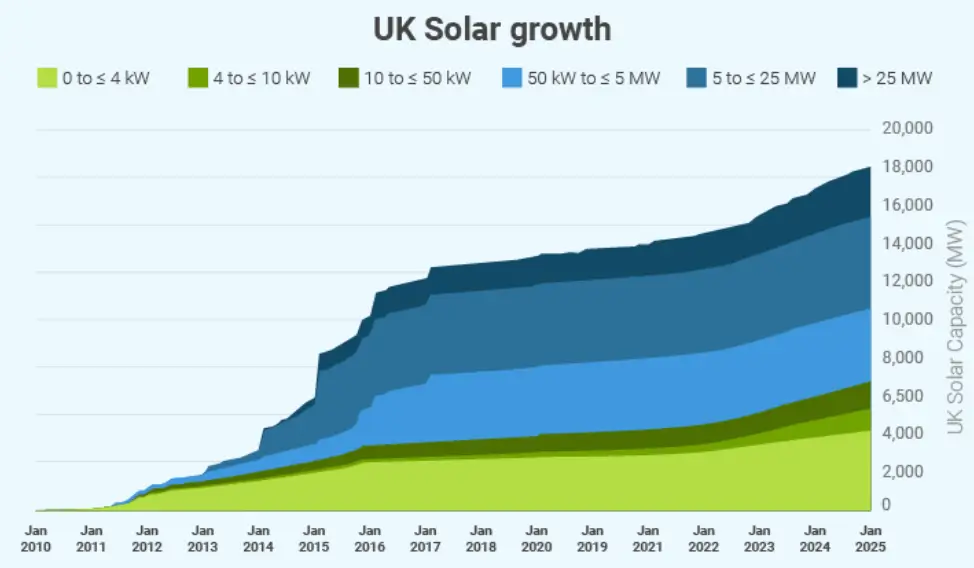
The UK’s solar market has seen exponential growth over the past few years, driven by policy support and decreasing costs. More and more homes are adopting solar, contributing to the country’s push towards renewable energy independence.
Key Drivers
- The 0% VAT has made solar power more accessible.
- Rising energy prices make solar power a more financially viable solution for homeowners.
- The Smart Export Guarantee allows homeowners to earn money by exporting excess energy.
Energy analysts predict that solar adoption will continue to rise in the next few years, particularly before the VAT exemption expires in 2027.
Risks and Policy Uncertainty
While the financial benefits of installing solar are clear, there are several factors that could affect long-term returns:
1. Policy Expiration
The 0% VAT rate is set to expire in March 2027, and VAT will return to 5%. This change could increase upfront costs for new solar buyers, although some experts suggest that long-term savings will still make solar an attractive investment.
2. Potential Changes to the SEG
While the SEG has been a boon for solar homeowners, rates could change or be adjusted by the government, potentially reducing earnings for those exporting energy to the grid.
3. Upfront Costs Still a Barrier
Even with the VAT reduction, the initial cost of installing solar panels remains a significant investment for many homeowners.
Expert Perspectives
Energy experts highlight that 2026 represents a critical window of opportunity for homeowners. One expert noted: “The 0% VAT policy is one of the most impactful financial incentives for renewable energy adoption in recent history. For homeowners considering solar, 2026 may be the best time to install.”
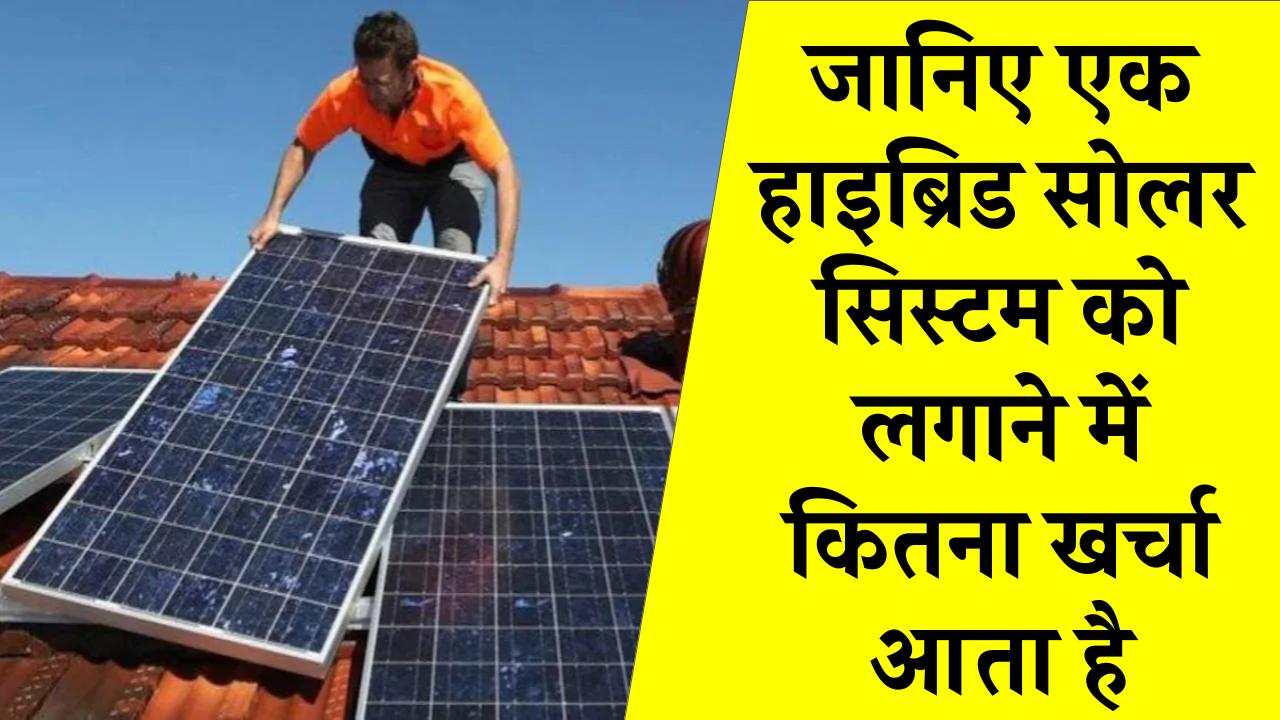
सोलर सिस्टम लगवाने की सोच रहे हैं? जानिए हाइब्रिड सोलर सिस्टम की असली कीमत और सब्सिडी का पूरा सच
Another noted that “the combination of zero VAT and lower technology costs significantly accelerates the payback period, providing a quicker return on investment.”
Consumer Decision Factors
When choosing a solar system, consumers should consider:
- Roof Orientation and Shading: Solar efficiency depends on the direction and angle of your roof.
- Upfront Costs and Financing: While savings are significant, some buyers may still require financing options.
- System Size and Energy Consumption: The size of the system should match household needs.
- Installer Reliability: Choose certified installers with proven track records for quality work.
Experts recommend getting multiple quotes from trusted installers and assessing long-term savings before committing to an installation.
Related Links
Balcony Solar in Flats: How to Cut Your UK Flat’s Energy Bill by £300 a Year Without an Electrician
WA Residential Battery Scheme: How Synergy and Horizon Customers Can Save Up to $7,500
Future Outlook: What Happens After 2027?
From April 2027, VAT on solar installations is expected to return at 5%, increasing upfront costs again. While this won’t completely negate the benefits of solar, it will make installation more expensive.
Experts suggest that while the 0% VAT policy’s expiration could slow adoption, continued innovation in solar panel technology and storage systems will still make solar an attractive long-term investment.
The 0% VAT rule on solar installations has created a rare opportunity for UK homeowners to invest in renewable energy at a lower cost. With the policy set to expire in 2027, 2026 offers a unique financial advantage for those looking to install solar and lock in savings.
By removing VAT, lowering technology costs, and offering additional support programs, the UK government has provided a compelling incentive for homeowners to transition to solar energy now.