
The rise of green ammonia 2026 marks a turning point in India’s fertilizer sector, with solar-powered production plants beginning to lower costs and reduce import dependence.

Backed by government policy and falling renewable energy prices, this shift is expected to benefit farmers through more stable fertilizer pricing and improved long-term supply security.
What is Green Ammonia and Why It Matters in 2026
Green ammonia is produced using renewable electricity—mainly solar—to generate hydrogen through electrolysis. This hydrogen is then combined with nitrogen to create ammonia, a key ingredient in fertilizers.
Unlike traditional ammonia production, which relies on natural gas, green ammonia eliminates fossil fuel dependence and reduces carbon emissions significantly.
For India, where agriculture depends heavily on nitrogen-based fertilizers, this transition has both economic and environmental implications.
Green Ammonia 2026: Policy Push and National Strategy
India’s transition is anchored in the National Green Hydrogen Mission, which aims to reduce import dependence and promote clean energy.
Key Policy Measures
- Long-term procurement agreements for green ammonia.
- Financial incentives for producers.
- Support for electrolyser manufacturing.
These measures are designed to create a stable demand environment, encouraging investment in green ammonia production. Government officials have indicated that such initiatives could reduce fertilizer subsidy burdens and improve long-term fiscal sustainability.
How Solar-Powered Plants Reduce Fertilizer Costs
Electricity as the Key Cost Driver
Electricity accounts for the majority of green ammonia production costs. Solar energy, with its rapidly declining tariffs, offers a cost-effective solution.
Cost Reduction Pathway
Solar-powered plants reduce costs through:
- Low-cost renewable electricity.
- Elimination of natural gas imports.
- Stable long-term energy pricing.
As solar capacity expands, the cost of green ammonia is expected to approach parity with conventional ammonia.
Impact on Farmers: From Subsidy Dependence to Cost Stability
Per-Acre Cost Implications
Fertilizer costs represent a significant portion of input expenses for Indian farmers. Even small reductions can improve margins. Experts estimate that:
- A 5–10% reduction in fertilizer prices could meaningfully increase farm profitability.
- Stable pricing reduces financial risk during planting seasons.
Reduced Price Volatility
Green ammonia reduces exposure to global energy price fluctuations, which often affect fertilizer costs. This stability is particularly important for small and marginal farmers.
State-Level Deployment and Regional Impact
Green ammonia projects are being planned or implemented in:
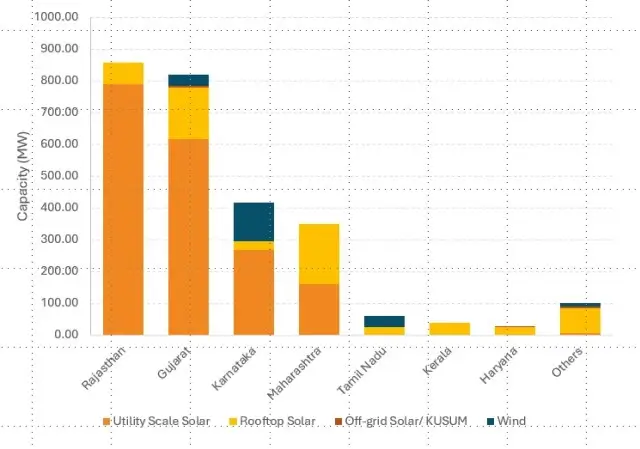
- Rajasthan and Gujarat (high solar potential).
- Tamil Nadu (renewable energy integration).
- Andhra Pradesh (industrial corridors).
These regions are expected to become hubs for green fertilizer production.
Supply Chain Transformation: From Imports to Domestic Production
India currently imports significant quantities of ammonia and natural gas.
Benefits of Domestic Green Ammonia
- Reduced foreign exchange outflow.
- Improved supply reliability.
- Enhanced food security.
Estimates suggest that large-scale adoption could save billions annually in import costs.
Comparison with Conventional Fertilizer Production
| Factor | Green Ammonia | Conventional Ammonia |
|---|---|---|
| Energy Source | Solar/Wind | Natural Gas |
| Emissions | Low | High |
| Cost Stability | High | Volatile |
| Import Dependence | Low | High |
This comparison highlights the long-term advantages of transitioning to green ammonia.
Suzlon Energy ने 2025 में स्टॉक मार्केट में किया खराब प्रदर्शन, B&K सिक्योरिटीज़ जताई चिंता
Infrastructure and Storage Challenges
Storage Complexity
Ammonia must be stored under specific conditions, requiring specialised infrastructure.
Transportation Issues
- Need for pipelines or specialised tankers.
- High initial investment in logistics.
These factors could slow adoption in the early stages.
Financing the Transition: Public and Private Investment
The green ammonia sector is attracting investments from:
- Public sector undertakings (PSUs).
- Private renewable energy companies.
- International investors.
Financing Models
- Public-private partnerships (PPP).
- Long-term supply contracts.
- Government-backed incentives.
These models aim to reduce financial risks and accelerate project development.
Environmental Benefits: Cleaner Agriculture
Green ammonia significantly reduces emissions associated with fertilizer production.
Key Environmental Gains
- Lower carbon footprint.
- Reduced industrial pollution.
- Contribution to climate targets.
This aligns with India’s commitments under global climate agreements.
Risks and Constraints
Despite its potential, several challenges remain:
Intermittent Solar Power
Solar energy availability varies by time and weather, requiring storage or hybrid systems.
Water Usage
Electrolysis requires water, which could be a concern in water-scarce regions.
Land Requirements
Large solar installations require significant land, potentially competing with agriculture.
Industry and Investment Outlook
The green ammonia sector is witnessing rapid growth globally, with strong investment momentum.
Market Growth
- Global market expected to expand significantly by 2034
- Driven by demand for sustainable fertilizers and clean energy
Indian Industry Participation
Major companies and public-sector units are actively investing in green ammonia production.
Related Links
The “Crop-Shield” Effect: How Agrivoltaics is Saving Water for Indian Farmers During Peak Summer
Illinois Residents Rally in Support of Strong Clean Energy Bills – Public Calls for Action
What Lies Ahead for Farmers and the Industry
The transition to green ammonia is expected to accelerate over the next decade.
Short-Term (2026–2027)
- Pilot projects and initial production
- Gradual cost reduction through scale
Medium-Term (2028–2030)
- Scaling up of production capacity
- Wider adoption across fertilizer plants
Long-Term
- Potential dominance of green ammonia in fertilizer production
The emergence of green ammonia 2026 signals a major transformation in India’s agricultural and energy systems. By integrating solar power with fertilizer production, the country is moving towards a more sustainable and cost-efficient model.
While challenges such as infrastructure and financing remain, the long-term benefits for farmers—lower costs, stable prices, and reliable supply—make green ammonia a critical component of India’s agricultural future.