

TOPCon vs. HJT has become a defining debate in the global solar industry, as TOPCon and HJT technologies compete to establish the next benchmark in high-efficiency solar panels.
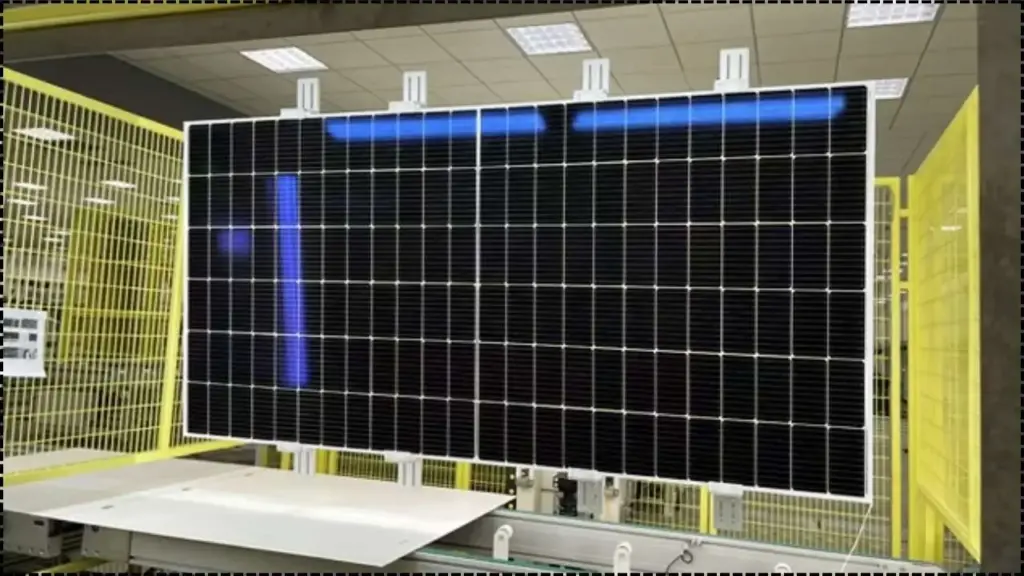
In 2026, manufacturers, policymakers, and investors are closely watching this competition, which could shape the future of solar deployment, cost structures, and technological innovation.
TOPCon vs. HJT
| Key Factor | TOPCon | HJT |
|---|---|---|
| Efficiency | High (~24–26%) | Very High (~25–27%) |
| Cost | Lower | Higher |
| Scalability | Strong | Moderate |
| Market Share | Leading | Emerging |
| Best Use | Utility-scale | Premium applications |
Understanding TOPCon vs. HJT: What Are TOPCon and HJT?
The solar industry is transitioning from traditional PERC (Passivated Emitter and Rear Cell) technology to more advanced n-type solar cell technologies, with TOPCon and HJT leading the shift.
TOPCon (Tunnel Oxide Passivated Contact)
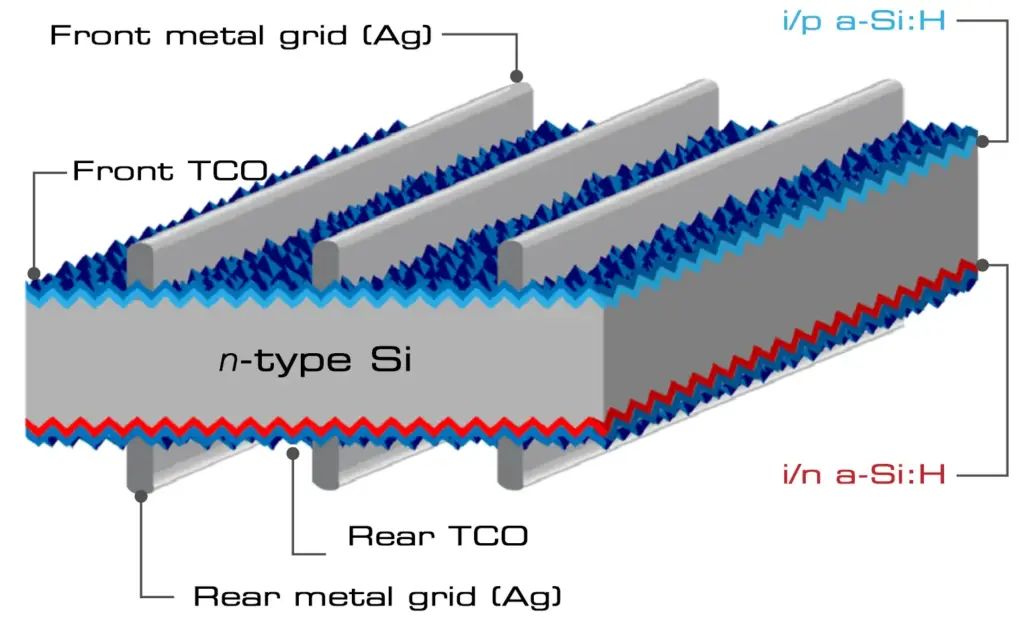
TOPCon builds on conventional silicon technology by adding an ultra-thin oxide layer and a doped silicon layer. This improves electron flow and reduces recombination losses.
Its key advantage lies in compatibility with existing manufacturing infrastructure, allowing producers to upgrade facilities rather than build new ones.
HJT (Heterojunction Technology)
HJT combines crystalline silicon wafers with thin layers of amorphous silicon, creating a hybrid structure. This allows better charge separation and higher efficiency under real-world conditions.
HJT is widely seen as a more advanced but capital-intensive technology, requiring new production lines and precision engineering.
Efficiency vs Cost: The Core Trade-Off
The competition between TOPCon and HJT is not simply about efficiency—it is about balancing performance with cost.
- TOPCon offers strong efficiency at lower cost.
- HJT delivers slightly higher efficiency but at a premium.
In most commercial scenarios, the efficiency gap is relatively small, often less than one percentage point. This means that economic factors, such as manufacturing cost and scalability, often determine adoption rather than efficiency alone.
Manufacturing and Scalability
TOPCon: The Industry Workhorse
TOPCon’s biggest advantage is its scalability. Manufacturers can upgrade existing PERC production lines, reducing capital expenditure and accelerating deployment. This has made TOPCon the dominant choice for large-scale solar manufacturing in 2026.
HJT: High-Tech but Costly
HJT requires entirely new production infrastructure, including advanced deposition techniques and stricter quality control. While this increases costs, it also positions HJT as a long-term technology with higher performance potential.
Real-World Performance Differences
Temperature Performance
HJT panels perform better in high-temperature environments, making them suitable for regions with extreme heat.
Low-Light Efficiency
HJT also performs better under low-light conditions, improving energy output during cloudy weather or early morning and evening hours.
Degradation Rate
HJT panels typically degrade more slowly over time, offering longer operational life and higher lifetime energy yield.
Market Trends and Industry Adoption
The global solar market is currently dominated by TOPCon technology due to its cost advantages and ease of scaling.
However, HJT is gaining traction, particularly in premium segments where performance is prioritized over cost. Industry analysts suggest that the market is likely to remain diversified, with both technologies coexisting rather than one replacing the other entirely.
Comparison with Emerging Technologies
The TOPCon vs HJT debate is part of a broader evolution in solar technology.
| Technology | Efficiency Range | Status |
|---|---|---|
| PERC | ~20–23% | Declining |
| TOPCon | ~24–26% | Dominant |
| HJT | ~25–27% | Growing |
| Tandem Cells | 30%+ | Emerging |
While tandem cells represent the future, TOPCon and HJT are currently driving the transition to high-efficiency solar systems.
महंगी होंगी या सस्ती? जानिए भारत में Lithium-Ion बैटरी की कीमतें किन फैक्टर्स पर निर्भर हैं
Implications for Emerging Markets
In countries like India, where solar capacity is expanding rapidly, both technologies offer distinct advantages:
- TOPCon: Ideal for utility-scale projects due to lower cost.
- HJT: Suitable for rooftop and high-performance installations.
Experts suggest that a hybrid adoption strategy will allow markets to balance cost and performance effectively.
Challenges Facing Both Technologies
TOPCon Challenges
- Limited long-term efficiency ceiling.
- Incremental innovation compared to newer technologies.
HJT Challenges
- High capital investment.
- Limited manufacturing capacity.
- Complex supply chain requirements.
Addressing these challenges will be critical for long-term success.
Expert Insights
Industry experts emphasize that the competition is not about a single winner but about optimizing different use cases. One analyst noted that “cost efficiency drives adoption at scale, while performance drives innovation.”
This suggests that both technologies will play complementary roles in the evolving solar landscape.

Future Outlook
Looking ahead, the solar industry is expected to evolve in phases:
- Short term (2026–2028): TOPCon dominates deployment.
- Medium term (2028–2032): HJT gains market share.
- Long term: Tandem technologies disrupt both.
This layered progression reflects the rapid pace of innovation in renewable energy.
Related Links
Anti-Solar Bills Defeated in Texas House – Victory for Renewable Energy Advocates
Level 3 Alert Issued for Solar Inverters by National Power Grid Reliability Council
The competition between TOPCon and HJT reflects a broader transformation in solar technology. While TOPCon currently leads in scalability and cost efficiency, HJT is pushing the boundaries of performance and durability.
As the industry evolves, the “gold standard” may not belong to a single technology, but rather to a dynamic ecosystem where multiple innovations coexist and drive progress.
FAQs
Which technology is more efficient: TOPCon or HJT?
HJT is slightly more efficient, but the difference is small in practical use.
Why is TOPCon more widely adopted?
It is cheaper and easier to scale using existing manufacturing infrastructure.
Is HJT worth the higher cost?
Yes, for applications requiring higher performance and better temperature stability.
Will TOPCon replace HJT or vice versa?
Not immediately. Both technologies are expected to coexist for different applications.
What comes after TOPCon and HJT?
Perovskite-silicon tandem cells are expected to be the next major breakthrough.