Transparent solar windows—an advanced form of building-integrated photovoltaics (BIPV)—are emerging in 2026 as a promising solution to urban energy challenges.
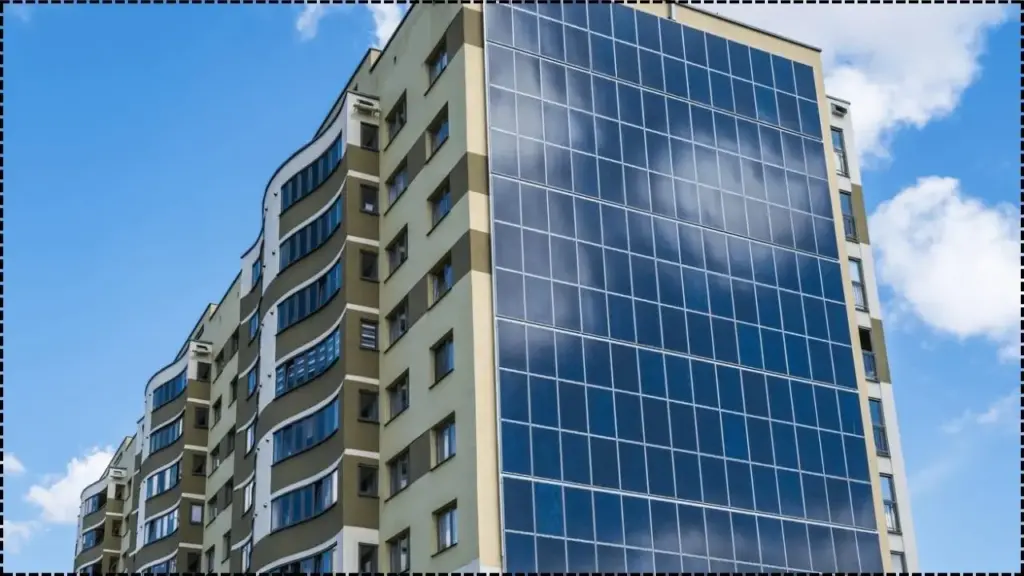
By embedding photovoltaic materials such as perovskites into glass, developers aim to transform skyscrapers into electricity-generating structures, potentially reducing reliance on centralized power grids while preserving architectural design.
Transparent Solar Windows
| Key Fact | Detail | Context |
|---|---|---|
| Transparency | Up to ~80% visible light transmission | Advanced solar glass |
| Efficiency | ~3%–17% (higher with tandem tech) | Research & pilots |
| Energy Potential | Up to 40% building energy | Urban studies |
What Are Transparent Solar Windows?
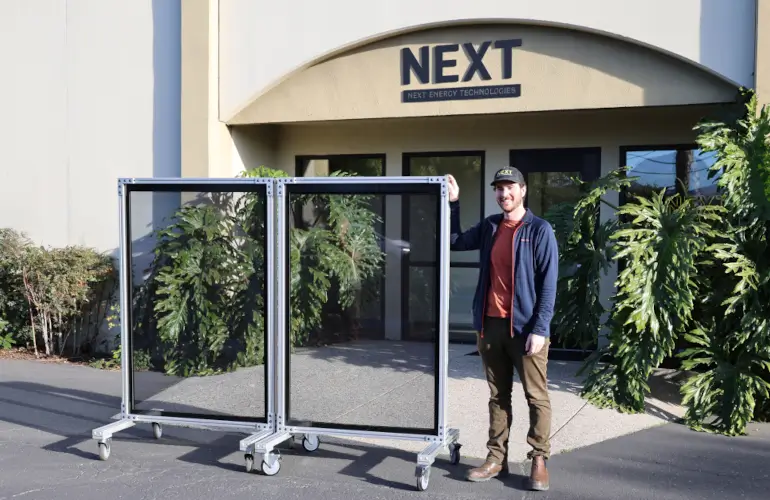
Transparent solar windows are glass panels embedded with photovoltaic materials capable of generating electricity while maintaining partial transparency. They belong to the broader category of BIPV systems, where energy generation is integrated into the building envelope.
Companies such as Ubiquitous Energy have developed coatings that allow glass to absorb invisible wavelengths while transmitting visible light, enabling power generation without significantly altering building aesthetics.
How the Technology Works
Transparent solar windows rely on several innovations:
Perovskite Thin Films
Highly efficient and tunable, these materials can be applied as thin coatings on glass surfaces.
Organic Photovoltaics (OPV)
Flexible and lightweight, suitable for large-scale facade applications.
Luminescent Solar Concentrators
These systems channel absorbed light toward the edges of panels, where it is converted into electricity. Together, these technologies enable buildings to generate energy across large vertical surfaces.
Efficiency vs Transparency: A Critical Trade-Off
A central challenge is balancing visibility with performance:
- Higher transparency → lower efficiency.
- Lower transparency → higher energy output.
Recent advances have pushed semi-transparent solar cells toward ~17% efficiency, with ongoing research exploring tandem configurations for further gains.
Real-World Case Studies
Commercial Installations
Companies like Onyx Solar have installed photovoltaic glass in airports, office buildings, and public infrastructure projects globally.
Pilot Projects
Pilot buildings in Europe and Asia have integrated solar windows into facades, demonstrating measurable reductions in energy consumption.
Urban Demonstrations
In dense cities, test installations show that solar windows can contribute meaningful energy without requiring additional space.
ROI and Payback Period Analysis
One of the most important questions for developers is cost recovery.
Initial Costs
- Higher than conventional glass.
- Installation complexity.
Long-Term Benefits
- Reduced electricity bills.
- Potential grid feed-in revenue.
- Increased property value.
Industry estimates suggest payback periods of 8–15 years, depending on location, sunlight exposure, and energy prices.
Grid Integration and Energy Management
Transparent solar windows must integrate with building energy systems.
Key Challenges
- Variable energy generation.
- Need for energy storage solutions.
- Synchronization with grid supply.
Modern buildings are increasingly using smart energy management systems powered by AI to optimize energy usage and storage.
Comparison with Traditional Rooftop Solar
| Feature | Solar Windows | Rooftop Panels |
|---|---|---|
| Efficiency | Lower | Higher |
| Space Use | Vertical surfaces | Roof only |
| Aesthetics | High | Moderate |
| Cost | Higher | Lower |
Solar windows are not a replacement but a complement to rooftop systems.
Urban Impact: Energy-Generating Skyscrapers
Transparent solar windows could significantly reshape urban energy infrastructure.
Key Benefits
1. Expanding Energy Generation Area
Skyscrapers offer vast facade space, far exceeding rooftop area.
2. Supporting Net-Zero Buildings
BIPV helps buildings meet sustainability targets and reduce emissions.
3. Decentralizing Power Generation
Buildings can produce energy locally, reducing transmission losses.
Risks and Challenges
1. Durability Issues
Perovskite materials are sensitive to heat, moisture, and UV exposure.
2. Glare and Light Management
Improper design may cause glare or affect indoor lighting quality.
3. Fire and Safety Regulations
Building codes must adapt to include photovoltaic glass safety standards.
4. High Costs
Scaling production remains a challenge.
Policy and Regulatory Landscape
Governments are increasingly supporting BIPV adoption through:
- Green building mandates.
- Tax incentives.
- Renewable energy targets.
Urban planning policies are evolving to encourage integrated energy systems in new developments.
Environmental and Lifecycle Considerations
Transparent solar windows can reduce carbon emissions by generating clean energy. However, lifecycle considerations include:
- Recycling photovoltaic glass.
- Managing materials like lead in perovskites.
- Ensuring sustainable manufacturing processes.
Regulatory frameworks will play a key role in addressing these concerns.
Industry and Investment Trends
The BIPV market is attracting strong investor interest. Analysts expect rapid growth driven by:
- Urbanization.
- Sustainability goals.
- Technological advancements.
Companies are scaling production and exploring partnerships with construction firms.
Expert Perspectives
Experts describe transparent solar windows as a “key innovation” for urban sustainability. A building energy researcher stated: “Integrating solar generation into building materials is essential for scaling renewable energy in cities with limited space.”
However, experts caution that cost and durability improvements are necessary for widespread adoption.
Future Outlook: Smart Cities and Solar Glass
By 2030, transparent solar windows are expected to:
- Integrate with smart grids
- Work alongside AI-driven energy systems
- Become standard in premium commercial buildings
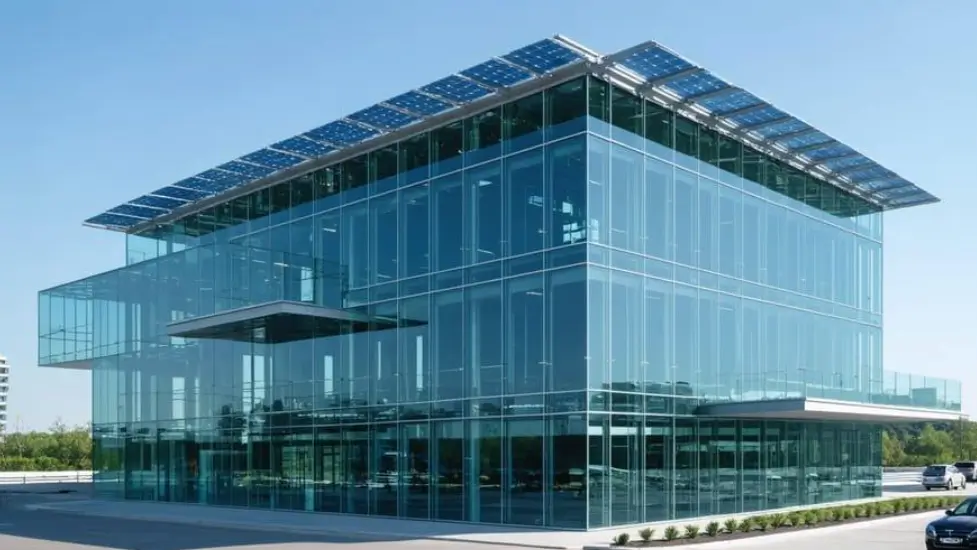
They may play a central role in the development of energy-efficient smart cities.
Related Links
Illinois Considers Bold Clean Energy Package to Tackle Data Center Energy Demand
Texas to Mandate Recycling of Retired Solar and Wind Projects – New Sustainability Push
Transparent solar windows represent a significant advancement in integrating renewable energy into urban infrastructure. While challenges remain, ongoing innovation and investment suggest that skyscrapers could soon become active contributors to energy generation.
As cities evolve, BIPV technologies may redefine how buildings interact with energy systems, paving the way for more sustainable urban environments.
FAQs
Are transparent solar windows available today?
Yes, but mainly in pilot and limited commercial projects.
Can they replace traditional solar panels?
No, they complement rooftop panels rather than replace them.
How long do they last?
Durability is improving, but long-term performance is still under evaluation.
Are they cost-effective?
Currently expensive, but costs are expected to decrease with scale.