
India is rapidly scaling up Floating Solar Farms, converting reservoirs and lakes into renewable energy hubs.
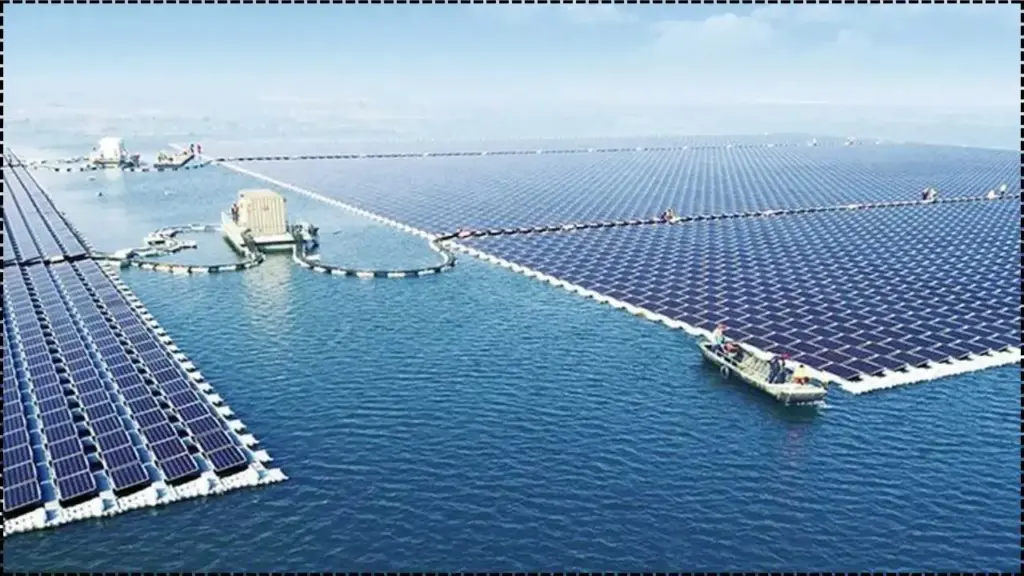
As land constraints intensify and energy demand rises, this emerging technology is becoming central to India’s clean energy strategy, offering efficiency gains, water conservation benefits, and new opportunities for sustainable infrastructure development.
Floating Solar Farms and India’s Clean Energy Transition
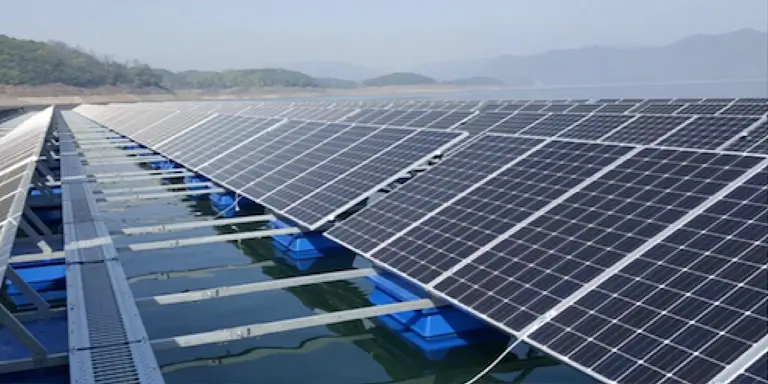
Floating Solar Farms are emerging as a strategic solution in India’s renewable energy mix. These systems deploy photovoltaic panels on floating platforms anchored in reservoirs, lakes, and irrigation ponds.
India’s renewable energy ambitions are among the most ambitious globally. The government aims to achieve 500 gigawatts (GW) of non-fossil fuel capacity by 2030. Within this framework, floating solar is gaining attention as a scalable and resource-efficient option.
Officials from the Ministry of New and Renewable Energy (MNRE) have highlighted floating solar as a key area for innovation, particularly in regions facing land scarcity.
Why Floating Solar Farms Are Expanding Rapidly
Land Scarcity and Competing Priorities
India’s growing population and economic expansion have increased pressure on land resources. Agriculture, urban development, and infrastructure projects compete for limited space.
Floating Solar Farms provide a practical alternative by utilising water surfaces that are otherwise underused. According to energy analysts, even a fraction of India’s reservoir area could support large-scale solar deployment.
Higher Energy Output Through Cooling
Solar panels lose efficiency when temperatures rise. Floating systems benefit from natural cooling provided by water bodies, improving performance.
Studies indicate that floating solar installations can generate 10–15% more electricity than comparable land-based systems, making them attractive for developers seeking higher returns.
Water Conservation and Climate Benefits
India is one of the most water-stressed countries globally. Floating solar installations reduce evaporation by covering water surfaces.In reservoirs used for irrigation and drinking water, this benefit is particularly significant. Experts note that reduced evaporation can help stabilise water availability in drought-prone regions.
Major Floating Solar Projects and Case Studies
India has already developed several large floating solar projects, demonstrating the viability of the technology.
Omkareshwar Floating Solar Project (Madhya Pradesh)
The Omkareshwar project, with a planned capacity of 600 MW, is among the largest globally. It reflects India’s ambition to scale floating solar to utility levels.
Ramagundam Project (Telangana)
Developed by National Thermal Power Corporation (NTPC), this project showcases integration with existing power infrastructure.
Kerala and Maharashtra Initiatives
States like Kerala and Maharashtra are deploying floating solar on smaller reservoirs and irrigation systems, demonstrating decentralised applications.
Economic Impact and Financing Challenges
Floating solar projects require higher upfront investment than ground-mounted systems. Costs typically range between ₹5–6 crore per megawatt, depending on site conditions and technology.
Investment Trends
Public sector enterprises, private developers, and international investors are increasingly participating in floating solar projects. Financial institutions are also showing growing interest.
Financing Risks
However, financing challenges remain. High capital costs, evolving technology, and regulatory uncertainties can deter smaller developers.
A renewable energy finance expert noted, “Floating solar is promising, but investors require policy certainty and long-term visibility to commit capital at scale.”
Integration with Hydropower and Grid Stability
Floating solar systems are often deployed on hydropower reservoirs, creating hybrid energy systems. This integration offers several advantages:
- Shared transmission infrastructure reduces costs.
- Hydropower can balance solar variability.
- Improved grid stability and reliability.
According to the International Energy Agency (IEA), hybrid renewable systems could play a crucial role in future energy systems.
Environmental and Ecological Considerations
Floating Solar Farms offer environmental benefits, but they also raise ecological questions.
Positive Impacts
- Reduced carbon emissions.
- Lower water evaporation.
- Limited land disturbance.
Potential Risks
- Impact on aquatic ecosystems.
- Changes in water temperature and oxygen levels.
- Effects on fisheries and biodiversity.
Environmental experts emphasise the importance of careful site selection and monitoring.
Local Communities and Social Impact
Floating solar projects can influence local communities in multiple ways.
Opportunities
- Job creation during construction and maintenance.
- Improved access to electricity.
- Support for irrigation and agriculture.
Concerns
- Restricted access to water bodies for fishing.
- Land and water use conflicts.
Stakeholder engagement is essential to ensure equitable outcomes.
Technological Evolution and Innovation
Floating solar technology is evolving rapidly.
Advanced Materials
Developers are using more durable and corrosion-resistant materials to improve system lifespan.
Hybrid Systems
Emerging designs combine floating solar with wind energy or energy storage systems.
Digital Monitoring
Advanced monitoring systems are being deployed to track performance and detect issues in real time. Experts say innovation will be key to reducing costs and improving reliability.
Global Comparison: Where India Stands
Floating solar is gaining traction worldwide.
- China leads in large-scale deployments.
- Japan and South Korea have advanced urban floating systems.
- Europe is exploring smaller, decentralised projects.
According to the World Bank, countries with large reservoir networks have significant untapped potential. India’s scale and early adoption position it as a strong contender in the global floating solar market.
Policy Landscape and Regulatory Needs
India has introduced several policies to promote renewable energy, including floating solar. The Solar Energy Corporation of India (SECI) has issued tenders for floating solar projects, encouraging private participation.
However, experts highlight the need for:
- Clear guidelines on water usage rights.
- Standardised environmental regulations.
- Long-term policy stability.
Policy clarity will be critical for sustained growth.
Related Links
Domestic Manufacturing Boom: Is India on Track to Become the World’s Third-Largest Solar Hub?
Transparent Solar Windows: Turning Skyscrapers into Power Plants with BIPV Tech in 2026
Future Outlook: Scaling the Reservoir Revolution
India’s floating solar capacity is expected to expand significantly over the next decade. Government agencies are mapping reservoirs and identifying suitable sites. Technological improvements are expected to reduce costs and improve efficiency.
Floating solar could become a mainstream component of India’s renewable energy mix, complementing land-based solar and wind power.
Floating Solar Farms are reshaping India’s renewable energy landscape. By transforming reservoirs into energy-generating assets, the country is addressing land constraints, improving efficiency, and conserving water.
While challenges related to cost, technology, and environmental impact remain, the trajectory is clear. With sustained investment, policy support, and innovation, floating solar is poised to become a key pillar of India’s clean energy future.