
India’s clean energy expansion is entering a new phase. Under the evolving The Solar Waste Crisis 2026 framework, authorities in 2026 are enforcing stricter rules for end-of-life solar panel recycling, aiming to address rising waste volumes while ensuring long-term sustainability of the country’s renewable energy growth.
Solar Expansion Creates a Parallel Waste Challenge
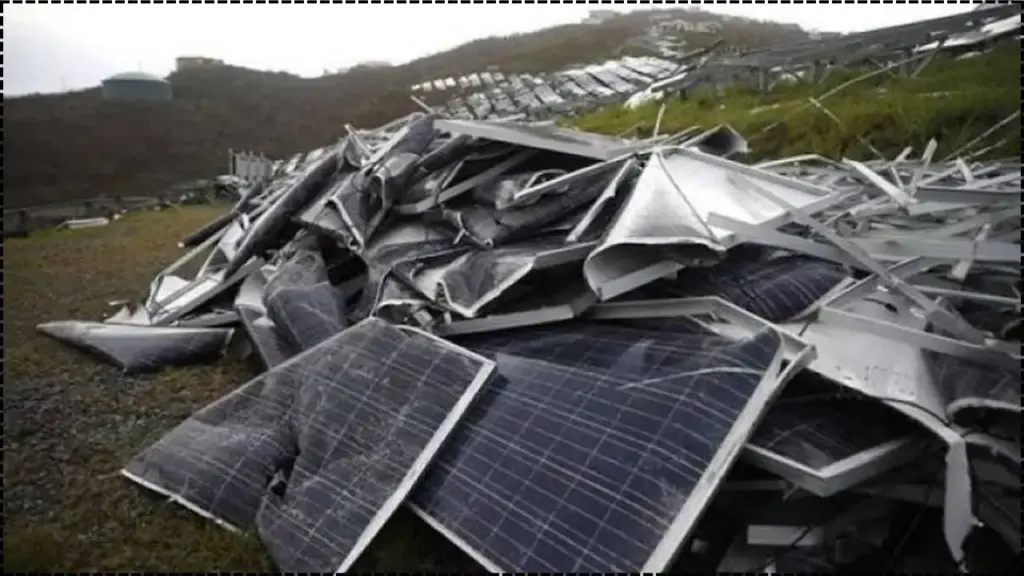
India has rapidly scaled up solar capacity over the past decade, driven by declining costs and strong policy support. However, this expansion is now producing a growing stream of solar panel waste.
Government-linked estimates indicate that India could generate around 600 kilotonnes of solar photovoltaic waste by 2030, with volumes increasing significantly in the decades that follow.
The Central Pollution Control Board (CPCB) has warned that early installations are approaching the end of their operational life, creating an urgent need for structured waste management systems.
“India is moving from a deployment phase to a disposal phase in solar energy,” said a senior researcher at a public policy institute.
The The Solar Waste Crisis 2026 Shift: From Generation to Lifecycle Accountability
The introduction of stricter solar waste rules reflects a broader shift toward The Solar Waste Crisis 2026, where the full lifecycle of renewable technologies is regulated.
Key Elements of the Shift
- Mandatory end-of-life panel management.
- Producer accountability through Extended Producer Responsibility (EPR).
- Digital tracking of waste flows.
- Formalisation of recycling infrastructure.
This marks a transition from a linear energy model to a circular economy approach, where materials are recovered and reused.
New 2026 Rules: Mandatory Recycling and Compliance
Legal Enforcement and Penalties
Under updated CPCB guidelines:
- Solar panel disposal outside authorised systems is prohibited.
- Violations may attract penalties under environmental protection laws.
- State pollution control boards are responsible for enforcement.
Legal experts note that these rules align solar waste management with broader environmental compliance frameworks in India.
Extended Producer Responsibility (EPR) in Practice
The EPR system places responsibility on manufacturers, importers, and project developers.
They must:
- Establish collection mechanisms.
- Partner with authorised recyclers.
- Submit annual compliance reports.
- Meet recovery targets (expected to tighten over time).
A centralised digital portal tracks compliance, improving transparency and accountability.
Environmental and Health Risks
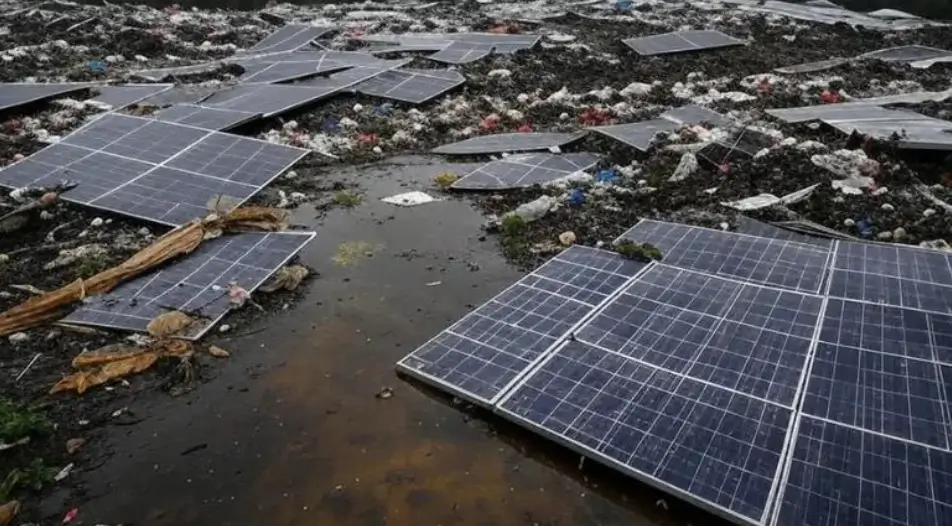
Solar panels contain materials that require controlled disposal.
Potential Risks
- Soil contamination from heavy metals.
- Water pollution due to leaching.
- Air emissions during improper burning.
Although most panel components are recyclable, improper handling—especially in informal sectors—can create environmental hazards. Experts emphasise that early regulation is critical to avoid large-scale contamination.
Lifecycle Carbon Accounting: A New Dimension
A key addition to policy discussions is lifecycle carbon accounting. While solar energy reduces emissions during operation, panel production and disposal also carry environmental costs.
Recycling can:

- Reduce emissions associated with raw material extraction.
- Lower the carbon footprint of future panels.
- Improve overall sustainability metrics.
“Circularity is essential to ensure that solar remains a truly green technology,” said a sustainability expert.
Economic Opportunity: Building a Recycling Industry
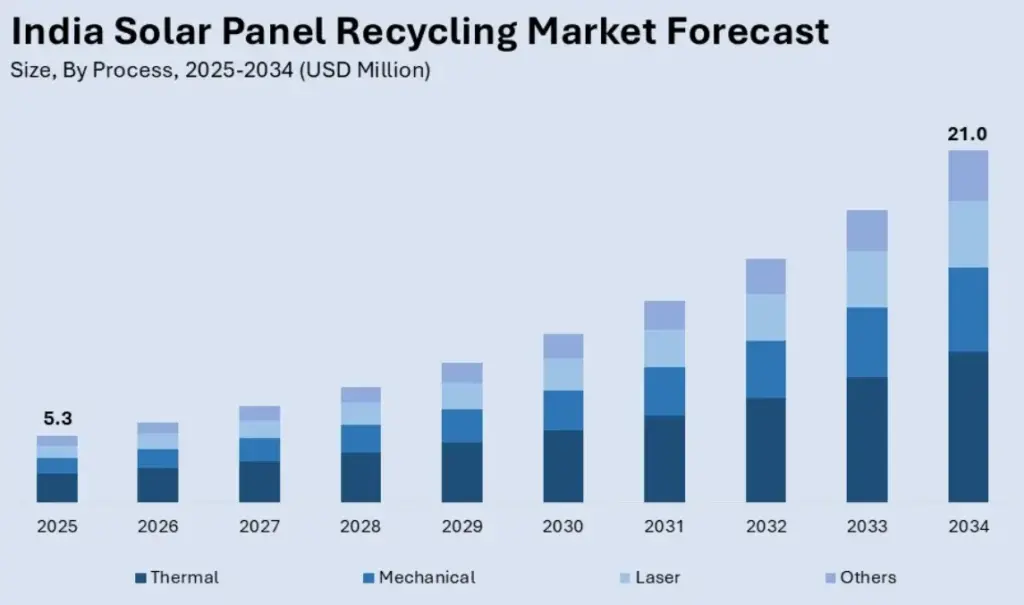
Solar waste is also emerging as a potential economic resource. Recovered materials such as aluminium, glass, and silicon have significant industrial value. Estimates suggest the sector could evolve into a multi-billion-rupee market by 2047.
Market Drivers
- Rising waste volumes.
- Demand for recycled materials.
- Policy incentives.
- Export opportunities.
Industry stakeholders say early investment could position India as a global hub for solar recycling.
Infrastructure Gap and Investment Needs
Despite policy momentum, infrastructure remains limited. India currently has only a small number of specialised recycling facilities. Meeting future demand could require hundreds of plants nationwide.
Key Barriers
- High capital costs.
- Limited technology adoption.
- Fragmented supply chains.
Experts recommend public-private partnerships and targeted subsidies to accelerate capacity building.
Insurance, Liability, and Financial Risk
A less-discussed aspect of solar waste management is financial liability. Developers and asset owners may face:
- Decommissioning costs.
- Recycling compliance expenses.
- Insurance requirements for environmental risks.
Financial institutions are beginning to factor end-of-life obligations into project financing and risk assessment.
Global Trade and Export Implications
India’s solar waste policies also have implications for international trade. As global markets tighten environmental standards:
- Exporting recycled materials may become more viable.
- Compliance could improve access to green supply chains.
- Non-compliance could restrict market access.
The European Union, for example, requires strict sustainability standards for imports, including lifecycle considerations.
Case Studies and Early Industry Response
Several companies in India have begun pilot recycling projects. Examples include:
- Solar developers partnering with recycling firms.
- Startups focusing on material recovery technologies.
- Research institutions developing cost-effective processes.
These early efforts provide insights into scaling challenges and economic viability.
Labour Transition and Social Impact
The shift toward formal recycling systems will also affect workers.
Key Issues
- Integration of informal workers into formal systems.
- Need for training and skill development.
- Occupational safety standards.
Experts stress that a “just transition” approach is essential to ensure social inclusion.
Innovation and Technology Trends
Advances in recycling technology are critical to the sector’s growth. Emerging solutions include:
- Automated panel dismantling.
- Chemical recovery of silicon.
- High-efficiency material separation techniques.
Such innovations could significantly reduce costs and improve recovery rates.
Enforcement and Implementation Challenges
While the regulatory framework is expanding, implementation remains a concern.
Challenges
- Monitoring compliance across states.
- Preventing illegal dumping.
- Ensuring availability of authorised recyclers.
Experts say strong enforcement mechanisms and inter-agency coordination will be key.
Related Links
Agri-Solar 2026: How Farmers Can Generate Double Income from the Same Piece of Land
Hybrid Hydro-Solar: How Dam Reservoirs are Doubling as Massive Solar-Battery Hubs
What Comes Next
India’s solar waste policy is expected to evolve further. Future steps may include:
- Binding recycling targets.
- Stricter reporting requirements.
- Incentives for circular manufacturing.
- Expansion of recycling infrastructure.
Policy experts say the next five years will be critical in shaping the sector.
India’s solar waste crisis reflects the unintended consequences of rapid clean energy expansion. The 2026 push for mandatory end-of-life recycling marks a significant shift toward lifecycle accountability.
If effectively implemented, the The Solar Waste Crisis 2026 framework could transform solar waste into a valuable resource stream, strengthening India’s clean energy transition while safeguarding environmental and public health outcomes.