

India’s renewable energy sector is showing unusual resilience, with companies such as ACME Solar and NTPC Green Energy rising up to 9% even as broader equity markets remain subdued.

The ACME Solar & NTPC Green Energy surge 9% reflects strong demand fundamentals, policy backing, and investor confidence in long-term clean energy growth.
ACME Solar & NTPC Green Energy Surge 9% Amid Weak Market Sentiment
India’s benchmark indices have faced volatility due to global macroeconomic pressures, including interest rate uncertainty and foreign investor outflows. However, renewable energy stocks have diverged from this trend.
Market data shows ACME Solar gaining sharply in intraday trade, while NTPC Green Energy also recorded strong upward movement. Analysts attribute this divergence to sector-specific drivers rather than broader market sentiment.
“Renewable energy is increasingly viewed as a structural growth story rather than a cyclical trade,” said a senior equity strategist at a domestic brokerage.
Execution Strength and Asset Expansion Driving ACME Solar
Battery Storage Integration as a Growth Lever
ACME Solar’s recent commissioning of large-scale battery energy storage capacity has been a major trigger for investor optimism. Battery storage allows renewable companies to:
- Store excess solar generation
- Sell electricity during peak pricing periods
- Improve grid reliability
This technology is critical because solar power is intermittent. Storage transforms it into a more stable and commercially viable energy source. “Storage is the next frontier in renewable energy profitability,” said an energy analyst tracking infrastructure investments. “Companies that adopt it early gain a competitive edge.”
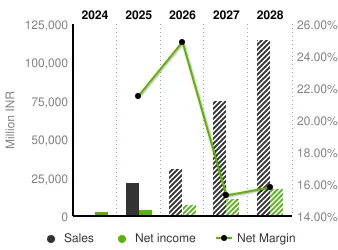
Financial Position and Revenue Visibility
ACME Solar benefits from long-term power purchase agreements (PPAs), typically signed with government-backed distribution companies (DISCOMs). These contracts ensure predictable cash flows over 20–25 years. However, analysts note that:
- Renewable developers often carry high debt due to capital-intensive projects
- Cash flow stability depends on timely payments from DISCOMs
Despite these risks, the company’s expanding portfolio and execution track record have improved investor confidence.
NTPC Green Energy: Backed by Scale and Policy Support
Expansion Anchored by Parent Company Strength
NTPC Green Energy is supported by NTPC Ltd, India’s largest power producer. This backing provides financial stability and easier access to capital.
Recent solar project commissioning has strengthened NTPC Green’s capacity base, reinforcing its role in India’s renewable expansion.
Government Policy as a Key Driver
The Indian government has significantly increased NTPC’s investment limits to accelerate renewable deployment. The company aims to achieve around 60 GW of renewable capacity by 2032, aligning with national energy targets.
According to policy experts, government backing reduces project risk and enhances investor confidence.“NTPC Green benefits from both policy alignment and institutional credibility,” said a researcher at the Council on Energy, Environment and Water (CEEW).
Power Demand Surge Supporting the Sector
Seasonal and Structural Drivers
Electricity demand in India is rising due to:
- Early onset of summer temperatures
- Increased use of cooling appliances
- Industrial recovery
Data from the Ministry of Power shows a steady increase in peak electricity demand, with expectations of further growth.
Long-Term Electrification Trends
Structural factors are equally important:
- Growth in electric vehicles
- Expansion of data centres
- Shift toward electric cooking and appliances
These trends are expected to sustain demand for decades, benefiting power producers.
Renewable Stocks vs Thermal Power: A Changing Market Preference
Interestingly, renewable stocks are increasingly competing with traditional thermal power companies for investor attention.Thermal companies benefit from:
- Immediate demand spikes
- Established infrastructure
However, renewables offer:
- Long-term sustainability
- Lower regulatory risk over time
- Alignment with climate policies
This shift is gradually changing capital allocation patterns in the energy sector.
Investor Behaviour: Domestic vs Foreign Flows
Domestic Institutional Support
Domestic institutional investors (DIIs), including mutual funds, have increased exposure to power and renewable stocks. This has helped stabilise prices during foreign investor exits.
Foreign Investor Caution
Foreign institutional investors (FIIs) have remained cautious due to:
- Valuation concerns
- Currency fluctuations
- Global interest rate environment
However, renewable energy remains a key long-term theme for global funds focused on sustainability.
Valuation Debate: Growth vs Overpricing
One of the most debated aspects of the rally is valuation.
Bullish View
Supporters argue that:
- Renewable demand is structurally rising
- Government targets ensure long-term growth
- Earnings visibility justifies premium valuations
Bearish View
Critics caution that:
- Stocks may be priced ahead of earnings
- Execution delays could impact returns
- Tariffs in competitive auctions are declining
“Investors should distinguish between growth potential and valuation comfort,” said an analyst at a global investment firm.
Infrastructure and Grid Challenges
Transmission Constraints
India’s rapid renewable expansion is putting pressure on transmission networks. Renewable projects are often located in remote areas, requiring strong grid connectivity.

Delays in transmission infrastructure can lead to:
- Project commissioning delays
- Lower utilisation rates
DISCOM Financial Health
Distribution companies remain a weak link in the power sector. Payment delays can affect cash flows for renewable developers. Government reforms are ongoing, but structural issues persist.
Policy Momentum and Future Outlook
India aims to achieve 500 GW of non-fossil fuel capacity by 2030, making renewable energy a central pillar of its economic strategy. Key policy initiatives include:
- Solar park development
- Battery storage incentives
- Green hydrogen programmes
- Rooftop solar expansion
Industry estimates suggest India could add over 50 GW of renewable capacity annually in the coming years.
Global Context: India’s Position in the Energy Transition
Globally, renewable energy investments are accelerating due to climate commitments and energy security concerns. India is emerging as a key market due to:
- Rapid demand growth
- Competitive solar tariffs
- Strong policy framework
Large-scale projects and hybrid energy parks are attracting both domestic and international capital.

Scenario Analysis: What Could Happen Next?
Bull Case
- Continued demand growth
- Faster project execution
- Stable policy environment
Result: Sustained rally in renewable stocks.
Related Links
New Mandate: Aadhaar Authentication Now Required for PM Surya Ghar Solar Subsidy
Bihar Free Solar Scheme: 2.5 Lakh BPL Families to Get Free Rooftop Solar Under Kutir Jyoti Yojana
Bear Case
- Grid bottlenecks
- Policy changes
- Rising interest rates
Result: Valuation correction and slower growth.
The ACME Solar & NTPC Green Energy surge 9% highlights a broader transformation in India’s energy and financial markets. Renewable companies are increasingly seen as long-term growth assets supported by policy, demand, and technology.
While risks remain, including valuation concerns and infrastructure challenges, the sector’s structural tailwinds suggest it will remain a key focus for investors in the years ahead.