As India faces intensifying summer heat and water scarcity, agrivoltaics is emerging as a climate-resilient solution. The “crop-shield” effect, created by solar panels installed above farmland, is helping farmers reduce water loss, protect crops, and sustain productivity during extreme weather conditions.
Understanding the Crop-Shield Effect
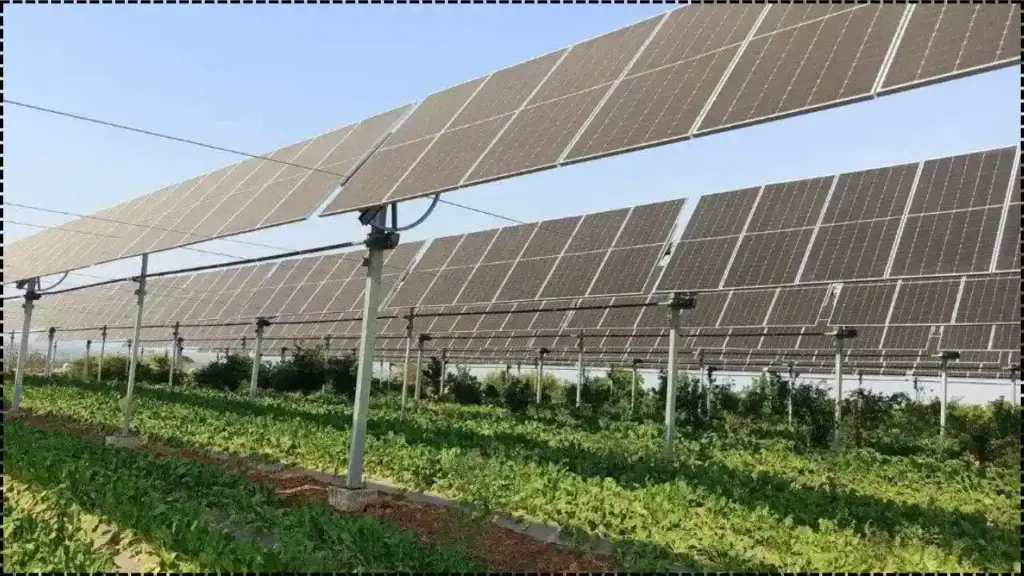
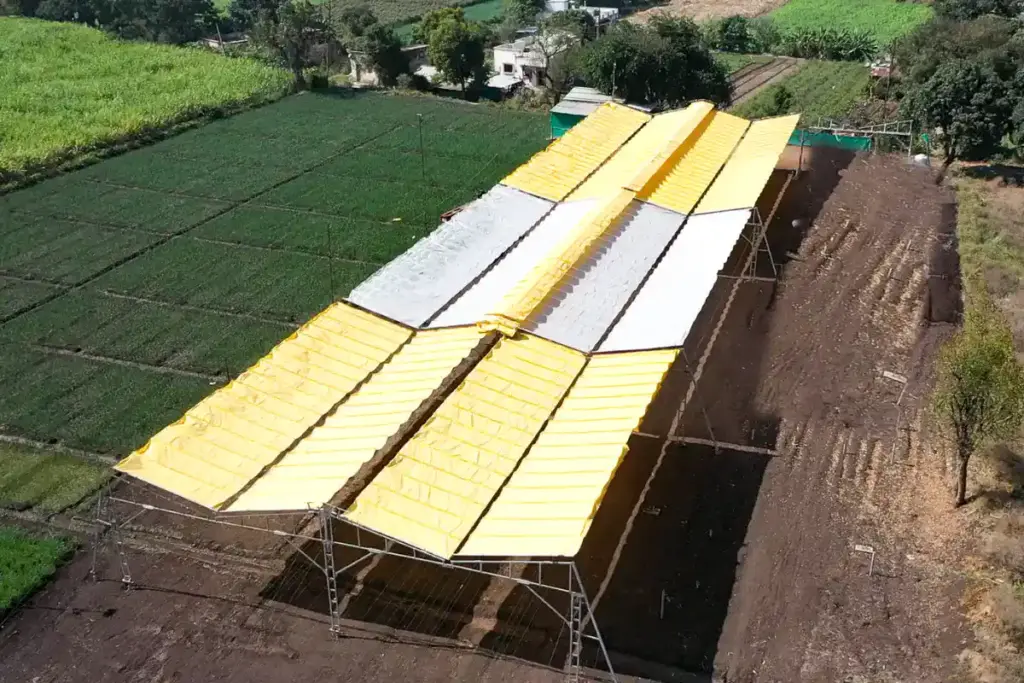
Agrivoltaics refers to the dual use of land for solar energy generation and agriculture. Panels are elevated to allow crops to grow below, creating a partially shaded microclimate. This produces the crop-shield effect, where solar panels:
- Reduce direct solar radiation.
- Lower soil temperature.
- Limit moisture loss.
Researchers describe this as a natural climate buffer that protects crops from extreme heat while improving water efficiency.
How Agrivoltaics Saves Water During Peak Summer
1. Reduced Evaporation from Soil
Direct sunlight accelerates water loss in open fields. Solar panels act as a barrier, reducing evaporation rates significantly. Studies indicate that water requirements can drop by 25–40%, especially in arid regions.
2. Enhanced Soil Moisture Retention
Shaded soil retains moisture for longer periods, reducing the need for frequent irrigation. This is particularly beneficial during peak summer when water availability is limited.
3. Lower Crop Transpiration Rates
Plants lose water through transpiration. Under agrivoltaic systems, moderated temperatures reduce this loss.This helps crops maintain hydration even during heatwaves.
4. Efficient Use of Irrigation Water
Farmers report improved efficiency in irrigation practices due to slower soil drying. In some cases, drip irrigation combined with agrivoltaics further enhances water savings.

Scientific Mechanisms Behind the Crop-Shield Effect
The crop-shield effect is grounded in environmental science.
Key Processes
- Reduced solar radiation lowers heat absorption.
- Cooler soil reduces evaporation rates.
- Stable humidity improves plant physiology.
Researchers note that agrivoltaics optimises the water-energy-food nexus, making it a highly efficient system.
Crop Protection and Yield Stability
Extreme heat can damage crops, reduce yields, and increase crop failure risks.Agrivoltaics helps by:
- Reducing heat stress.
- Protecting crops from excessive sunlight.
- Stabilising growth conditions.
Studies show that certain crops maintain or even improve yields under partial shading.
Which Crops Benefit the Most
Suitable Crops
- Leafy vegetables.
- Tomatoes and chillies.
- Turmeric and ginger.
These crops benefit from moderated sunlight and improved moisture conditions.
Less Suitable Crops
- Wheat
- Rice
- Sun-intensive cereals
These require full sunlight and may not perform well under panels.
NEW: Groundwater Conservation Impact
India relies heavily on groundwater for irrigation. Over-extraction has led to declining water tables in many regions. Agrivoltaics contributes to groundwater conservation by:
- Reducing irrigation demand.
- Slowing water depletion rates.
- Improving recharge potential.
Water policy experts say this could play a crucial role in long-term water sustainability.
NEW: Economic Breakdown for Farmers
Agrivoltaics offers both savings and income opportunities.
Cost Factors
- Initial installation (solar panels and mounting structures).
- Maintenance costs.
Revenue Streams
- Sale of electricity.
- Reduced irrigation expenses.
- Stable crop output.
Experts estimate that combined income can significantly exceed traditional farming in some cases.
NEW: Technology Design and Innovation
The effectiveness of agrivoltaics depends on system design.

Design Considerations
- Panel height and spacing.
- Tilt angle.
- Crop compatibility.
Advanced systems use adjustable panels to optimise both sunlight for crops and energy generation.
NEW: Policy Gaps and Implementation Challenges
Despite its potential, agrivoltaics is not yet widely adopted in India.
Key Barriers
- Lack of clear national policy framework.
- Limited financial incentives.
- Low awareness among farmers.
Experts call for targeted subsidies and pilot programmes to accelerate adoption.
NEW: Farmer Training and Skill Requirements
Agrivoltaics requires farmers to adapt traditional practices.
Training Needs
- Crop selection under partial shade.
- Water management techniques.
- System maintenance.
Agricultural extension programmes are essential for successful implementation.
Regional Importance: A Solution for Water-Stressed Areas
Regions such as Bundelkhand, Vidarbha, and Marathwada face chronic water shortages.
Agrivoltaics offers:
- Reduced irrigation needs.
- Better crop survival rates.
- Improved resilience to drought.
Experts describe it as a climate adaptation tool for vulnerable regions.
Global Perspective: Learning from Other Countries
Countries like Germany, Japan, and the United States have successfully implemented agrivoltaic systems. These countries report:
- Increased land productivity.
- Improved water efficiency.
- Better climate resilience.
India can adapt these models to local conditions.
Environmental Benefits Beyond Water Saving
Agrivoltaics contributes to:
- Reduced carbon emissions.
- Sustainable land use.
- Lower dependence on fossil fuels.,
Environmental experts highlight its role in achieving climate targets.
Related Links
Solar Waste Management: Are You Ready for India’s New Mandatory Panel Recycling Laws?
From Application to Subsidy: Decoding the New National Portal Dashboard for 2026
Future Outlook: Scaling Agrivoltaics in India
Experts believe agrivoltaics could become mainstream with:
- Policy support
- Financial incentives
- Increased awareness
As climate pressures grow, demand for water-efficient farming solutions is expected to rise.
The crop-shield effect represents a significant innovation in Indian agriculture, offering a practical response to water scarcity and rising temperatures. By reducing evaporation, conserving groundwater, and stabilising crop growth, agrivoltaics provides a sustainable pathway for farming in extreme climates.
While challenges remain, its potential to transform water use and agricultural resilience makes it one of the most promising solutions for India’s future.