India’s private space and cloud technology companies are preparing to test a bold new idea: deploying solar-powered orbital data centres in low-Earth orbit (LEO) to support artificial intelligence workloads.
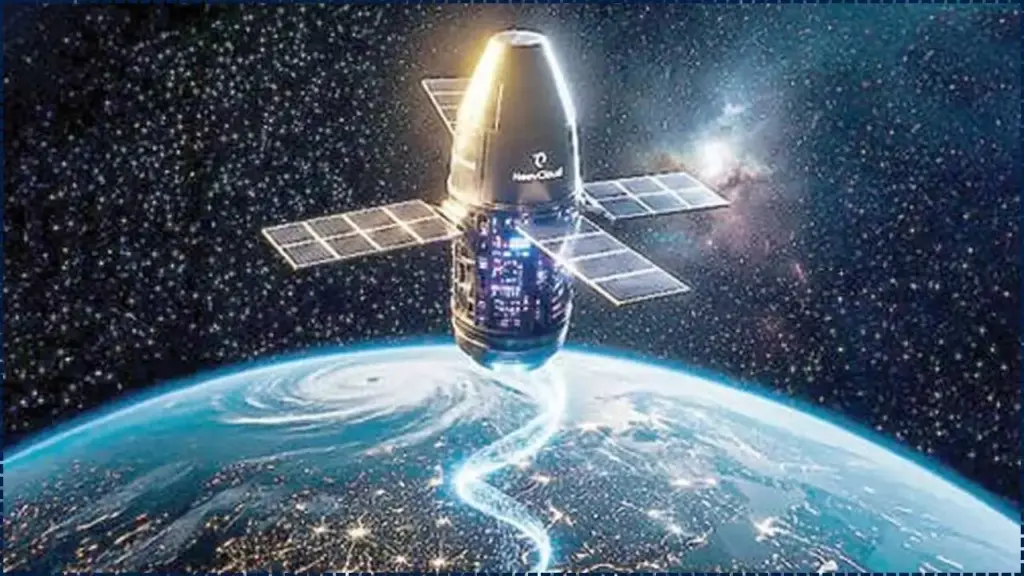
The initiative aims to combine continuous solar power, passive cooling in the vacuum of space and potentially lower network latency to create more energy-efficient AI infrastructure.
The concept, often described as AI from the Stars infrastructure, reflects India’s expanding ambitions in both space technology and advanced computing. While still in the proof-of-concept stage, the proposal signals a strategic attempt to address the surging energy demands of AI systems.
AI from the Stars Vision: Why Move Data Centres into Orbit?
The rise of generative AI, machine learning models and real-time analytics has sharply increased global data centre energy consumption. According to the International Energy Agency (IEA), data centres already account for a growing share of electricity demand, and AI workloads could accelerate that trend.
Traditional terrestrial data centres require vast amounts of power and extensive cooling infrastructure. Air conditioning systems, liquid cooling loops and backup generators add operational complexity and cost.
Proponents of AI from the Stars systems argue that space offers two distinct advantages:
- Continuous access to solar energy above Earth’s atmosphere
- Free passive cooling through radiative heat dissipation into the vacuum
These features could reduce operating expenses and improve environmental performance if successfully engineered.
Who Is Behind India’s Orbital AI Initiative?
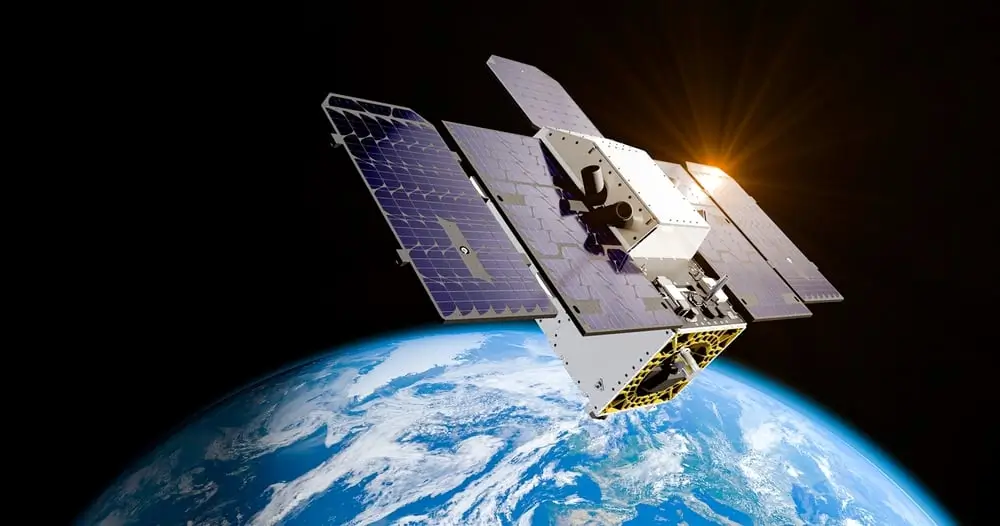
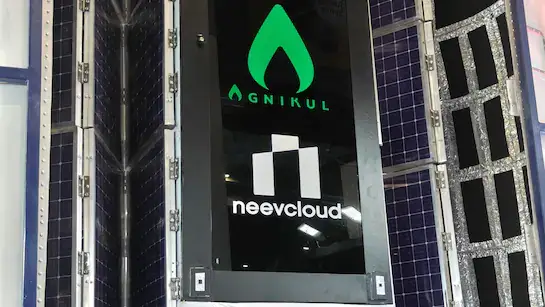
The proposal is being led by Agnikul Cosmos, a Chennai-based private launch and space systems startup, in partnership with NeevCloud, a Bengaluru-based AI cloud infrastructure provider.
Agnikul plans to repurpose the upper stage of its launch vehicle into a modular orbital platform capable of hosting computing payloads. NeevCloud intends to integrate high-performance AI chips and distributed cloud software into these platforms.
Company representatives have indicated that a demonstration mission could be attempted by late 2026, subject to regulatory approvals and technical validation.
India’s space sector has grown rapidly since reforms enabled private participation. The Indian Space Research Organisation (ISRO) continues to provide regulatory and technical oversight through the Indian National Space Promotion and Authorisation Centre (IN-SPACe).
Solar Power in Orbit: Continuous Energy Potential
In low-Earth orbit, satellites can be positioned in sun-synchronous paths that provide near-continuous exposure to sunlight. Solar panels mounted on orbital platforms could therefore generate electricity more consistently than ground-based installations, which face interruptions from weather and nightfall.
This uninterrupted energy stream is attractive for AI systems that require steady power for model training and inference.
However, energy engineers caution that conversion efficiency, radiation shielding and battery buffering remain technical considerations.
Free Cooling: Reducing Thermal Management Costs
Cooling represents one of the largest operational costs for terrestrial data centres. In hot climates, cooling can consume nearly as much electricity as the servers themselves.
In space, the absence of atmosphere eliminates convective heating. Heat must instead be radiated away through specially designed panels. Engineers say that well-designed radiator systems can dissipate large quantities of thermal energy without mechanical chillers.
“Thermal control in orbit relies on radiation, not air circulation,” said a thermal systems researcher at the Indian Institute of Science. “The engineering is complex, but the potential efficiency gains are significant.”
Yet experts emphasise that AI processors generate intense heat densities. Designing radiation surfaces large enough to manage these loads remains a technical challenge.

Charge Your EV for Free! A Step-by-Step Guide to Setting Up the Ultimate Solar + EV Charger Combo
Ultra-Low Latency AI: Fact and Expectation
NeevCloud has suggested that orbital compute nodes could support latency-sensitive applications such as defence systems, maritime surveillance, autonomous vehicles and emergency response networks.
Signals transmitted to LEO satellites travel shorter distances than those sent to geostationary satellites. In theory, this can reduce round-trip communication delays.
However, telecommunications experts stress that “zero latency” is physically impossible. Data transmission remains limited by the speed of light and routing infrastructure.
“Latency improvements depend on network architecture,” said a telecom policy analyst based in New Delhi. “Orbital nodes may offer advantages in specific geographies, but ground infrastructure still plays a central role.”
Economic Feasibility and Cost Considerations
Launching computing hardware into orbit remains expensive, even as global launch costs decline. Hardware must be radiation-hardened and capable of operating autonomously.
Maintenance poses another challenge. Unlike ground-based facilities, orbital platforms cannot be easily repaired or upgraded. Redundancy systems would be essential.
Economists note that while energy savings could offset some operational costs, high upfront capital expenditure may limit adoption to specialised or high-value applications in early stages.
Lifecycle carbon accounting would also need to include rocket launch emissions and manufacturing footprints.
Environmental and Space Governance Issues
Deploying multiple orbital compute platforms raises questions about space traffic management and debris mitigation.
International treaties govern outer space activities, but commercial data centre platforms introduce new regulatory dimensions. India would need to coordinate with global space governance bodies regarding orbital slots and collision avoidance.
Environmental experts stress that long-term sustainability in space will require responsible design and end-of-life deorbiting mechanisms.
Global Competition in Space-Based Computing
India’s proposal aligns with growing international interest in orbital computing. Technology firms in the United States and Europe have explored satellite-based data processing to reduce Earth transmission loads.
Some research initiatives propose processing Earth observation data directly in orbit, reducing bandwidth demands.
India’s approach focuses on AI workloads and renewable energy synergy, potentially positioning the country within an emerging global niche.

Strategic Implications for India
If technically viable, orbital AI platforms could enhance India’s technological sovereignty in AI infrastructure. Sovereign cloud systems hosted in orbit may appeal to defence, government and strategic sectors.
The initiative also complements India’s renewable energy expansion goals and digital economy ambitions.
Policy analysts note that combining space innovation with AI infrastructure could attract global investment and strengthen India’s reputation as a space-tech leader.
Risks and Technical Barriers
Experts outline several unresolved challenges:
- Radiation exposure affecting semiconductor reliability
- Limited in-orbit servicing capabilities
- Thermal management for high-density chips
- High insurance and launch costs
- Spectrum allocation and bandwidth constraints
“Orbital computing is promising but must pass rigorous engineering validation,” said a senior aerospace scientist affiliated with ISRO. “Scalability remains an open question.”
Broader Impact on AI Infrastructure
If orbital data centres prove viable, they could complement terrestrial facilities rather than replace them. Hybrid architectures combining ground and space compute nodes may emerge.
Energy economists say that renewable-powered AI infrastructure, whether on Earth or in orbit, will become increasingly important as AI models expand in size and energy demand. India’s exploration of AI from the Stars systems illustrates how emerging technologies are converging across sectors.
Related Links
2026 Portfolio Picks: Top 5 solar stocks that every clean energy investor should watch right now
Electricity from Space? How Space-Based Solar Power tech is moving from sci-fi to reality in 2026.
India’s proposed solar-powered orbital data centres represent an ambitious attempt to merge renewable energy, space engineering and artificial intelligence infrastructure. Continuous solar power and passive cooling could improve efficiency, while low-Earth orbit placement may offer latency advantages for select applications.
Significant technical, economic and regulatory hurdles remain. Yet the initiative underscores India’s expanding innovation ecosystem and its willingness to explore unconventional solutions to rising AI energy demands.
As proof-of-concept missions approach, policymakers and technologists worldwide will closely watch whether AI from the stars becomes a viable component of future digital infrastructure.