

India’s renewable energy sector has entered a critical phase, as the ALMM mandate April 2026 makes solar module selection a decisive factor in subsidy eligibility.
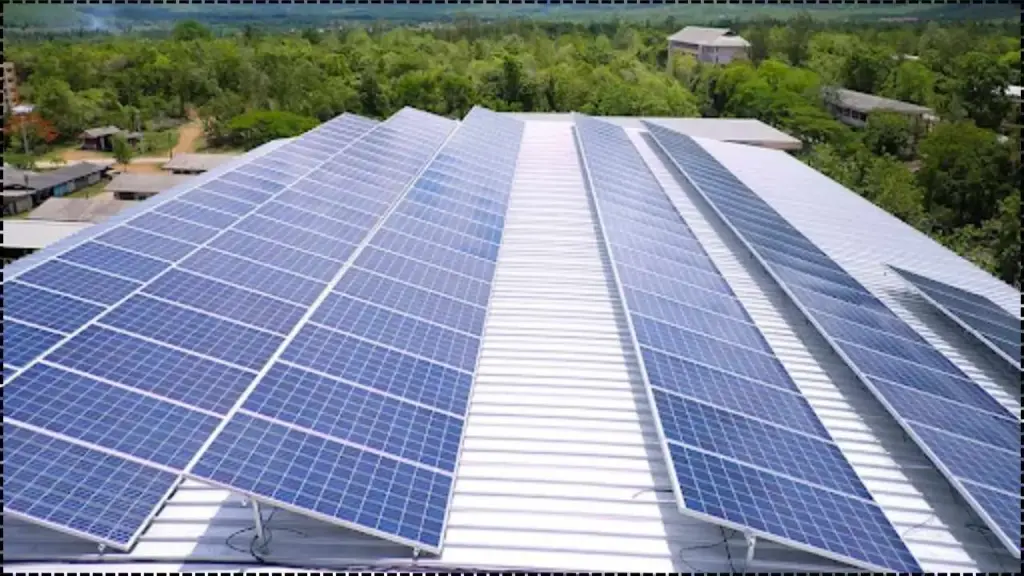
With stricter enforcement by the Ministry of New and Renewable Energy (MNRE), projects using non-approved modules risk losing financial support, fundamentally reshaping investment decisions across residential, agricultural, and commercial solar markets.
ALMM Mandate April 2026: The Rule That Now Determines Subsidy Eligibility
The Approved List of Models and Manufacturers (ALMM) is a regulatory framework introduced by MNRE to ensure quality and reliability in solar installations. Under the updated mandate:
- Only ALMM-listed modules qualify for subsidies.
- Solar cells must also comply (List-II) from June 2026.
- Non-compliant systems are excluded from financial incentives.
This creates a direct linkage:
Solar module choice = Subsidy eligibility
The policy reflects a shift from voluntary compliance to strict enforcement.
Timeline: How ALMM Evolved Into a Mandatory Rule
Understanding the timeline explains why 2026 is a turning point:
- 2021: ALMM introduced for quality control.
- 2022–2023: Temporary relaxations due to supply shortages.
- 2024–2025: Gradual reintroduction and expansion.
- April 2026: Enforcement tightened for subsidy-linked projects.
- June 2026: Solar cells added under List-II.
This phased approach allowed the industry to adapt while building domestic capacity.
Financial Impact: How Much Subsidy Is at Stake?
The financial implications are substantial.
Example: 5 kW Rooftop System
| Scenario | Module Type | Subsidy | Net Cost |
|---|---|---|---|
| ALMM-compliant | Domestic | ₹78,000 (approx) | Reduced |
| Non-compliant | Imported | ₹0 | Higher |
This shows that even if imported panels appear cheaper initially, the loss of subsidy significantly increases total cost. Banks and lenders now consider ALMM compliance essential for financing approval.
DISCOM and Net-Metering: The Hidden Layer
Distribution companies (DISCOMs) play a crucial role in solar approvals.
Key Reality
- Net-metering approvals often require ALMM compliance.
- Non-compliant systems may face rejection or delays.
- Subsidy disbursement depends on DISCOM verification.
This makes ALMM compliance not just a central policy issue but also a practical execution requirement.
Impact Across Stakeholders
Residential Consumers
Homeowners must ensure ALMM-approved modules to access subsidies under rooftop solar schemes. Installers are increasingly guiding customers toward compliant options.
Farmers
Farmers using solar pumps or grid-connected systems under government schemes depend heavily on subsidies. Non-compliance can make projects financially unviable.
Commercial & Industrial Users
Businesses must align with ALMM rules for approvals, especially for grid-connected or net-metered projects.
EPC Contractors
EPC firms face strict compliance checks. Many now include ALMM verification as a mandatory procurement step.
Ground Reality: What Installers and EPCs Are Seeing
Industry professionals report a clear shift:
- Clients increasingly ask for ALMM-compliant systems.
- Installers refuse to deploy non-compliant panels for subsidy projects.
- Procurement teams prioritise compliance over cost.
An EPC contractor noted that “projects using non-ALMM modules are now considered high-risk from both financial and regulatory perspectives.”
Risks of Non-Compliance
Financial Risk
Loss of subsidy increases total project cost significantly.
Regulatory Risk
Projects may fail to receive approvals or grid connectivity.
Operational Risk
Future audits or inspections may flag non-compliant installations.
Common Mistakes Buyers Are Making
- Choosing cheaper imported panels without checking ALMM status.
- Assuming all panels are subsidy-eligible.
- Not verifying installer credentials.
- Ignoring documentation requirements.
Experts warn that these mistakes can lead to rejection of subsidy claims.
Myth vs Reality
| Myth | Reality |
|---|---|
| Imported panels are always cheaper | Subsidy loss makes them costlier overall |
| ALMM is optional | Mandatory for most subsidy projects |
| All installers ensure compliance | Buyer must verify independently |
| Efficiency differs significantly | Domestic panels now match global standards |
Policy Objective: Why the Government Is Enforcing ALMM
The ALMM mandate supports broader national goals:
Key Objectives
- Promote domestic manufacturing.
- Reduce import dependence.
- Ensure product quality.
- Strengthen energy security.
This aligns with India’s “Atmanirbhar Bharat” strategy.
Global Context: How India Compares
India’s approach is part of a global trend.
Comparison
- USA: Domestic manufacturing incentives under Inflation Reduction Act.
- EU: Local supply chain focus for energy security.
- India: ALMM ensures both quality and localisation.
This shows that localisation policies are becoming standard worldwide.

Compliance Checklist for Buyers
To ensure subsidy eligibility:
- Verify manufacturer in ALMM List-I.
- Confirm cell compliance (post-June 2026).
- Check BIS certification.
- Work with authorised installers.
- Maintain documentation for subsidy claims.
Failure at any step can result in rejection.
Related Links
Local vs. Imported: A Comprehensive Guide to Choosing MNRE-Approved Solar Manufacturers in 2026
Agri-Solar 2026: How Farmers Can Generate Double Income from the Same Piece of Land
Future Outlook: Beyond 2026
The ALMM framework is expected to expand further.
Upcoming Developments
- Inclusion of wafers and upstream components.
- Stricter efficiency benchmarks.
- Greater enforcement at installation level.
Experts expect compliance requirements to become even more comprehensive.
The ALMM mandate April 2026 marks a structural transformation in India’s solar sector. By linking module selection directly to subsidy eligibility, the government has shifted decision-making from cost-driven to compliance-driven.
For consumers, businesses, and developers, understanding and adhering to ALMM requirements is now essential for financial viability and long-term success.