
Australia’s Federal Solar Rebate is dropping in 2026 as part of a long-planned phase-out of national incentives, reducing upfront savings for households installing rooftop solar systems.
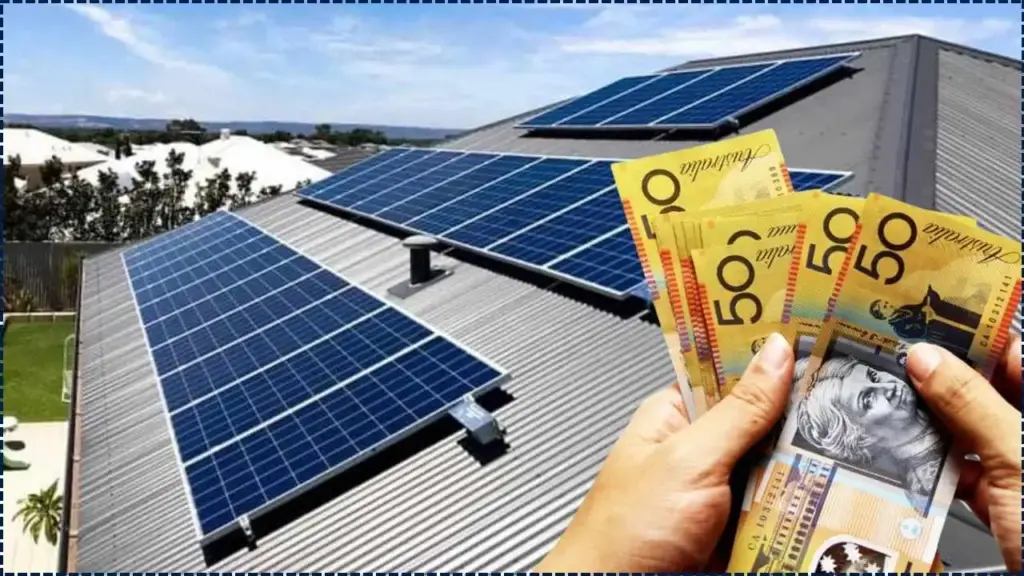
While the subsidy still offers meaningful cost reductions, experts say the decline underscores a shift toward a self-sustaining solar market as adoption continues to expand across the country.
Australia’s Federal Solar Rebate
| Key Fact | Detail |
|---|---|
| Rebate structure | Delivered via Small-scale Technology Certificates (STCs) |
| Annual reduction | Incentive declines each year until 2030 |
| Typical 2026 savings | ~$1,800–$2,500 for common systems |
| Scheme end date | Scheduled to end in 2030 |
Understanding Australia’s Federal Solar Rebate
Australia’s Federal Solar Rebate operates through the Small-scale Renewable Energy Scheme (SRES), a national program designed to encourage renewable energy adoption. Rather than direct payments, households receive discounts through Small-scale Technology Certificates (STCs).
Installers typically calculate and apply these certificates upfront, reducing the total system cost at the point of purchase. The value of STCs depends on:
- System size
- Installation location
- Market price of certificates
- Remaining years in the scheme
According to the Clean Energy Regulator, the program has played a central role in making Australia one of the world’s leading adopters of rooftop solar.
Why Australia’s Federal Solar Rebate Is Dropping
The reduction in Australia’s Federal Solar Rebate is not a policy reversal but a built-in feature of the program.
Designed Phase-Out
The scheme was structured to gradually decline and conclude in 2030. Each year, fewer STCs are issued because the system only credits expected energy production up to that end date.
This means:
- Systems installed earlier receive more certificates
- Later installations receive fewer, reducing financial benefits
Market Maturity and Falling Costs
Government data shows solar installation costs have dropped sharply over the past decade. The International Renewable Energy Agency (IRENA) reports global solar costs have fallen by more than 80% since 2010. As a result, policymakers argue subsidies can be reduced without slowing adoption significantly.
A spokesperson from the Department of Climate Change, Energy, the Environment and Water has previously stated that the phase-down reflects “strong market growth and improved affordability of solar technology.”
How Much the Rebate Drops in 2026
The decline in 2026 is incremental but financially meaningful. Industry estimates suggest:
- A reduction of approximately 8–10% compared to 2025
- Continued annual decreases through 2030
While there is no single nationwide “cut” date, the gradual decline means each passing year reduces potential savings.
How Much Households Can Save in 2026
Despite the reduction, Australia’s Federal Solar Rebate still provides substantial savings.
Typical Savings by System Size
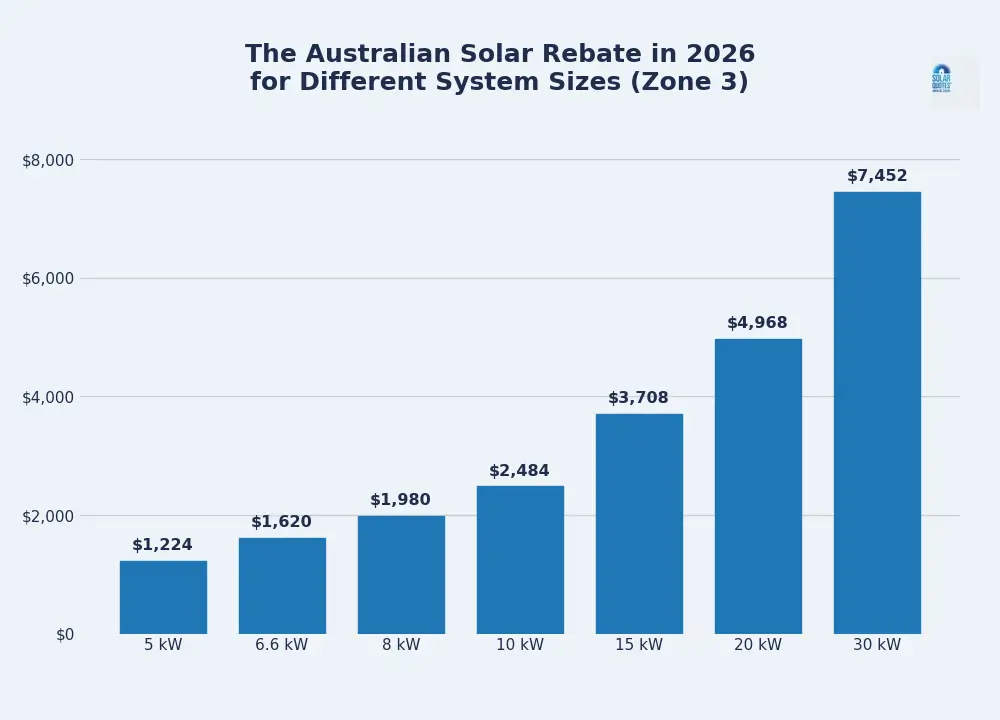
6.6 kW system (most common):
- Rebate: ~$1,800 to $2,300
- Post-rebate cost: ~$4,000–$6,000
10 kW system:
- Rebate: Up to ~$2,500 or more
These estimates vary based on STC market prices and installation specifics.
Real-World Payback Periods
According to industry data, most households can recover installation costs within:
- 3 to 5 years, depending on electricity usage
After this period, electricity savings effectively become financial gains.
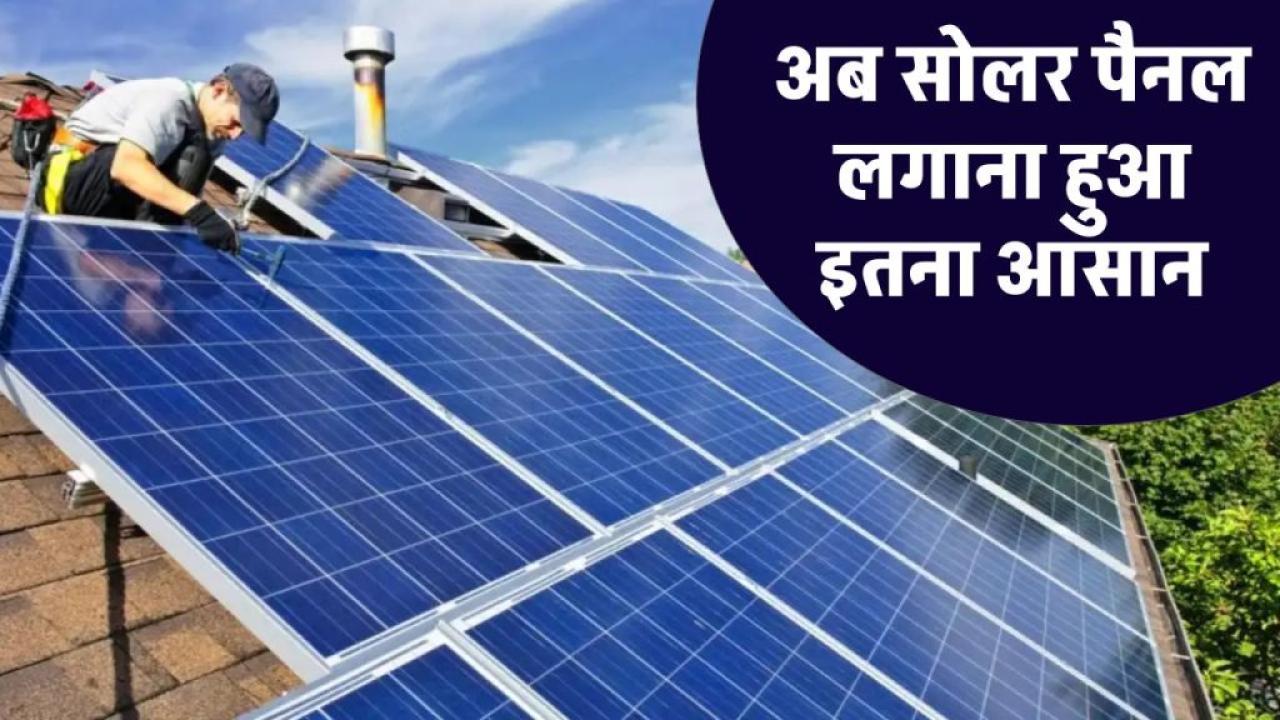
1.5kW सोलर सिस्टम से करें बिजली की जरूरतों को पूरा, जानें इसकी कीमत, लाभ और इंस्टॉलेशन प्रक्रिया
Additional Factors Affecting Savings
Electricity Prices
Rising electricity costs in Australia have increased the value of solar energy. Households offset more expensive grid power, improving return on investment.
Feed-in Tariffs
Many households earn credits by exporting excess electricity back to the grid. However, feed-in tariffs have declined in recent years, reducing this component of savings.
System Quality and Orientation
Savings depend heavily on:
- Panel efficiency
- Roof orientation and shading
- Installation quality
Experts caution that lower upfront cost should not outweigh long-term system performance.
State Incentives Still Play a Role
Although Australia’s Federal Solar Rebate is declining, state-level programs continue to support adoption. These include:
- Battery rebates (e.g., Victoria, South Australia)
- Interest-free loans
- Additional solar incentives
The availability and scale of these programs vary significantly by state, meaning total savings can differ widely across the country.
Impact on the Solar Industry
Installation Trends
Australia’s solar industry has experienced sustained growth over the past decade. The gradual reduction in incentives is expected to:
- Slow growth slightly
- Encourage market efficiency
However, analysts do not anticipate a sharp decline in installations.
Industry Perspective
Many installers emphasize timing. “The rebate is still significant, but it will continue to shrink. Acting sooner generally means greater savings,” industry representatives often advise.
At the same time, consumer advocates stress the importance of informed decisions rather than urgency-driven purchases.
Equity Concerns and Policy Debate
The reduction of Australia’s Federal Solar Rebate has raised questions about accessibility.
Lower-Income Households
Some experts argue that declining incentives may:
- Limit access for lower-income households
- Increase reliance on financing options
Energy policy researchers have highlighted the need for complementary programs to ensure equitable access.
Government Focus Shifts
Federal policy is increasingly focused on:
- Battery storage adoption
- Grid reliability
- Electrification of homes
This reflects a broader transition beyond solar panel subsidies toward system-wide energy transformation.
Long-Term Outlook Beyond 2026
Australia’s Federal Solar Rebate will continue declining each year until its scheduled conclusion in 2030.
After that:
- Solar adoption will rely on market economics
- State policies may play a larger role
- Battery storage could become a central incentive focus
Experts widely agree that solar will remain a cost-effective option even without federal subsidies.
Related Links
Tesla in $2.9 Billion Talks with Chinese Firms to Build 100 GW Solar Capacity in the US
Europe’s Clean Energy Push – Which Solar Companies Stand to Gain?
Australia’s Federal Solar Rebate continues to play a significant role in reducing installation costs in 2026, even as its value declines. The steady phase-out reflects a maturing market, leaving households with a narrowing but still meaningful opportunity to secure savings before incentives diminish further.
FAQs
What is Australia’s Federal Solar Rebate?
It is a government incentive delivered through STCs that reduces the upfront cost of installing solar systems.
How much can I save in 2026?
Most households can expect savings between $1,800 and $2,500, depending on system size and location.
Will the rebate continue after 2030?
No, the scheme is scheduled to end in 2030 under current legislation.
Is it still worth installing solar in 2026?
Yes. Even with reduced incentives, solar remains financially beneficial due to high electricity prices and falling system costs.