
Australia’s virtual power plant payouts have reached record highs in 2026, as rising electricity prices and grid instability create new income opportunities for households with battery storage.
By linking residential batteries into coordinated networks, virtual power plants (VPPs) are enabling participants to earn payments for supplying electricity during peak demand periods.
Australia’s VPP Payouts Hit Record
| Key Fact | Detail |
|---|---|
| Peak payouts | Over $1/kWh during demand spikes |
| Typical income | $150–$500 annually |
| Bonus payments | Event-based earnings increase returns |
| Growth driver | Battery adoption + energy volatility |
Understanding Australia’s Virtual Power Plant Payouts
Australia’s virtual power plant payouts represent a shift in how electricity is generated, stored, and monetized at the household level. A virtual power plant aggregates thousands of distributed batteries into a coordinated system that can supply electricity to the grid when demand peaks.
This allows operators to act like a conventional power station, without centralized infrastructure. According to state energy authorities, VPPs are increasingly important as renewable energy penetration rises and grid balancing becomes more complex.
Why Payouts Are Reaching Record Highs
Electricity Price Volatility
Australia’s wholesale electricity market is highly dynamic. During peak demand—especially heatwaves—prices can spike dramatically.
VPP participants benefit directly from these spikes. When their stored energy is dispatched to the grid, it can be sold at premium rates. Industry estimates indicate payouts can exceed $1 per kilowatt-hour during extreme events, far surpassing traditional solar export rates.
Renewable Energy Expansion
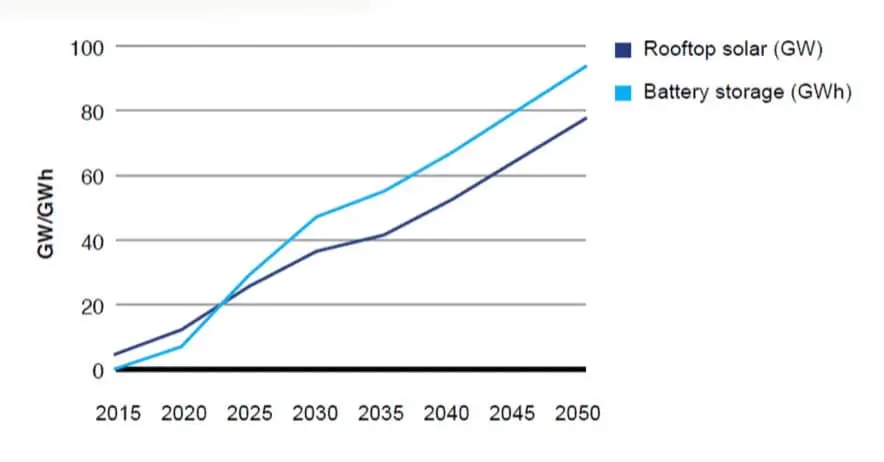
Australia has one of the highest rates of rooftop solar adoption globally. While this reduces emissions, it creates variability in energy supply.
“Distributed storage is critical to stabilizing a renewable-heavy grid,” said an energy systems expert at an Australian university. VPPs provide that flexibility by storing excess energy and releasing it when needed.
Government Incentives
Programs in states like New South Wales and South Australia offer:
- Battery installation rebates
- Payments for joining VPP networks
- Performance-based incentives
These policies are accelerating adoption and participation.
How Virtual Power Plants Work
Turning Homes into Power Stations
A VPP operates through coordinated software platforms:
- Solar panels generate electricity
- Excess energy is stored in batteries
- Batteries are connected to a VPP network
- Energy is exported during high-demand periods
- Participants receive payments or credits
This process is automated, requiring minimal user intervention.
How Much Can You Earn?
Typical Earnings
Most households earn:
- $150 to $500 annually
- Additional bill savings of $100+ per quarter
However, earnings vary significantly depending on system size and provider structure.
Event-Based Earnings
The highest payouts occur during grid stress events. These events:
- Are short but high-value
- Can significantly boost annual income
- Depend on market conditions
Some participants earn a large share of their income from just a few peak events each year.
Real vs Projected Earnings
| Scenario | Annual Earnings |
|---|---|
| Conservative (small battery) | $150 |
| Average household | $300–$500 |
| High participation + events | $700+ |
Experts caution that projected earnings often assume favorable market conditions.
VPP Provider Models: Not All Are the Same
Fixed Payment Models
Some providers offer:
- Guaranteed annual payments
- Lower but predictable returns
Revenue Sharing Models
Others provide:
- A share of wholesale market earnings
- Higher but variable payouts
Wholesale Exposure Models
Advanced platforms allow:
- Direct participation in energy markets
- Highest potential returns—but also risk
Energy analysts recommend comparing models carefully before enrolling.
Battery Economics: The Hidden Trade-Off
While VPPs generate income, they also increase battery usage.
Battery Degradation
Frequent charging and discharging can:
- Reduce battery lifespan
- Increase long-term replacement costs
However, most modern batteries are designed for thousands of cycles. Experts say the financial benefits typically outweigh degradation costs, but this depends on usage patterns.
Get Paid for Your Battery Power
Install a Compatible Battery
Systems typically range from 5 kWh to 20 kWh and must support VPP integration.
Choose a Provider
Major providers include:
- AGL
- Origin Energy
- EnergyAustralia
- Amber Electric
Each offers different pricing and access models.
Sign a Contract
Contracts define:
- Energy dispatch rights
- Payment structures
- Exit conditions
Consumer advocates recommend reviewing terms carefully.
Monitor and Optimize
Participants can track:
- Earnings
- Energy exports
- Battery usage
Apps allow real-time insights and optimization.
VPP vs Feed-In Tariffs
Feed-in tariffs have declined significantly, reducing the value of exporting solar energy alone.
| Feature | Feed-in Tariff | VPP |
|---|---|---|
| Earnings | Low | Higher potential |
| Flexibility | Fixed | Dynamic |
| Technology | Solar only | Solar + battery |
| Market access | Limited | Wholesale |
VPPs are increasingly seen as the next evolution of distributed energy participation.
Risks and Consumer Concerns
Contract Complexity
Some agreements include:
- Exit fees
- Long-term commitments
- Limited transparency
Data and Privacy
VPPs rely on real-time data sharing. This raises concerns about:
- Data ownership
- Cybersecurity
- Usage tracking
Regulators are beginning to examine these issues more closely.
Earnings Uncertainty
Income depends on:
- Market conditions
- Grid demand
- Provider performance
This variability makes earnings less predictable than fixed tariffs.
Australia’s Global Leadership in VPPs
Australia is widely regarded as a global leader in virtual power plant deployment.
Factors include:
- High solar adoption
- Supportive policy environment
- Advanced grid integration
Countries in Europe and North America are now studying Australia’s model.
Future Outlook: What Comes Next
Smart Grids and AI Integration
Future VPPs are expected to use:
- Artificial intelligence for demand forecasting
- Automated dispatch optimization
- Real-time pricing integration
Expansion into Electric Vehicles
Electric vehicles (EVs) may soon become part of VPP networks, further increasing storage capacity.
Market Expansion
Analysts expect:
- More households joining VPPs
- Increased competition among providers
- Greater regulatory oversight
Related Links
Australia’s Battery Rebate Cliff: Why You Must Install Before May 1, 2026
How Green Energy Policies in Europe Are Fueling Solar Stock Growth
Australia’s virtual power plant payouts are redefining the role of household energy systems in 2026. As battery adoption grows and electricity markets evolve, VPPs are transforming consumers into active participants in the energy system.
While opportunities are significant, long-term success will depend on transparency, regulation, and informed consumer participation.
FAQs
What is a virtual power plant?
A network of connected batteries that supply electricity to the grid during peak demand.
How much can you earn?
Typically $150–$500 annually, with higher payouts during peak events.
Is it worth joining a VPP?
For many households, yes—but it depends on contract terms and usage.
Does it damage your battery?
It can increase wear slightly, but most systems are designed for frequent cycling.