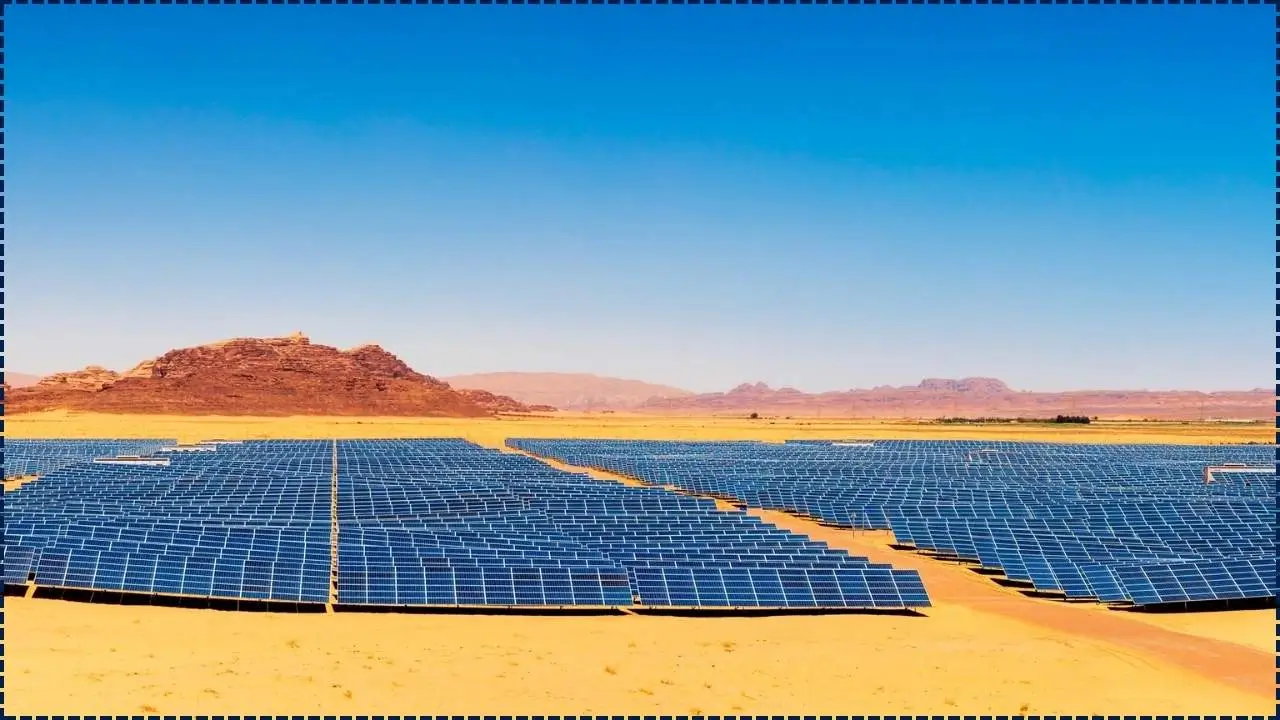
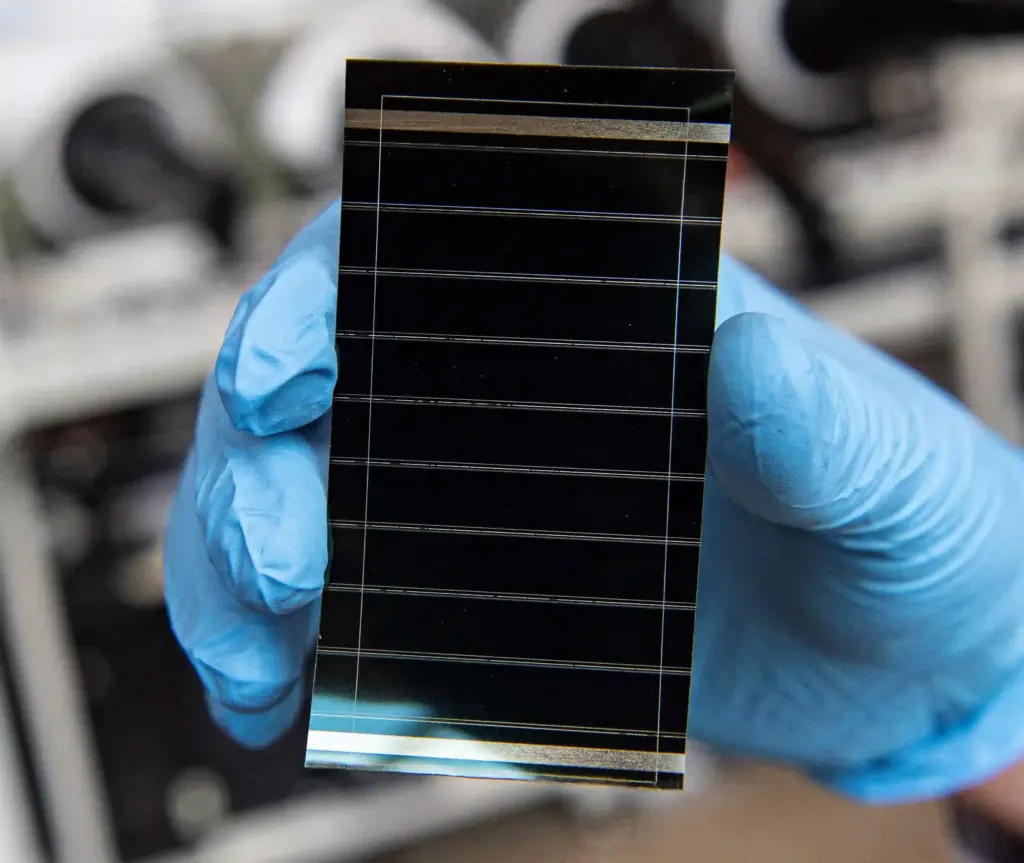
Solar researchers are approaching a milestone once considered nearly impossible. Laboratory prototypes of Tandem-III solar cells, a new class of multi-junction photovoltaic technology, are nearing 40% energy conversion efficiency, significantly outperforming traditional silicon panels.
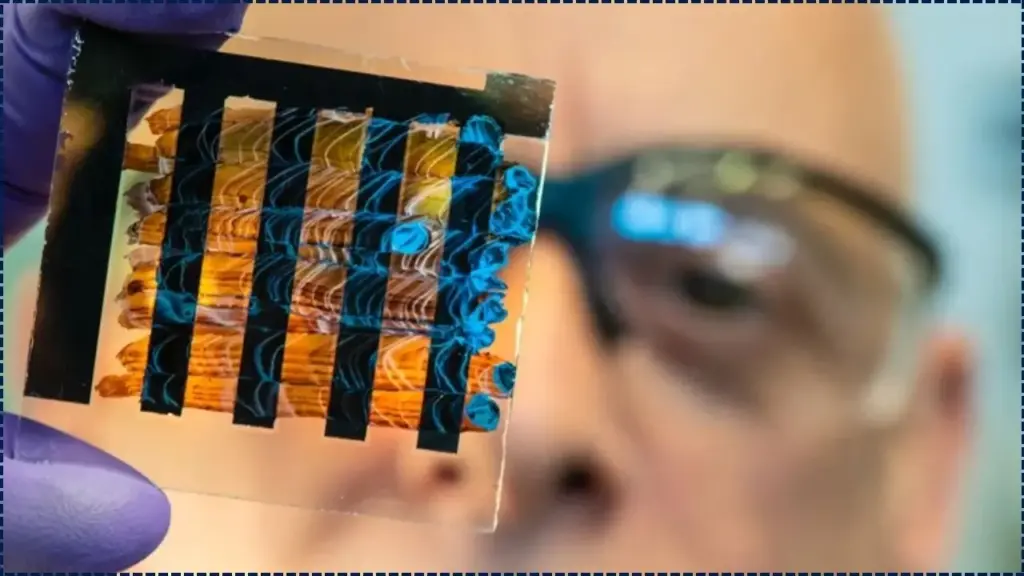
Scientists say the breakthrough could dramatically increase solar power output while reducing the land and materials required for renewable electricity generation.
Meet the “Tandem-III” Cell
| Key Fact | Detail |
|---|---|
| Efficiency Limit | Single-junction solar cells face a theoretical limit of ~33% |
| Typical Panels | Most commercial modules operate at 20–23% efficiency |
| Tandem Potential | Multi-junction designs can exceed 40% efficiency |
| Main Advantage | Stacked materials capture a wider range of sunlight wavelengths |
Understanding the Meet the “Tandem-III” Cell: Tandem-III Solar Cells
The Meet the “Tandem-III” Cell, Tandem-III solar cell, refers to a new generation of photovoltaic devices that combine several semiconductor materials into a single layered structure.
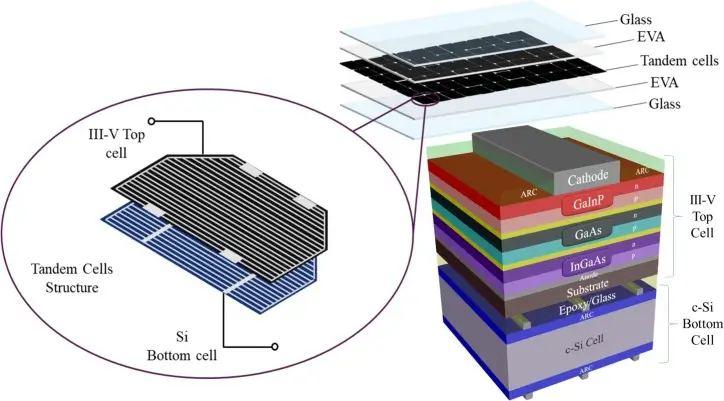
Unlike conventional solar panels that use only silicon, tandem cells stack different materials with distinct electronic properties. Each layer absorbs a different portion of sunlight, converting more of the solar spectrum into electricity.
According to photovoltaic researchers, this layered architecture significantly reduces energy losses and increases overall conversion efficiency.
“Tandem solar cells represent one of the most promising pathways for boosting photovoltaic performance beyond the limits of single-junction devices,” according to studies published in solar energy research journals.
Why Solar Cells Have an Efficiency Limit
Solar panels convert sunlight into electricity through the photovoltaic effect, in which photons excite electrons inside a semiconductor material.
However, a fundamental physical limit exists.
Scientists call this the Shockley-Queisser limit, which states that single-junction solar cells cannot convert more than about 33% of sunlight into electricity under ideal conditions.
Two major energy losses explain the limit:
- Thermal losses: Excess photon energy becomes heat.
- Transmission losses: Low-energy photons pass through the material without generating electricity.
As a result, even the most advanced silicon panels today rarely exceed 25% efficiency.
How Tandem Solar Cells Break the Limit
Multi-Junction Design
Tandem cells solve this problem by stacking semiconductor layers with different bandgaps.
Each layer captures a specific portion of the solar spectrum:
- Top layer: absorbs high-energy blue and ultraviolet light
- Middle layer: captures visible light
- Bottom layer: converts infrared wavelengths
This design dramatically reduces wasted energy.By dividing sunlight across multiple cells, tandem architectures can exceed the theoretical efficiency limit of single-junction devices.
From Silicon to Perovskite to Tandem-III
Solar technology has evolved through several generations of materials and architectures.
First Generation: Silicon Panels
For decades, crystalline silicon dominated the photovoltaic industry. Silicon panels are durable, reliable, and relatively inexpensive to produce. However, they are approaching their maximum theoretical efficiency.
Second Generation: Perovskite Tandems
Perovskite materials have emerged as promising solar absorbers because they are highly efficient and inexpensive to manufacture.
Researchers began stacking perovskite layers on top of silicon cells, creating perovskite-silicon tandem cells with efficiencies exceeding 30% in laboratory testing.
Third Generation: Tandem-III Architecture
The Tandem-III concept expands this approach by combining additional semiconductor materials, often including III-V compound semiconductors such as gallium arsenide.
These materials offer precise control over electronic properties, enabling highly optimized multi-junction devices. Researchers say this architecture could push photovoltaic efficiencies close to or beyond 40%.
The Long Race Toward 40% Efficiency
Achieving extremely high solar efficiency has been a long-term goal of photovoltaic research.
Historical Milestones
- 1954 – First silicon solar cell reaches ~6% efficiency
- 1980s – Silicon panels surpass 20% efficiency
- 2006 – Multi-junction cells exceed 40% efficiency under concentrated sunlight
- 2010s – Perovskite solar cells rapidly improve efficiency
- 2020s – Tandem technologies approach 40% efficiency under standard sunlight
These milestones illustrate how advances in semiconductor engineering continue to improve solar technology.
Where Ultra-Efficient Solar Cells Are Used Today
Despite impressive laboratory results, high-efficiency tandem cells remain relatively rare in commercial solar installations. However, they are widely used in specialized industries where efficiency matters more than cost.
Space Technology
Satellites rely heavily on multi-junction solar cells because spacecraft require maximum power with minimal weight and surface area.
Concentrated Solar Power Systems
Some solar power plants use concentrated sunlight to drive multi-junction photovoltaic cells with extremely high efficiencies.
Aerospace and Defense
High-performance solar cells are also used in drones, military equipment, and experimental aircraft.
Commercialization Challenges
Although Tandem-III technology offers extraordinary efficiency, several challenges remain before widespread commercialization becomes possible.
Manufacturing Complexity
Multi-junction solar cells require precise fabrication techniques such as epitaxial crystal growth, which makes them significantly more expensive than conventional silicon panels.
Cost of Materials
Many tandem designs rely on rare elements such as gallium and indium, which could increase manufacturing costs.
Durability
Some advanced photovoltaic materials degrade faster than silicon when exposed to heat, moisture, or ultraviolet radiation. Scientists are still studying how tandem devices perform over decades of outdoor use.
The Global Race to Commercialize Tandem Solar
Research institutions and companies worldwide are racing to bring tandem solar technology to market.
Major players include:
- National Renewable Energy Laboratory (NREL) in the United States
- Fraunhofer Institute for Solar Energy Systems (ISE) in Germany
- Oxford PV, a commercial developer of perovskite tandem cells
- LONGi Green Energy, one of the world’s largest solar manufacturers
These organizations are exploring ways to combine high-efficiency tandem layers with conventional silicon manufacturing processes. The goal is to produce high-efficiency panels at a cost competitive with today’s commercial modules.
Economic Impact of Higher Solar Efficiency
Higher-efficiency solar panels could reshape the economics of renewable energy.

Lower Cost per Watt
Although advanced cells may cost more individually, their higher efficiency means fewer panels are required to produce the same electricity.
Reduced Land Use
Solar farms could generate the same amount of power using less land, reducing environmental and land-use conflicts.
Greater Energy Output from Rooftops
Homeowners and businesses could generate significantly more electricity from existing rooftop installations. Energy analysts say improving photovoltaic efficiency remains one of the most important drivers of renewable energy expansion.
Implications for the Global Energy Transition
Solar power is already the fastest-growing source of electricity in many countries. Higher-efficiency tandem panels could accelerate this trend by making solar installations more productive and cost-effective.
Researchers say tandem technologies may play a key role in helping countries achieve climate targets by increasing renewable energy output.
As nations transition away from fossil fuels, the ability to generate more electricity from the same sunlight could become increasingly valuable.
Related Links
Solar Upgrade Dilemma: Homeowners Spark Debate Over Avoiding Costly Long-Term Regrets
Solar Shingles vs. Solar Panels: Understanding the Tech and the Differences
The development of Tandem-III solar cells represents a major milestone in photovoltaic research. By stacking multiple semiconductor layers designed to capture different wavelengths of sunlight, scientists are pushing solar technology toward the 40% efficiency frontier.
Although several technical and economic challenges remain, researchers believe tandem photovoltaics could become a central component of future energy systems.
If the technology can be scaled successfully, tomorrow’s solar panels may produce nearly twice as much electricity as today’s modules—bringing the world closer to a sustainable, renewable energy future.
FAQs
What is a tandem solar cell?
A tandem solar cell uses multiple semiconductor layers stacked together so each layer absorbs a different portion of sunlight, increasing overall efficiency.
Why is 40% efficiency important?
Most commercial solar panels operate around 20–23%. A 40% efficient panel could nearly double electricity production from the same surface area.
Are Tandem-III solar cells commercially available?
Most remain in laboratory development, although companies are working to commercialize tandem solar technologies within the next decade.