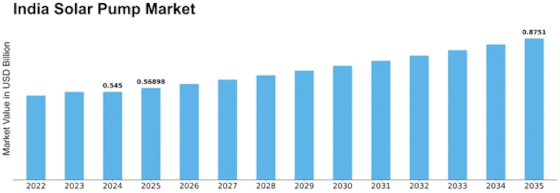
India’s Union Budget 2026–27 has significantly increased funding for Government Pumps Fresh Billions Into Solar Programs expanding allocations for rooftop solar, utility-scale projects, battery storage, and grid upgrades.

The government says the fresh investment will strengthen energy security and reduce long-term power costs. For households and businesses facing rising electricity bills, the question remains whether these measures will translate into tangible savings.
Experts say the outcome will depend on more than solar expansion alone.
Government Pumps Fresh Billions Into Solar Programs at the Core of Budget 2026
Presenting the Budget in Parliament, Finance Minister Nirmala Sitharaman reiterated India’s commitment to achieving 500 gigawatts of non-fossil fuel capacity by 2030. Solar energy forms the backbone of that plan.
According to official Budget documents, allocations to the Ministry of New and Renewable Energy (MNRE) have risen compared to the previous fiscal year. The increase focuses on rooftop solar incentives, grid-connected solar parks, domestic manufacturing support under the Production Linked Incentive (PLI) scheme, and enhanced battery storage funding.
The flagship Pradhan Mantri Surya Ghar Muft Bijli Yojana has received additional support to expand residential rooftop installations. The scheme aims to provide subsidised solar systems to households, enabling them to generate electricity directly.
Government officials say scaling rooftop adoption is central to lowering consumer energy expenses over time.
How Rooftop Solar May Reduce Household Bills (KW2)
Rooftop solar provides a direct pathway to savings. Households can use the electricity generated onsite, reducing reliance on grid supply during peak tariff hours.
Under state-level net metering policies, excess electricity can be fed into the grid. This arrangement allows consumers to offset part of their electricity bills.
Energy analysts at the Council on Energy, Environment and Water (CEEW) note that savings depend on location, consumption levels, and local tariff structures. Urban households with higher daytime usage typically benefit more.
“Distributed solar gives consumers greater control over energy spending,” said a senior researcher at CEEW. “But financing, awareness, and regulatory consistency are critical for widespread adoption.”
Utility-Scale Solar and Competitive Tariffs (KW3)
India’s solar tariffs have fallen steadily through competitive auctions conducted by the Solar Energy Corporation of India (SECI). Lower capital costs and improved module efficiency have strengthened solar’s cost advantage over new fossil-based generation.
Budget 2026 aims to deepen this advantage by reducing input duties on certain components and expanding support for domestic manufacturing. Analysts say lower equipment costs can reduce the price at which developers sell power to distribution companies.
However, retail tariffs paid by consumers depend on multiple factors beyond generation costs. Transmission charges, distribution losses, cross-subsidies, and fuel adjustment surcharges all contribute to final electricity bills.
“Generation cost is important, but distribution inefficiencies also drive tariffs,” said an analyst at The Energy and Resources Institute (TERI). “Savings must flow through the entire value chain.”
Battery Storage and Grid Stability (KW4)
Solar generation is intermittent, peaking during daylight hours. Budget 2026 includes expanded viability gap funding for Battery Energy Storage Systems (BESS) to help manage fluctuations.
Storage allows excess solar power to be used during evening demand peaks, reducing reliance on costlier fossil fuel plants. The Grid Controller of India Limited has emphasised the importance of flexible generation and forecasting systems as renewable penetration increases.
Improved storage capacity could stabilise wholesale power prices and prevent sudden tariff spikes during demand surges.
Impact on Industry and Commercial Consumers
Large industrial consumers often face higher tariffs to cross-subsidise residential users. Many have adopted captive solar installations to manage costs.
Budget 2026 incentives for renewable infrastructure and storage may support further industrial adoption of on-site generation. Lower energy costs can enhance competitiveness, particularly for energy-intensive sectors such as manufacturing and information technology.
Industry associations have welcomed the Budget’s emphasis on predictable policy frameworks and infrastructure development.
Coal’s Continuing Role
Despite increased solar allocations, coal remains India’s primary source of electricity generation. According to the Central Electricity Authority (CEA), coal-fired plants supply more than half of the country’s power.
Officials from the Ministry of Coal have stated that coal capacity expansion will continue where necessary to meet rising demand and ensure base load reliability.
“Energy transition must balance affordability and security,” a senior ministry official said during a recent policy conference. This balanced approach reflects India’s development priorities, where electricity demand continues to rise with economic growth and urbanisation.
Discom Reforms: The Missing Link
Distribution companies (discoms) face persistent financial challenges. According to assessments by the Reserve Bank of India (RBI), accumulated losses and delayed payments have strained the sector.
Even if solar reduces wholesale generation costs, retail tariffs may not decline unless distribution inefficiencies are addressed. Experts say reforms in billing systems, loss reduction, smart metering, and tariff rationalisation are essential to ensure that lower costs reach consumers.
Without structural reform, savings may be absorbed within the system rather than reflected in household bills.
Transmission Infrastructure and Land Constraints
Expanding solar capacity requires robust transmission networks to move electricity from generation sites to demand centres.
Budget 2026 allocates funding for green energy corridors to strengthen interstate transmission. Analysts note that timely execution will determine how effectively new capacity integrates into the grid.
Land acquisition also remains a sensitive issue in some states. Large solar parks require significant land areas, and balancing development with community interests is critical.
Financial and Investment Implications
India’s renewable sector has attracted domestic and foreign investment. According to industry reports cited by Reuters and Bloomberg, clean energy investment has grown steadily over recent years.
Budget 2026’s fiscal support may further strengthen investor confidence. However, experts caution that stable regulatory frameworks and predictable tariffs are essential for sustained investment.
Interest rates, currency fluctuations, and global supply chain trends also influence project economics.
Environmental and Health Considerations
Solar expansion reduces greenhouse gas emissions and air pollution. The Central Pollution Control Board identifies coal combustion as a major source of particulate matter in urban areas.
By increasing renewable capacity, India can mitigate environmental costs while meeting growing demand. Climate experts emphasise that sustained renewable deployment aligns with India’s net-zero target for 2070.
Will High Electricity Bills End?
The short answer is unlikely in the immediate term. Households adopting rooftop solar under expanded subsidies may see measurable savings. Over time, cheaper solar and storage projects could moderate wholesale prices.
However, final electricity tariffs depend on state-level regulation, distribution reforms, and infrastructure improvements. Budget 2026 creates favourable conditions, but systemic change requires coordinated implementation.
“Solar expansion is a significant step,” said a TERI policy analyst. “But affordability depends on governance, efficiency, and market design.”

Related Links
Budget 2026 strengthens India’s commitment to solar energy through expanded funding, manufacturing incentives, and storage support. The move reinforces a long-term transition toward cleaner and potentially cheaper power.
While the measures may gradually ease electricity costs, experts agree that structural reforms in distribution and grid management are equally important.
The government’s fiscal push marks progress, but the end of high electricity bills will depend on sustained policy execution and systemic efficiency.