

Canada’s 30% Clean Tech Tax Credit is reshaping business investment decisions in 2026, offering companies a refundable incentive to adopt low-carbon technologies.

The policy, introduced as part of the federal government’s climate strategy, aims to accelerate clean energy deployment while keeping Canada competitive with global subsidy programs.
Canada’s 30% Clean Tech Tax Credit
| Key Fact | Detail |
|---|---|
| Credit Value | Up to 30% refundable |
| Effective Period | 2023–2033 (reduced afterward) |
| Labour Condition | Required for full rate |
| Recapture Period | Up to ~10 years |
What Is Canada’s 30% Clean Tech Tax Credit?
The Canada clean tech tax credit 2026 is a refundable investment incentive designed to reduce the cost of adopting renewable energy and electrification technologies.
Introduced in the 2023 federal budget, the program allows businesses to recover up to 30% of eligible capital expenditures. Because the credit is refundable, companies can receive direct payments even if they owe little or no income tax.
Federal officials say the measure is intended to mobilize private capital. According to policy statements from the Department of Finance, the goal is to “accelerate the transition to a low-carbon economy while supporting economic growth.”
Why the Policy Matters in 2026
Global Competition for Clean Investment
Canada’s incentive structure is widely viewed as a response to the United States’ Inflation Reduction Act, which offers generous clean energy subsidies.
Energy economists note that capital is increasingly mobile. Without comparable incentives, investment could shift to jurisdictions with stronger financial support.
“Tax credits like this are no longer optional—they are part of global competition,” said a North American energy policy analyst.
Domestic Climate Commitments
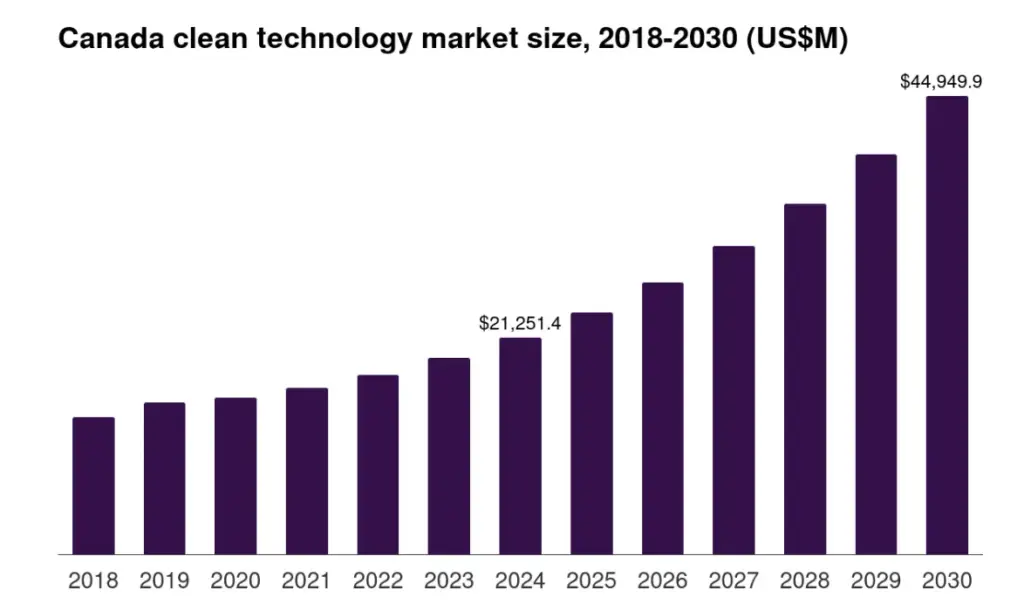
Canada has pledged to achieve net-zero emissions by 2050. Achieving that target requires rapid electrification of industry, buildings, and transportation.
The clean tech tax credit is one of several tools designed to bridge the gap between climate goals and private-sector investment decisions.
What Investments Qualify
Eligible Technologies
The program applies to a defined set of “clean technology property,” including:
- Solar photovoltaic systems
- Wind turbines
- Energy storage systems (batteries)
- Heat pumps and low-carbon heating
- Zero-emission industrial and non-road equipment
To qualify, assets must:
- Be newly acquired
- Be used primarily in Canada
- Be available for use (installed and operational)
What Does NOT Qualify
Less commonly discussed—but equally important—are exclusions. The credit generally does not apply to:
- Used or refurbished equipment
- Fossil fuel-based systems
- Assets not primarily used in Canada
- Projects already fully subsidized by other programs
Tax experts say misunderstandings around eligibility are one of the most common reasons claims are reduced or rejected.
Labour Requirements: A Key Condition
To access the full 30% credit, businesses must meet federal labour standards:
- Pay prevailing (market-aligned) wages
- Include apprentices in project workforces
Failure to comply reduces the credit to 20%.
Government officials say the rule ensures that public incentives also support workforce development. Industry groups, however, note that compliance tracking can be complex for smaller firms.
How Businesses Can Claim the Credit
Technical Eligibility Assessment
Before investing, companies should confirm that equipment qualifies. This often requires engineering validation and classification under CRA rules.
Financial Planning and Cost Tracking
Eligible costs typically include:
- Equipment purchase
- Installation and commissioning
- Supporting infrastructure
Operating expenses are generally excluded.

Filing the Claim
Businesses must file through their T2 corporate tax return, using designated schedules. Supporting documentation may include:
- Contracts and invoices
- Engineering reports
- Labour compliance records
Meeting Deadlines
Claims must be filed within prescribed timelines, usually within one year after the tax return due date. Missed deadlines can result in loss of eligibility.
Audit and Verification
The Canada Revenue Agency (CRA) may review claims. In some cases, Natural Resources Canada (NRCan) may assist in verifying technical eligibility.
Financial Impact: How Much Can Businesses Save?
The financial benefit can be substantial.
Example:
- Solar project cost: $2 million
- Eligible credit (30%): $600,000 refund
This significantly reduces upfront capital requirements and improves project return on investment.
Return on Investment (ROI) Effects
Analysts say the credit can:
- Shorten payback periods
- Improve internal rate of return (IRR)
- Enable projects that would otherwise be financially unviable
This is particularly important for capital-intensive sectors like manufacturing and utilities.
Interaction with Other Incentives
Canada offers multiple clean economy tax credits, including:
- Clean Electricity Investment Tax Credit
- Clean Technology Manufacturing Credit
- Hydrogen Investment Credit
However, stacking rules may apply, limiting how incentives can be combined. Businesses often require detailed tax planning to maximize total benefits without violating program rules.
Risks and Compliance Challenges
Recapture Risk
The credit includes a recapture mechanism, meaning businesses may need to repay funds if:
- Assets are sold
- Equipment is moved outside Canada
- Use changes in a way that disqualifies eligibility
This risk typically applies within a 10-year period.
Administrative Complexity
While the incentive is generous, compliance requirements can be demanding. Common challenges include:
- Interpreting eligibility rules
- Tracking labour requirements
- Managing documentation
“Companies should treat this as both a tax and engineering exercise,” said a Canadian tax consultant.

Sector-Level Impact
Manufacturing
Manufacturers are using the credit to electrify production and reduce emissions.
Energy and Utilities
Utilities are deploying large-scale renewable projects, benefiting significantly from the incentive.
Commercial Real Estate
Building owners are investing in heat pumps and energy systems to lower operating costs and emissions.
Regional Considerations
Different provinces may offer additional incentives, creating layered funding opportunities. However, rules vary widely, and businesses must ensure compliance across federal and provincial programs.
Policy Outlook
The credit remains at 30% until 2033, after which it will decline to 15% before expiring. Policy experts expect continued adjustments as Canada refines its clean economy strategy.There is also ongoing discussion about adding domestic content requirements to strengthen local supply chains.

Industry Reaction
Business groups have generally welcomed the incentive but stress the need for clarity. “The opportunity is significant, but execution will determine success,” said a representative from a Canadian renewable energy association. Small businesses, in particular, may require additional support to navigate the program.
Related Links
Is Tesla Energy a Threat to Traditional Solar Companies?
UK’s £15bn Warm Homes Plan: How to Get Free Solar and Batteries in 2026
Canada’s 30% Clean Tech Tax Credit is a central pillar of the country’s climate and industrial strategy in 2026. By reducing the cost of clean technology investments, the program aims to accelerate the transition to a low-carbon economy while strengthening domestic competitiveness.
For businesses, the opportunity is substantial—but realizing its full value depends on careful planning, compliance, and long-term strategy.
FAQs
What is the Canada clean tech tax credit 2026?
A refundable federal tax credit covering up to 30% of eligible clean technology investments.
Who qualifies?
Primarily taxable Canadian corporations investing in eligible equipment.
What reduces the credit amount?
Failure to meet labour requirements can lower the credit from 30% to 20%.
How long is it available?
Until 2033 at full value, then reduced before expiration.