
Canada’s rapidly expanding rooftop solar market is entering a critical phase, as utilities and regulators debate whether homeowners should continue receiving full compensation for exporting excess electricity to the grid.
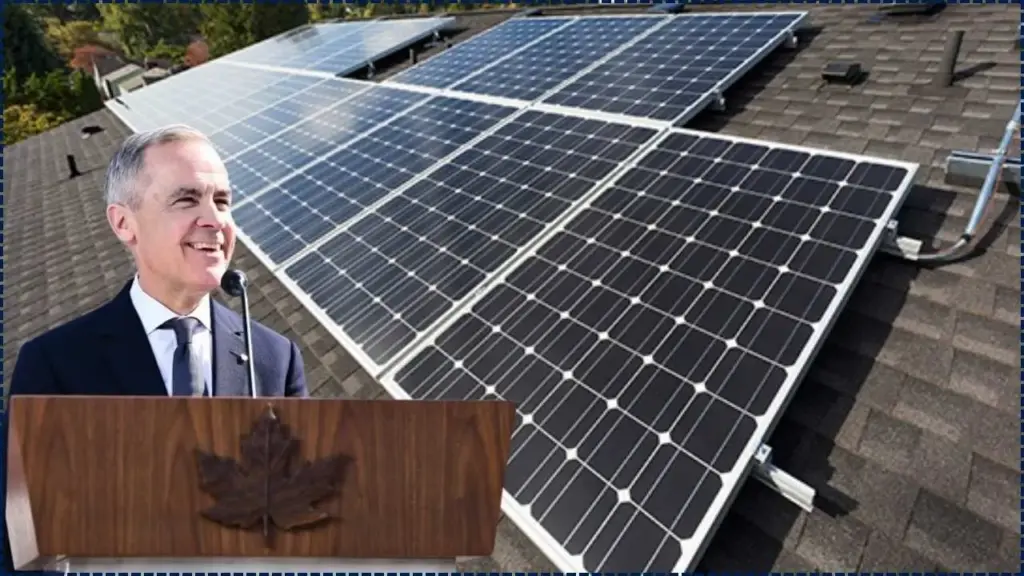
The discussion—often referred to as a “sun-tax”—reflects a broader shift in energy policy, with potential implications for household economics and the future of renewable energy adoption.
Canada’s ‘Sun-Tax’ Debate
| Key Issue | Detail | Context |
|---|---|---|
| “Sun-Tax” Status | Not formally implemented | Policy debate underway |
| Main Change | Shift toward net billing | Lower export value |
| Financial Impact | Reduced ROI for solar users | Longer payback periods |
| Policy Direction | Cost-reflective pricing | Global trend |
Canada’s “sun-tax” debate underscores a critical transition in energy policy, as the country balances rapid solar adoption with the practical demands of maintaining a stable and equitable electricity grid.
While direct export charges are not yet widespread, evolving compensation models are already reshaping the financial landscape for solar homeowners, signaling a more complex future for distributed energy.
Understanding Canada’s ‘Sun-Tax’ Debate
The phrase “sun-tax” has emerged as a shorthand for proposed changes to how utilities compensate solar energy exports. While no universal tax exists, the concern centers on declining export value under new pricing models.
Historically, net metering allowed homeowners to exchange electricity with the grid at near-equal value. Under emerging net billing systems, exported electricity is credited at lower rates, often aligned with wholesale prices.
This shift does not directly impose a tax but can produce similar financial outcomes by reducing earnings from solar generation.
Provincial Breakdown: Where Policies Are Changing
Canada’s decentralized energy system means each province sets its own rules.
Ontario and Quebec
- Continue to rely largely on net metering
- Provide relatively stable compensation
- Strong solar adoption incentives
Alberta
- Offers competitive retail credit programs through some providers
- Market-driven approach creates variability
British Columbia
- Gradually exploring net billing-style structures
- Reviewing long-term export pricing
Manitoba
- Lower export rates already in place
- Often cited as an example of reduced compensation
This variation means the impact of policy changes differs significantly across the country.
Why Utilities Are Reconsidering Solar Compensation
Grid Cost Recovery
Utilities argue that fixed grid costs—such as infrastructure maintenance—are not fully recovered when solar users offset their bills through net metering. As adoption increases, utilities warn of:
- Revenue shortfalls
- Uneven cost distribution
- Increased financial pressure on non-solar users
Supply and Demand Imbalance
Solar generation peaks during midday, when demand is often lower.
This leads to:
- Oversupply of electricity
- Reduced market value for exported energy
- Greater need for grid balancing
Transition in Policy Objectives
Early policies prioritized rapid solar adoption.
Current priorities include:
- Grid reliability
- Economic efficiency
- Fair cost allocation
Real-World Case Studies
Case 1: Net Metering Household
A homeowner in Ontario installs a rooftop solar system:
- Receives full retail credits
- Achieves payback within 8–10 years
- Exports surplus energy without penalty
Case 2: Net Billing Environment
A homeowner in Manitoba installs a similar system:

- Receives lower export rates
- Experiences extended payback period
- Must optimize energy use to maintain savings
Case 3: Future Policy Scenario
A hypothetical homeowner under an export fee system:
- Pays small charges for grid export
- Relies heavily on battery storage
- Adjusts energy usage patterns
Economic Impact: How Returns Are Changing
Net Metering Model
- High export value
- Faster return on investment
- Minimal need for storage
Net Billing Model
- Lower export compensation
- Greater reliance on self-consumption
- Moderate increase in payback period
Potential Export Fee Model
- Additional cost layer
- Further reduction in returns
- Increased complexity in system design
Technical Challenges: The Grid Perspective
From a technical standpoint, high levels of distributed solar introduce challenges such as:
- Voltage fluctuations
- Reverse power flow
- Infrastructure strain
Utilities must invest in grid upgrades to accommodate these changes, contributing to the push for revised compensation models.
The Growing Importance of Battery Storage
Battery systems are becoming a key solution in this evolving landscape. They allow homeowners to:
- Store excess solar energy
- Reduce exports to the grid
- Use electricity during peak pricing periods
Energy experts suggest that battery adoption may accelerate if export compensation continues to decline.
Market and Investment Implications
The “sun-tax” debate is also influencing:
- Solar installation companies
- Equipment manufacturers
- Investor confidence in renewable markets
Policy uncertainty can slow investment, while stable incentives tend to accelerate market growth.
Political and Regulatory Dynamics
The debate has become politically sensitive.
Government Position
- Focus on balancing renewable growth with grid stability
- Avoid sudden policy changes
Opposition and Advocacy Groups
- Warn against weakening solar incentives
- Emphasize climate commitments
Regulatory Bodies
- Conduct consultations
- Evaluate economic and technical impacts
Global Context: A Worldwide Trend
Canada’s situation mirrors global developments:
- Australia has introduced export tariffs in certain regions
- U.S. states like California have reduced net metering benefits
- Europe is exploring dynamic pricing models
These changes indicate a broader shift toward market-based solar compensation.

Future Scenarios: What Could Happen Next
Experts outline three likely paths:
1. Gradual Transition
Net billing becomes standard across provinces.

2. Hybrid Models
Combination of fixed credits and dynamic pricing.
3. Export Charges Introduced
Limited fees applied during peak export periods.
Each scenario would reshape how homeowners design and use solar systems.
Related Links
Avangrid Pledges $41 Million to Modernize New York’s Aging Power Grid Infrastructure
What Homeowners Should Do Now
Consumers considering solar should:
- Review provincial policies carefully
- Size systems based on usage patterns
- Consider battery storage options
- Monitor policy changes
These steps can help protect long-term returns.
FAQs
Is Canada introducing a sun-tax?
No formal tax exists yet, but compensation for solar exports is declining in some regions.
Will solar still be profitable?
Yes, though savings depend more on self-consumption and system design.
Could export fees be introduced?
It remains a possibility as policies evolve.
What is the biggest current change?
The shift from net metering to net billing.