
The expansion of commercial solar in 2026 is accelerating as government tax breaks, rising electricity prices, and improved financing models converge to reshape small business energy decisions.

Policies such as the instant asset write-off and energy efficiency incentives are lowering costs, while new ownership structures are making solar accessible to a wider range of businesses.
Commercial Solar in 2026
| Key Fact | Detail |
|---|---|
| Instant Asset Write-Off | Immediate deduction up to $20,000 per asset |
| Energy Incentive | 20% bonus deduction for efficiency upgrades |
| Payback Period | As low as 2–4 years with incentives |
The rapid adoption of commercial solar in 2026 reflects a convergence of policy incentives, economic pressures, and technological advancement.
Government tax breaks have transformed solar into a financially compelling investment for small businesses, though long-term growth will depend on policy stability, grid capacity, and market adaptation.
The Rise of Commercial Solar in 2026
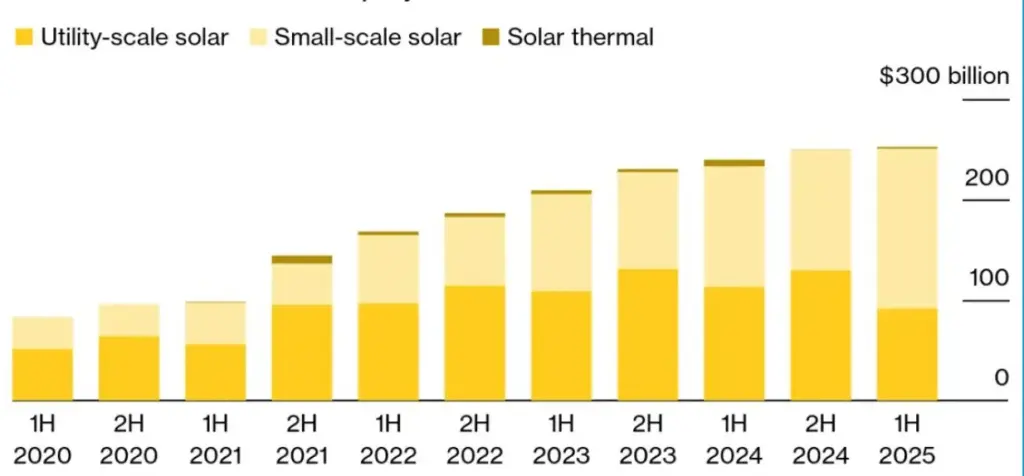
The surge in commercial solar in 2026 reflects a structural shift in how small businesses manage energy costs. Historically, high upfront capital requirements limited adoption. Today, policy incentives and declining technology costs have changed that equation.
Energy analysts describe this period as a “financial inflection point,” where solar is no longer a sustainability-driven expense but a core business investment.
Small businesses across sectors—retail, manufacturing, agriculture, and hospitality—are now entering the market at unprecedented rates.
How Government Tax Breaks Work
Instant Asset Write-Off
The instant asset write-off allows eligible businesses to deduct the cost of solar systems immediately rather than over several years.
This:
- Improves short-term cash flow
- Reduces taxable income
- Encourages faster capital investment
For many SMEs, this policy alone significantly alters the financial viability of solar.
Small Business Energy Incentive
The additional 20% bonus deduction further strengthens the business case.
It:
- Rewards energy-efficient upgrades
- Applies to solar, batteries, and electrification
- Reduces overall tax liability
This layered approach ensures businesses benefit both upfront and during tax reporting.
STC Rebates (Upfront Discount)
Through the Small-scale Renewable Energy Scheme, businesses receive an upfront discount via certificates applied at installation. This reduces capital cost before tax benefits are even considered, amplifying total savings.
Stacking Incentives: The Core Financial Advantage
The defining feature of commercial solar in 2026 is the ability to stack multiple benefits. Businesses can combine:
- Upfront rebates
- Immediate tax deductions
- Bonus energy incentives
This creates a powerful financial multiplier, reducing total costs by up to 50% in some cases.
Real-World Case Study: A Small Retail Business
Consider a mid-sized retail store installing a 30 kW system:
- Initial cost: ~$35,000
- STC rebate: reduces cost to ~$25,000
- Tax deductions: lower effective cost further
- Final net cost: ~$18,000–$20,000
Annual savings on electricity: ~$6,000
Payback period: approximately 3 years, Such scenarios are increasingly common, according to installer data and industry reports.
Financing Models Expanding Access
One of the most important developments in 2026 is the rise of alternative financing.
Power Purchase Agreements (PPAs)
Businesses pay for electricity generated, not the system itself.
Solar Leasing
Installations are financed over time with fixed payments.
Green Loans
Banks offer favorable terms for renewable energy investments. These models reduce upfront barriers and allow businesses without capital reserves to adopt solar.
Timing: A Narrow Window of Opportunity
The current policy framework creates urgency.
- The instant asset write-off threshold may drop significantly after June 2026
- Future tax incentives are uncertain
As a result, businesses are accelerating decisions to secure maximum benefits. Industry experts describe this as a “use-it-or-lose-it” moment.
Grid Integration and Infrastructure Challenges
As adoption grows, grid capacity is becoming a concern.
Emerging Issues
- Network congestion in high-solar regions
- Export limitations
- Delays in grid connection approvals
Utilities are investing in infrastructure upgrades, but challenges remain. Some businesses are addressing this by adding battery storage to maximize self-consumption.
Regional Differences in Adoption
Commercial solar uptake varies across Australia.
- Urban areas: Higher adoption due to energy costs and infrastructure
- Regional areas: Slower adoption due to grid limitations but strong solar potential
- Industrial zones: Rapid growth due to high energy demand
Policy implementation and local grid conditions play a major role in these differences.
Environmental and Policy Context
The expansion of commercial solar aligns with Australia’s broader climate and energy goals. Solar adoption contributes to:
- Reduced greenhouse gas emissions
- Lower reliance on fossil fuels
- Greater energy resilience
Government policy aims to support this transition while maintaining grid stability.
Risks and Considerations
Despite strong incentives, businesses must evaluate risks carefully.
Key Risks
- Policy changes after 2026
- Overestimation of savings
- Poor system design or installation
Operational Considerations
- Maintenance requirements
- Equipment lifespan
- Contract terms for financed systems
Experts recommend conducting energy audits before installation.
Market Trends and Industry Growth
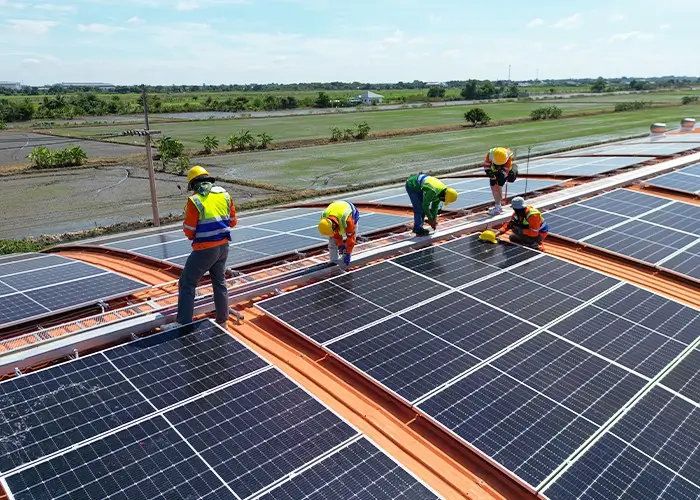
The commercial solar market is expanding rapidly. Key trends include:
- Increased competition among installers.
- Falling equipment costs.
- Integration with battery and energy management systems.
Industry forecasts suggest continued growth if policy support remains stable.
Related Links
Canada’s 30% Clean Tech Tax Credit: How Your Business Can Claim it in 2026
Expert Perspectives
Energy experts view 2026 as a turning point.
- Some highlight strong financial incentives as the primary driver.
- Others caution that policy complexity may limit accessibility.
“There is a clear economic case now,” one analyst noted, “but execution matters as much as incentives.”
FAQs
What makes commercial solar attractive in 2026?
The combination of tax incentives, rebates, and rising energy costs.
Can small businesses adopt solar without upfront capital?
Yes, through PPAs, leasing, and green financing options.
What happens if incentives are reduced?
Payback periods may increase, but solar can still provide long-term savings.
Is battery storage necessary?
Not always, but it can improve savings and reduce grid reliance.