

Flywheel energy storage systems (FESS) convert electrical energy into rotational motion. When surplus electricity is available, a motor accelerates a heavy rotor to very high speeds. The spinning rotor stores energy as kinetic motion.
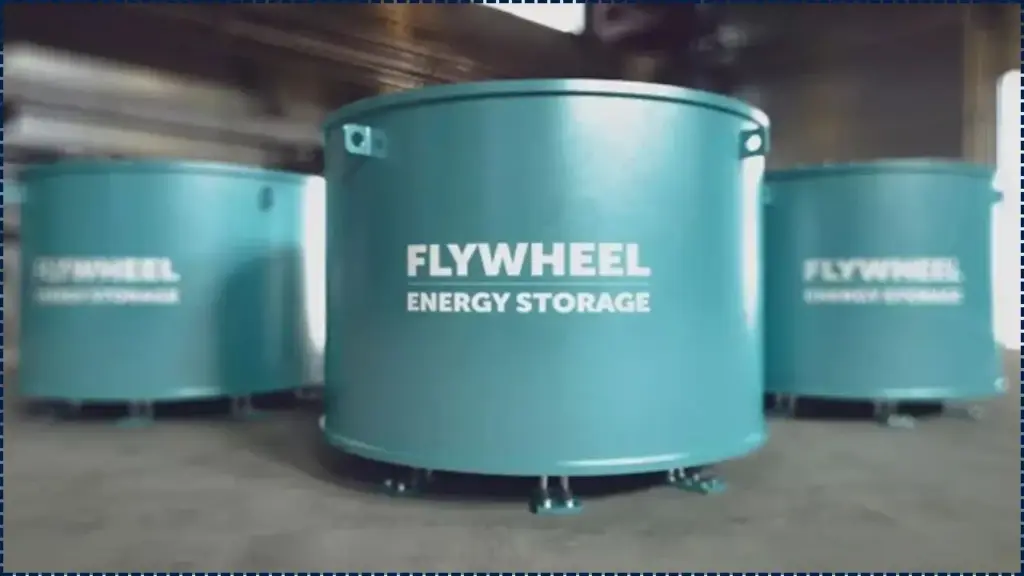
When power is required, the system slows the rotor and converts the stored motion back into electricity. Unlike lithium-ion batteries, which rely on chemical reactions, flywheels operate on mechanical principles.
The International Energy Agency (IEA) has noted that diversified storage technologies will be essential to balance variable renewable generation. Mechanical systems such as flywheels are part of that broader portfolio.
The Physics Behind Flywheel Technology
The energy stored in a flywheel depends on its mass and speed.
The governing formula is:
E = ½ I ω²
Where:
- I is the moment of inertia
- ω is the angular velocity
Because energy increases with the square of rotational speed, higher speeds dramatically increase stored energy. Modern flywheels operate at speeds above 20,000 revolutions per minute (RPM), and some advanced systems exceed 50,000 RPM within vacuum chambers to reduce air resistance.
Carbon-fibre composite materials allow these high speeds while maintaining structural integrity.
Key Components of a Flywheel Storage System
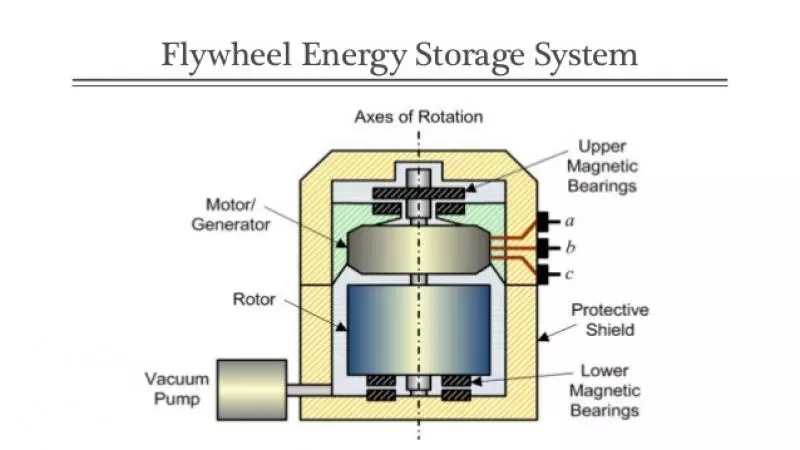
A modern flywheel storage unit typically includes:
- Rotor: The spinning mass that stores kinetic energy.
- Motor-generator unit: Converts electrical energy to mechanical and back.
- Magnetic bearings: Reduce friction and mechanical wear.
- Vacuum enclosure: Minimises air drag and energy loss.
- Power electronics: Control energy flow and grid connection.
Magnetic bearings allow near-frictionless rotation, extending operational lifespan.
Why Flywheel Storage Is Attracting Renewed Interest
Rapid Response Capability
Flywheels can respond in milliseconds, making them ideal for frequency regulation. Grid operators must maintain stable frequency — 50 hertz in India. Sudden supply-demand mismatches can cause deviations.
Flywheels can inject or absorb power almost instantly. The Central Electricity Authority (CEA) has emphasised the need for fast-acting balancing resources as renewable penetration rises.
High Cycle Life
Flywheels can endure hundreds of thousands of charge-discharge cycles without significant degradation. Lithium-ion batteries, by contrast, gradually lose capacity with repeated cycling.
This durability makes flywheels suitable for high-frequency applications.
Low Environmental Impact
Flywheel systems do not contain toxic electrolytes or rare earth metals. Their components are largely recyclable metals and composites. Environmental experts highlight reduced end-of-life disposal concerns compared to chemical batteries.
Applications in Modern Energy Systems
Grid Frequency Regulation
Commercial flywheel facilities in North America and Europe provide frequency response services to transmission operators. These systems stabilise grid fluctuations within seconds.
Renewable Energy Smoothing
Wind and solar output fluctuates with weather conditions. Flywheels can absorb sudden surges or compensate for brief drops in renewable output.

Data Centres and Industrial Backup
Flywheel-based uninterruptible power supply (UPS) systems protect critical infrastructure. They provide immediate backup power while diesel generators start.
Railways and Metro Systems
Flywheels can store braking energy from trains and release it during acceleration, improving energy efficiency in metro networks.
Cost and Economic Considerations
Flywheel storage systems generally have higher upfront costs than battery systems on a per-kilowatt basis. However, their long lifespan and minimal degradation can reduce lifetime replacement expenses.
Energy economists evaluate storage technologies using levelised cost of storage (LCOS). Flywheels may be competitive in applications requiring frequent cycling but less so for long-duration storage.
Financial viability depends on service type, market tariffs and grid service payments.
Comparing Flywheels and Batteries
| Parameter | Flywheel Storage | Lithium-Ion Battery |
|---|---|---|
| Response Time | Milliseconds | Seconds |
| Cycle Life | Very high | Moderate |
| Energy Duration | Short (seconds–minutes) | Long (hours) |
| Degradation | Minimal | Gradual |
| Environmental Risk | Low | Chemical waste concerns |
Experts increasingly view flywheels and batteries as complementary rather than competing technologies.
Safety and Engineering Design
High-speed rotation presents engineering challenges. Containment structures must prevent catastrophic failure in rare event of rotor malfunction.
Modern systems include real-time monitoring and vibration control. International safety standards govern mechanical containment and electromagnetic shielding.
Indian Context and Policy Relevance
India’s renewable capacity has expanded rapidly in the past decade. With increased solar and wind generation, short-term balancing requirements are rising. While battery energy storage projects are being tendered at utility scale, mechanical storage systems remain underexplored.
Researchers at Indian Institute of Technology (IIT) Delhi and other institutions have studied hybrid storage models combining flywheels and batteries. Energy planners suggest pilot deployments in renewable parks and urban substations.
Hybrid Energy Storage Systems
Future grids may combine multiple storage technologies.
For example:
- Flywheels manage rapid fluctuations.
- Batteries handle medium-duration storage.
- Pumped hydro provides long-duration capacity.
Hybrid systems can optimise performance and reduce stress on individual technologies.

Materials Science and Innovation
Advances in composite materials have improved flywheel efficiency. Carbon fibre rotors are lighter yet stronger than steel alternatives.
Magnetic levitation systems reduce mechanical friction, improving round-trip efficiency. Research aims to increase energy density while reducing manufacturing costs.
Limitations and Criticisms
Flywheel storage cannot economically provide multi-hour backup power. Energy density remains lower than advanced battery chemistries.
Capital costs may deter small-scale adoption without supportive policy incentives. Energy analysts caution against overestimating the role of any single storage technology.
The Long-Duration Storage Debate
Energy transition discussions increasingly emphasise long-duration storage for overnight renewable supply. Flywheels are unlikely to replace large battery banks or pumped hydro for this purpose.
However, they can enhance grid resilience by handling high-frequency fluctuations. Mechanical storage remains a niche but strategic solution.
Global Deployment Examples
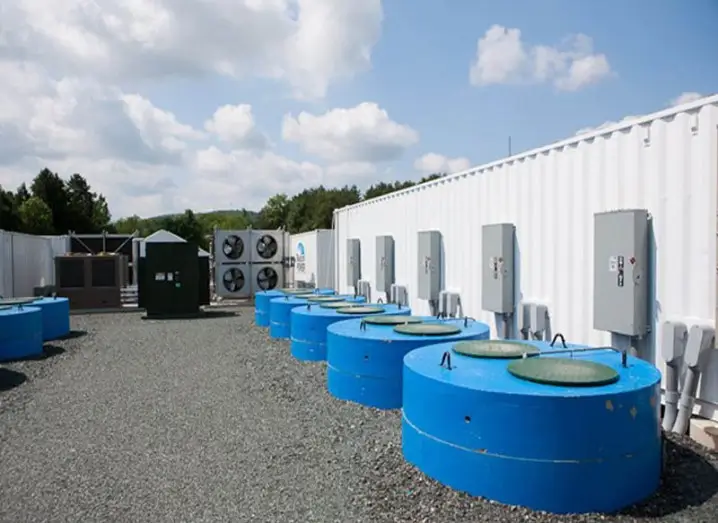
The United States has deployed multi-megawatt flywheel plants for grid services. European utilities have integrated flywheels into frequency regulation markets. In Asia, pilot studies are examining use cases in metro rail systems and industrial clusters.
Related Links
E-Highway: Electric Buses on Delhi-Jaipur Highway; Power Directly from Overhead Lines
Vehicle-to-Grid (V2G): Your Car Can Save the Grid! Earn Money by Selling Power Back.
Flywheel storage offers a mechanical method of storing electricity without relying on chemical batteries. By converting power into high-speed rotational motion, it provides rapid response, long cycle life and low environmental risk.
While limited in long-duration applications, flywheel technology is well suited for grid stabilisation, renewable smoothing and critical infrastructure backup.
As India and other countries modernise power systems, diversified storage portfolios — including mechanical, chemical and hydro-based solutions — will likely shape the future of energy resilience.