Electric vehicles (EVs) are critical to global decarbonization efforts, but many drivers remain wary of slow charging times associated with conventional lithium‑ion batteries. Against this backdrop, New Graphene Battery technologies — particularly graphene‑based materials — have captured attention with claims of radically faster charging, sometimes as little as 120 seconds for a full EV recharge.
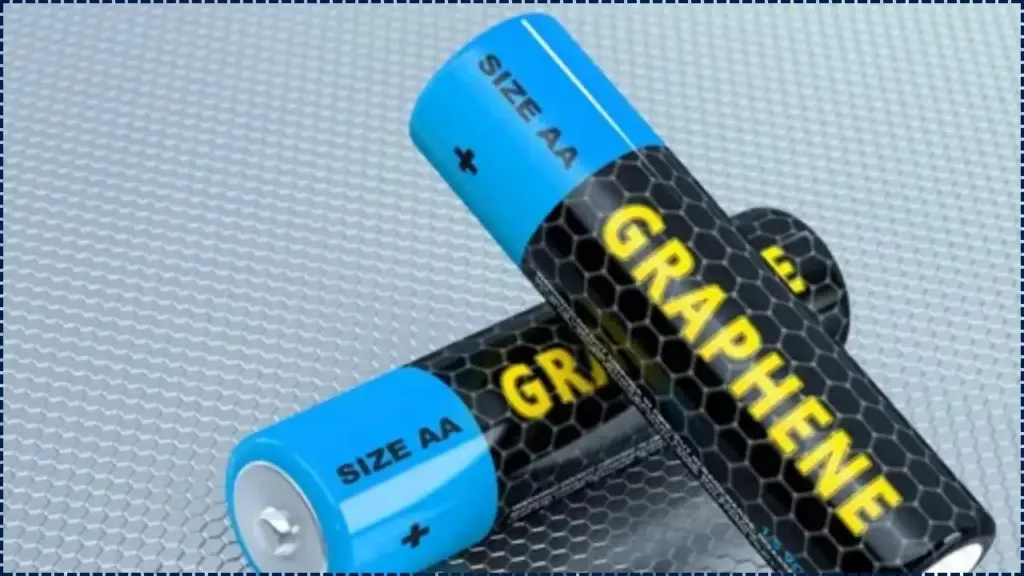
These headlines have ignited public curiosity, but experts caution that practical realities are far more complex than the marketing implies.
New Graphene Battery
| Key Fact | Detail |
|---|---|
| Graphene Charge Claims | Sensational media reports suggest ultra‑fast EV charging (120 seconds) |
| Real Research Progress | Graphene supercapacitors show fast charge/discharge and improved energy density |
| Commercial Readiness | Graphene battery technology is not yet mass‑produced for EVs |
Research published in Nature Communications details how a novel graphene material called multiscale reduced graphene oxide (M‑rGO) can significantly improve both energy and power density in supercapacitor systems, potentially delivering rapid charge and discharge at scales closer to that of batteries.
However, translating such laboratory successes into commercially viable EV battery systems will require substantial engineering and manufacturing advances.
What Is Graphene, and Why It Matters
Graphene is an atom‑thin sheet of carbon atoms arranged in a hexagonal lattice. It is exceptionally strong, lightweight, and conducts electricity and heat far better than typical lithium‑ion materials. These properties make it attractive for next‑generation energy storage research.
In laboratory studies, graphene‑based electrodes have demonstrated the potential for much faster charge/discharge rates and high cycle life compared with traditional battery chemistries. Graphene has shown increased electrical double‑layer capacitance and energy storage capability, allowing devices like supercapacitors to charge and discharge rapidly at high currents.
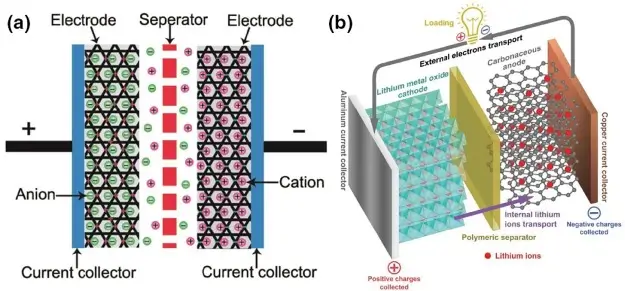
Supercapacitors store charge electrostatically rather than through chemical reactions, which enables extremely fast charging but typically at lower energy densities than batteries. If graphene can enhance both power (fast charge/discharge) and energy density (total stored energy), it could help close the gap between lithium‑ion batteries and ultracapacitors.
How Graphene Enhances Energy Storage
Graphene in Batteries
Graphene can be used as an additive or structural component in battery electrodes. In such cases, it increases electrical conductivity and helps ions move more quickly through the battery during charging and discharging.
Some experimental graphene‑enhanced lithium‑ion cells have shown charging rates several times faster than standard cells, along with improved stability over many cycles.
Graphene Supercapacitors
Supercapacitors are energy storage devices that store charge electrostatically rather than chemically. They can charge and discharge much more rapidly than batteries, but traditionally had lower energy storage capacity.
Recent breakthroughs — such as the development of M‑rGO graphene structures — have improved both energy density and power density in supercapacitors, bringing them closer to practical battery performance.
These graphene supercapacitors hold promise for fast energy transfer applications, potentially enabling partial recharges in seconds. However, supercapacitors alone still store much less energy than a full EV battery pack would require.
Thus, researchers are exploring hybrid systems that combine the fast charging capability of supercapacitors with the energy storage capacity of batteries.
The Reality Behind “120‑Second” EV Charging Claims
Headlines touting a graphene battery that can fully charge an EV in just 120 seconds frequently originate from prototype systems or startup announcements with limited detail. To date, there is no publicly verified, production‑ready battery system capable of recharging a typical EV to full capacity in two minutes.
In contrast, promising lab results have achieved partial charging in minutes, not seconds, for prototype cells, and none have yet been integrated into full electric vehicle battery packs.
For example, one graphene aluminium‑ion battery prototype has been reported to reach approximately 62 percent capacity in just over three minutes under specialized conditions — but at low energy density not yet suitable for consumer EVs.
Similarly, scientific studies show that graphene supercapacitors can discharge significant energy in seconds in controlled tests, underscoring fast charge potential but not full EV applicability.
Charging an entire electric vehicle battery — typically dozens of kilowatt‑hours — in 120 seconds would require not only advanced battery chemistry but also charging infrastructure capable of safely delivering extremely high power levels.
Current public fast chargers deliver up to roughly 350 kW, whereas a two‑minute 100 kWh charge would demand sustained delivery of 30 times that power level — a challenge for grids and connectors alike.
Challenges to Commercialization
Energy Density vs. Power Density
Fast charging technologies often sacrifice energy density — the amount of energy stored for a given weight or volume. Supercapacitors typically store less energy than lithium‑ion batteries, and while graphene may improve this, achieving the high energy densities needed for EVs remains a significant challenge.
Heat Management
Rapid charging generates heat. Without effective cooling systems, batteries or supercapacitors could degrade quickly or pose safety risks. Managing thermal energy in ultra‑fast charging systems is a key focus of ongoing graphene research.
Cost and Scalability
Graphene is expensive to produce in large quantities, and scaling it to the level required for EV batteries presents challenges in both cost and materials science. Despite breakthroughs, mass production of graphene‑based batteries that are affordable remains years away.

Commercial and Startup Efforts
Several companies are working on graphene and other advanced materials for fast charging. In 2024, a UK battery firm demonstrated an EV cell that could charge to 80 percent in about five minutes, albeit using novel niobium additives rather than pure graphene. (en.wikipedia.org)
Similarly, hybrid supercapacitor/battery systems are under development that aim to combine the best attributes of both technologies: the rapid energy delivery of capacitors and the storage capacity of batteries.
These directions suggest that future EVs may see incremental improvements in charging times rather than an abrupt shift to two‑minute recharges.
The Road Ahead for Graphene Batteries
Broadly speaking, graphene remains a promising material for next‑generation energy storage. Researchers continue to explore ways to incorporate it into commercial cells with meaningful improvements in charging speed, lifespan, and energy density.
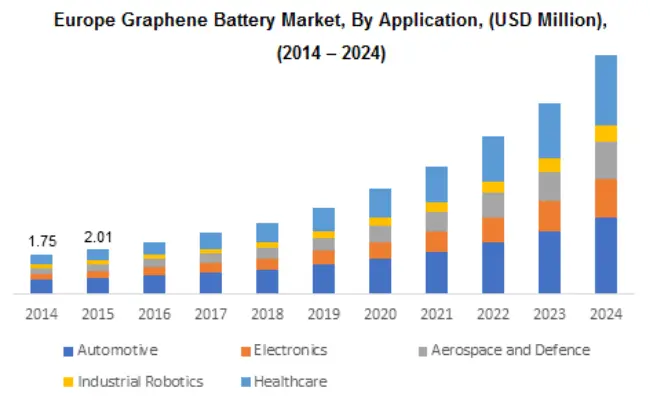
Industry analysts forecast that graphene‑enhanced batteries could begin appearing in niche applications — such as high‑power tools or portable electronics — before widespread EV adoption.
Only with continued investment in materials science, supply chain scaling, and safety testing might graphene become a mainstream EV battery component over the next decade.
While claims of New Graphene Battery fully charging an electric vehicle in just 120 seconds remain speculative, there is real potential for graphene to enhance EV battery performance in the coming years.
Researchers are making progress toward faster, longer‑lasting batteries, though full commercial applications in EVs are still a long way off.
Drivers and industry stakeholders alike should temper expectations, focusing instead on the gradual advances in graphene that will likely lead to meaningful improvements in EV charging speeds, energy efficiency, and overall battery lifespan.