
India is leveraging its vast network of dams to power the future with Hybrid Hydro-Solar systems. By integrating solar power generation with hydropower storage, these hybrid systems turn reservoirs into large-scale energy storage hubs.
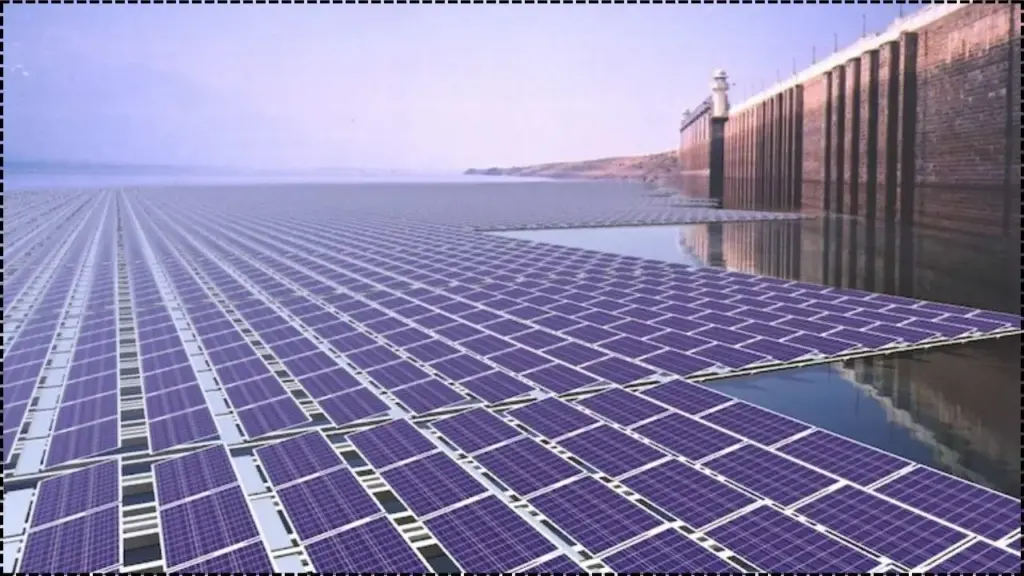
This innovation helps tackle renewable energy intermittency, improves grid reliability, and provides continuous power—critical for a sustainable energy future.
Hybrid Hydro-Solar
| Key Fact | Detail/Statistic |
|---|---|
| Largest energy storage | Pumped storage accounts for 94% of the world’s long-duration energy storage |
| India’s potential | Estimated 90,000 MW pumped storage capacity could be developed |
| Key benefit | Reliable, round-the-clock renewable power |
| Global trend | Hybrid systems are being scaled in China, US, and Africa |
Hybrid Hydro-Solar Systems: Integrating Solar Power and Hydropower
Hybrid Hydro-Solar systems integrate solar photovoltaic (PV) technology with pumped-storage hydropower (PSH). This innovative system capitalises on the capacity of existing hydropower reservoirs to store excess solar energy during the day.
The basic principle is simple: when solar power generation exceeds demand, excess electricity is used to pump water to an elevated reservoir. When energy demand spikes or the sun sets, this stored energy is released through turbines to generate electricity.
The Energy Storage Cycle: From Solar to Stored Power
This is where the idea of “water batteries” comes in. The process is a closed-loop system, essentially storing solar power as gravitational potential energy in the form of water in an upper reservoir.
This method allows renewable energy to be stored in a scalable and efficient way, addressing one of solar power’s primary challenges: intermittency. For instance, India’s Pinnapuram Integrated Renewable Energy Project in Andhra Pradesh combines:
- 4,000 MW solar power.
- 1,000 MW wind energy.
- 1,680 MW pumped storage.
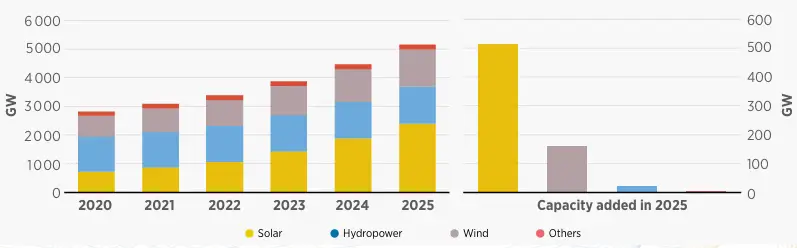
This hybrid system can generate power for up to 9 hours continuously, even when the sun is not shining, providing a dependable and consistent supply of clean energy.
Why Hybrid Hydro-Solar Is Gaining Traction in India
Reliability and Grid Stability
India faces the dual challenge of increasing electricity demand and the need for reliable clean energy. With solar power generation peaking during the day and demand surging during evening hours, hybrid systems solve this problem by storing excess energy for use when sunlight is absent. This helps stabilise the grid and ensures round-the-clock renewable power.
Maximising Existing Infrastructure
India already has an extensive network of hydropower reservoirs, many of which have significant untapped potential for solar integration. This allows the country to use existing infrastructure for both generation and storage, reducing the need for new transmission lines and other costly infrastructure.
Global Hybrid Hydro-Solar Developments
Hybrid Systems Globally
Hybrid systems are gaining traction globally, and India is well-positioned to become a global leader. Key examples include:
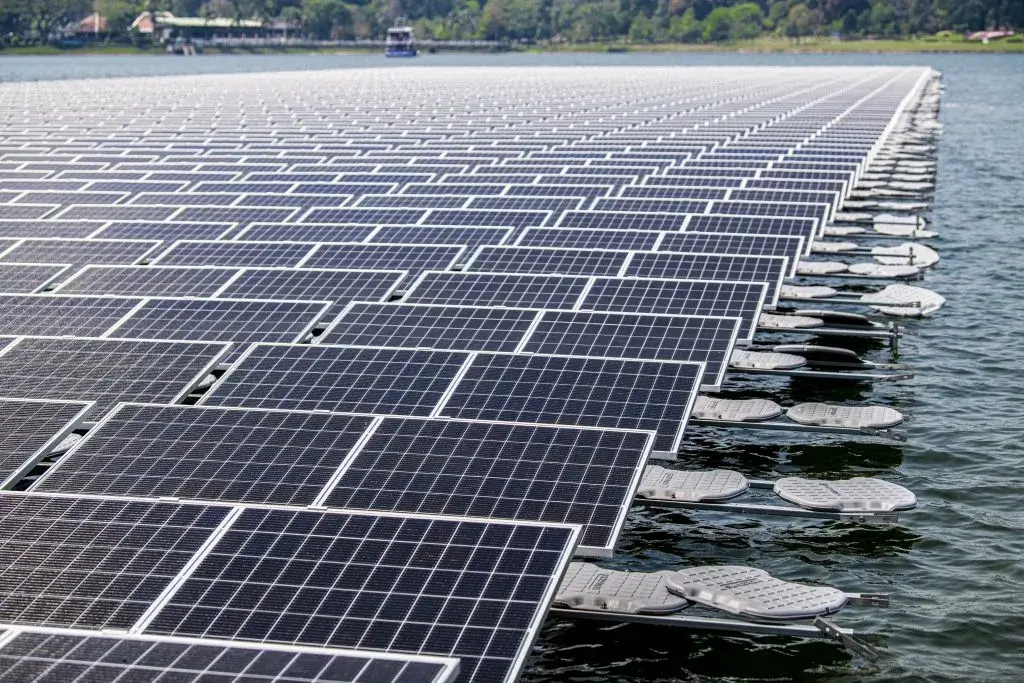
- Bui Hydro-Solar Hybrid Project in Ghana, integrating floating PV on the Bui Reservoir with existing hydro infrastructure.
- Pumped Hydro Storage Systems (PSH) in China, which dominate the global energy storage landscape, providing critical backup for intermittent renewable power.
These global projects highlight how hybrid systems can provide scalable, reliable energy storage solutions and offer useful lessons for India’s energy future.
Economic Impact and Investment Insights
Upfront Costs vs Long-Term Gains
Hybrid systems require significant initial capital, particularly for the development of pumped storage reservoirs, tunnels, and turbines. Estimates indicate costs ranging from ₹5-6 crore per megawatt for hybrid hydro-solar systems.
However, the long-term savings, due to the reduced reliance on fossil fuels and increased capacity utilisation, make these systems highly cost-effective. The overall cost reduction in operation and maintenance also plays a significant role in improving the economics of hybrid systems.
किसानों के लिए खुशखबरी! सोलर ड्रायर पर मिल रही है भारी सब्सिडी, जानिए कैसे उठा सकते हैं फायदा
A 2024 report from IEEFA suggests that Hybrid Hydro-Solar projects can achieve higher capacity utilisation compared to standalone solar plants, driving better returns on investment over time.
Investment and Policy Landscape
The Solar Energy Corporation of India (SECI) and state governments are encouraging hybrid projects through:
- Competitive renewable energy tenders.
- Storage and infrastructure incentives.
- Policy support for round-the-clock (RTC) renewable energy supply.
The Indian government aims to expand pumped-storage capacity, having already identified 94,000 MW of potential capacity across various regions, and hybrid systems are seen as a key part of this strategy.
Environmental and Societal Benefits
Efficiency in Land Use
Hybrid systems make efficient use of land and water resources by integrating solar with existing hydropower plants. This minimises the need for new land acquisition, which can be politically and socially challenging in densely populated regions.
Water Conservation and Ecosystem Balance
Pumped storage systems offer secondary benefits such as improving water resource management, flood control, and irrigation, especially in drought-prone areas. They help balance energy storage with water use, serving dual purposes in critical agricultural sectors.
Technological Advancements Driving Growth
Battery Storage Integration
As battery storage technology improves, some hybrid projects are incorporating battery energy storage systems (BESS). Batteries provide fast-response storage for short-term fluctuations, while pumped storage handles longer-duration needs. Integrating both technologies provides a more resilient and flexible energy system.
Advanced Hydropower Designs
Developments in floating solar technology, combined with pumped storage, open up new avenues for storage. Floating solar can be added directly to existing reservoirs, making it a flexible option.
Challenges to Scaling Hybrid Hydro-Solar Systems
Geographical Constraints
Not all locations are suitable for pumped storage. The reservoirs must meet specific topographical requirements, such as significant height differences between upper and lower reservoirs.
Regulatory and Environmental Barriers
Hybrid projects face challenges related to water usage rights, environmental regulations, and local community concerns. Ensuring these systems don’t harm aquatic ecosystems requires thorough environmental impact assessments.
High Initial Capital Investment
Despite their long-term advantages, initial capital costs for pumped storage infrastructure remain high, requiring careful planning and financing.
India’s Competitive Edge and Global Leadership Potential
India has a competitive advantage due to:
- Large untapped hydro-storage capacity.
- Extensive solar potential.
- Strong policy support.
Experts believe India can emerge as a global leader in hybrid hydro-solar systems, offering a reliable and scalable solution to intermittent renewable energy sources. Moreover, the global push for energy independence and climate goals positions India as a key player in the hybrid energy market.
Related Links
TOPCon vs. HJT: The Battle for the New “Industry Gold Standard” in High-Efficiency Panels
Beyond 30% Efficiency: How Perovskite-Silicon Tandem Cells are Revolutionizing Solar in 2026
Future Outlook: Innovation and Scaling Up
Hybrid Systems for a 24/7 Renewable Grid
As India’s energy mix evolves, hybrid hydro-solar systems will become central to the goal of providing round-the-clock renewable energy. These systems can provide stable power generation, reducing reliance on fossil fuels.
Technological Breakthroughs
Future breakthroughs, such as advanced solar panel efficiency and high-capacity turbines, will make hybrid systems even more viable, further driving down costs and increasing efficiency.
Hybrid Hydro-Solar systems represent the future of energy storage and generation, particularly for countries like India that face high energy demand and renewable intermittency challenges. These systems provide reliable, clean energy while making the most of existing infrastructure.
With continued policy support, investment, and technological advancements, India has the potential to lead the world in hybrid hydro-solar energy, playing a pivotal role in the transition towards a sustainable, low-carbon future.