India has unveiled a transformative 10‑year energy roadmap under which solar capacity is projected to quadruple and the country’s coal dependency could fall by almost half by 2035‑36, according to government planning documents.
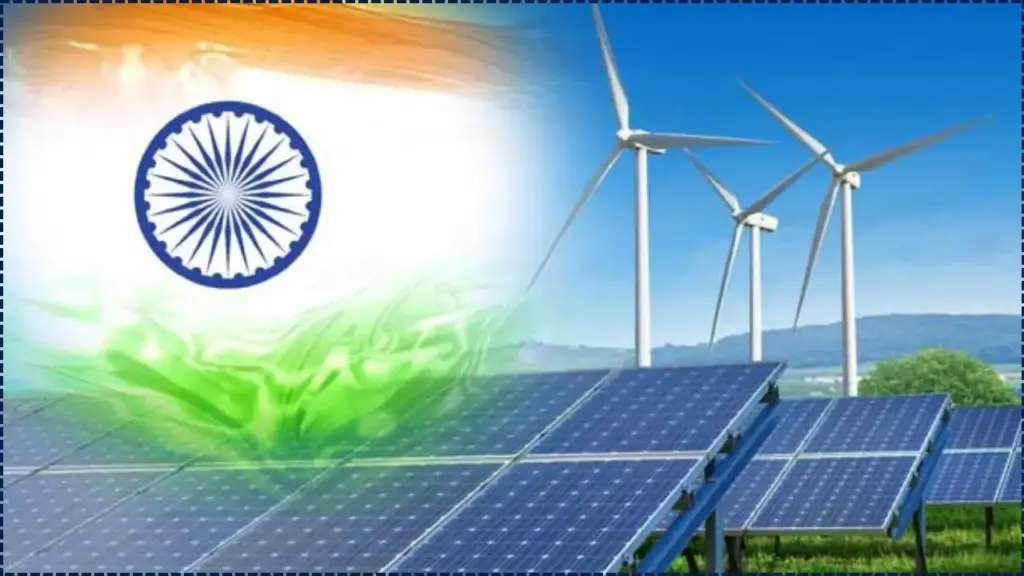
The strategy reflects New Delhi’s effort to meet surging electricity demand sustainably while balancing energy security and climate commitments.
Solar’s Central Role in India’s Energy Future
Quadrupling Solar Capacity
India’s solar power capacity is set to quadruple over the next decade, the Central Electricity Authority (CEA) projects, with solar installations rising sharply toward 509 gigawatts (GW) by 2035‑36. This reflects a strategic effort to pivot the energy portfolio toward renewable sources as part of a broader national energy transition.
Today, India has already made substantial progress, with solar capacity crossing 130 GW by late 2025, a record expansion year largely driven by utility‑scale and rooftop installations.
Solar’s rapid growth is underpinned by India’s abundant sunlight, with an assessed solar potential exceeding 10,000 GW thanks to long hours of sunshine across much of the country.
Wind and Other Renewables Strengthening the Grid
Wind capacity is expected to triple over the same period, climbing toward about 155 GW by 2035‑36, complementing solar generation. Other non‑fossil sources, including large hydro (projected at ~77 GW), nuclear (~22 GW), and smaller biomass and hydro projects, further diversify the clean energy mix.
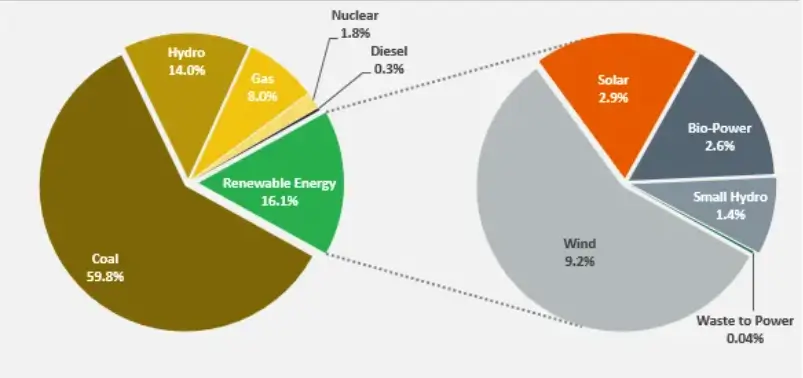
Overall, clean or non‑fossil energy sources are projected to make up around 70 % of India’s total installed capacity by the mid‑2030s, compared with roughly half today.
Fresh Milestones and Recent Growth
India’s renewable capacity has already crossed notable milestones. As of November 2025, total non‑fossil fuel capacity reached 262.74 GW, exceeding 50 % of total installed capacity five years ahead of schedule.
In fiscal year 2025 alone, India added a record 44.5 GW of renewable energy capacity, nearly doubling the previous year’s additions. Solar accounted for nearly 35 GW of that growth.
Reducing Coal’s Dominance
A Major Decline in Coal Share
Coal has traditionally supplied over 70 % of India’s electricity capacity. But under the new roadmap, this share is expected to drop to around 49 % by 2035‑36 as renewable capacity expands sharply.
Despite the decline, coal will remain significant, continuing to provide grid stability and baseload power as the system transitions. India’s total installed power capacity itself is projected to more than double to over 1,120 GW by 2035‑36, with coal capacity rising in absolute terms even as its share falls.
Drivers of the Transition
Policy and Strategic Initiatives
India’s roadmap is shaped by ambitious renewable targets and national climate commitments. The government’s vision of achieving 500 GW of non‑fossil fuel capacity by 2030 has already guided accelerated renewables deployment.
The new decade‑long plan extends that momentum, aligning capacity additions with long‑term electricity demand growth and decarbonisation goals.
Infrastructure and Technological Support
A growing emphasis on grid infrastructure upgrades—including interstate transmission and flexible grid management—is vital for integrating intermittent renewable sources. Energy storage forms a key part of this strategy.
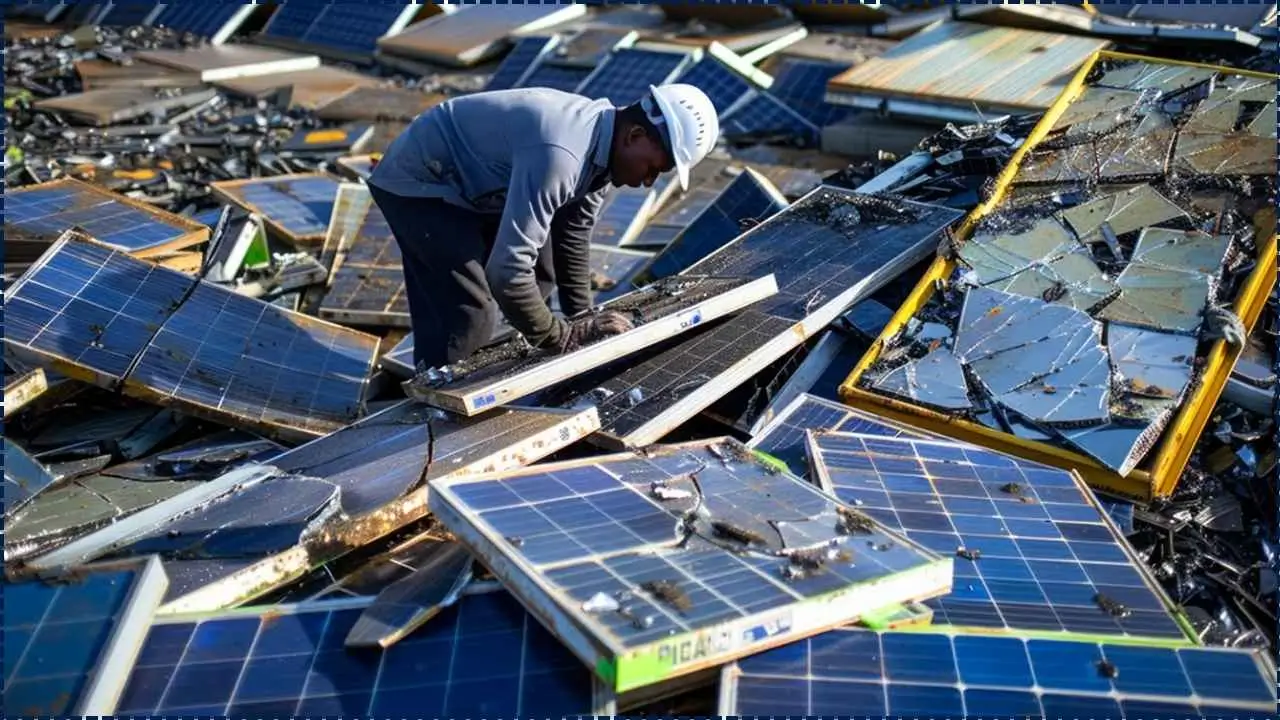
Mining the Roof: How a New Start-up is Recovering 99% of Silver from 20-Year-Old Dead Panels
Battery storage capacity, nearly negligible a few years ago, could reach 80 GW by 2035‑36, offering flexibility and reliability to accommodate variable generation. Similarly, pumped storage hydropower may expand to around 94 GW, providing large‑scale storage to balance daily and seasonal fluctuations.
Economic and Investment Signals
India’s renewable expansion has attracted both domestic and international investors. Competitive bidding, declining technology costs, and policy incentives have boosted confidence.
Financial instruments such as green bonds, concessional financing, and infrastructure funds are increasingly deployed to support large solar and wind farms.
State Contributions and Regional Projects
Solar and Hybrid Parks
Large renewable parks, such as the Gujarat Hybrid Renewable Energy Park, illustrate India’s capacity to deploy utility‑scale projects. This initiative aims to generate tens of gigawatts of combined solar and wind power in one location, attracting investment and job creation.
Other states, including Rajasthan and Tamil Nadu, are also central to solar and wind growth due to favourable resource profiles and supportive state policies.
Challenges on the Path Ahead
Grid Integration and Reliability
A rapid increase in solar and wind generation poses challenges for grid operators. Renewable energy, by nature intermittent, requires careful balancing between generation and consumption.
Upgrading transmission infrastructure and developing forecasting systems are crucial to avoid curtailment and ensure supply reliability.
Financing and Cost Dynamics
Scaling renewable capacity at this pace requires substantial capital expenditure. While technology costs have declined, financing large projects—especially in storage and transmission—remains complex.
Affordable credit, risk mitigation instruments, and investment certainty will be essential to sustain the pace of growth.
Balancing Base‑Load Needs
Even as coal’s share declines, India must ensure reliable base‑load power, especially during peak demand periods or extended low‑renewable output intervals. Experts stress that balanced system planning, rather than abrupt coal phase‑out, is critical to avoid power shortages.
Broader Impacts
Carbon Emissions and Climate Commitments
The energy shift supports India’s emission reduction goals under the Paris Agreement. Greater reliance on renewables is expected to significantly cut carbon emissions from the power sector, historically one of the largest contributors to national greenhouse gas output.
Socio‑Economic Benefits
Expanding clean energy can stimulate economic growth, create jobs across manufacturing, installation, and operations, and improve energy access in underserved regions. Long‑term reductions in electricity procurement costs could also deliver benefits for consumers and industry.
Related Links
India’s Decadal Power Shift: Solar Capacity to Quadruple and Wind to Triple by 2036
ACME Solar & NTPC Green Energy Surge 9%: Why Renewable Stocks are Defying the Weak Market
Comparative Global Context
India’s energy transition runs parallel to clean energy strategies in other major markets such as the United States and the European Union, which also prioritise domestic renewables, storage, and supply chain resilience.
Yet India’s rapid scale and pace of renewable deployment stand out among emerging economies, reflecting both resource potential and policy prioritisation.
What Comes Next
Mid‑Decade Review
Officials anticipate a strategic review around 2030 to assess progress against evolving demand, technology costs, and grid performance. Findings from this review will shape adjustments in policy and investment direction.
India’s 10‑year energy roadmap represents a decisive shift toward cleaner, more sustainable power generation. With solar capacity set to quadruple and coal’s role halving by 2035‑36, the country is redefining its energy future.
While challenges in grid integration, financing, and maintaining reliability remain, the overall trajectory reflects a strong commitment to a cleaner and more secure energy system.